The best electric sprayer for stain delivers even color, minimizes brush marks, and speeds up large projects. This guide highlights five top options, each suited to different staining needs—from small furniture refinishing to wide outdoor surfaces. Ideal buyers include DIY homeowners staining decks, fences, furniture, and cabinets, as well as professionals seeking efficient, uniform finishes. The table below summarizes what each product brings to the stain task.
| Product | Best For | Key Benefit |
|---|---|---|
| HomeRight Super Finish Max HVLP (450W) | Small to mid-size projects | Versatile spray patterns and adjustable flow |
| PICKITOLES 1000W HVLP | Fences and furniture | High efficiency with large 47 oz container |
| VEVOR Stand Airless Sprayer (650W) | Indoor/outdoor large surfaces | Airless design for faster coverage |
| PEMMKORE 700W Cordless | Untethered tasks and tight spaces | Cordless mobility with LED illumination |
| LUDERIGNITE 1000W HVLP | Large areas and precise work | High power with adjustable patterns |
HomeRight Super Finish Max HVLP Paint Sprayer
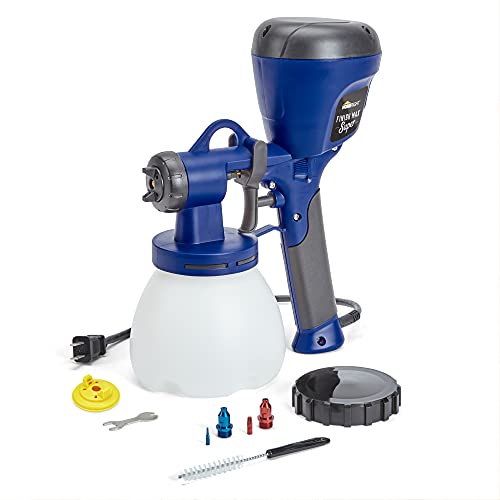
Best for: small to medium stain and paint projects on furniture, cabinets, fences, and decks. This sprayer supports horizontal, vertical, and round spray patterns with adjustable material flow, enabling controlled finishes on varied surfaces. The 450-watt motor provides solid spray power for coats without excessive thinning.
Why selected: The adjustable airflow and flow control help achieve uniform stain application on detailed work or broad surfaces. It handles stains, sealers, and varnishes, making it a flexible choice for a range of stain projects. Caution: Detach and clean parts thoroughly after use to prevent clogs when switching between different stain viscosities.
1000W HVLP Paint Sprayer by PICKITOLES

Best for: large staining tasks where efficiency matters, such as fences or broad furniture sets. Notable for a high-torque motor and a 47 oz container that reduces refill interruptions. Features six nozzle sizes and adjustable spray patterns for precise control.
Why selected: The kit’s efficiency edge (30% more than typical 1000W units) supports faster completion of staining sessions. Limitation: ensure extensive dilution guidance is followed for latex or highly viscous stains to optimize atomization.
VEVOR Stand Airless Paint Sprayer

Best for: large indoor or outdoor staining projects such as walls, fences, and exterior furniture. The stand design with a 25 ft hose extends reach, and the airless mechanism delivers quicker coverage with consistent finish.
Why selected: Its adjustable flow and high-pressure capability couple with a durable pump to spray unthinned material efficiently. Caution: airless systems can waste more material if not tuned properly; start with small tests to dial in the right pressure and pattern.
PEMMKORE 700W Cordless Electric Spray Gun

Best for: spots, ledges, and high-mreasure painting where cords are inconvenient. The cordless design uses two 4000mAh batteries with up to 25 minutes per battery, plus LED illumination for low-light areas.
Why selected: The portability suits overhead staining on cabinets or outdoor furniture where mobility matters. Limitation: battery life is finite; plan longer jobs with extra batteries or breaks between sessions.
LUDERIGNITE 1000W HVLP Sprayer

Best for: large finishes on walls, fences, doors, and furniture where a smooth, even coat is essential. It offers three spray patterns (horizontal, vertical, circular) with an added 1400 ml container for fewer refills.
Why selected: Strong motor and versatile patterns support both broad coverage and detail work. Caution: ensure proper thinning guidelines for the stain to prevent clogging and achieve even atomization.
Buying Guide: How To Choose The Right Stain Sprayer
- Sprayer Type: HVLP (high-volume, low-pressure) sprayers are ideal for stains and finishes because they minimize overspray and yield smooth, controlled coats. Airless sprayers deliver faster coverage on large areas but can require more masking and planning to avoid runs.
- Power and Flow: Look for a motor wattage between 450W and 1000W for staining; higher power equals faster coverage but can increase coverage control needs. Flow control and nozzle options determine how much stain is released per pass.
- Tank/Container Size: Larger containers reduce refill interruptions on big jobs. For fences and decks, consider 47 oz or larger; for furniture refinishing, a smaller bottle may suffice.
- Spray Patterns and Nozzles: Multi-pattern spray (horizontal, vertical, circular) with assorted nozzle sizes improves versatility for flat surfaces and edges. Ensure nozzles are compatible with stain viscosity.
- Corded vs Cordless: Corded models offer continuous power; cordless units add flexibility but require battery management. For overhead or tight spaces, cordless can be advantageous.
- Cleaning and Maintenance: Stains can dry and clog spray tips. Choose sprayers with easy disassembly and accessible cleaning tools. Consider pump life and ease of thinning guidelines for different stains.
- Materials and Compatibility: Check whether the sprayer handles water-based stains, oil-based stains, varnishes, or sealers. Dilution requirements vary; some products specify color or viscosity limits.
- Setup and Safety: Adequate masking and ventilation are essential. Ensure sprayer parts are easy to assemble and cleaned to prevent cross-contamination of finishes.
Frequently Asked Questions
- What stain sprayer is best for small furniture projects?
– A compact HVLP sprayer like the HomeRight model is well-suited for tight spaces and detailed furniture work due to adjustable flow and pattern control. - Should I choose a cordless or corded sprayer for exterior staining?
– Corded sprayers provide consistent power for longer sessions, while cordless units offer mobility for overhead or scaffolding work. Consider project size and space. - Can I spray varnish or sealers with these sprayers?
– Most HVLP sprayers handle stains, varnishes, and sealers; check each model’s compatibility and dilution guidelines to avoid clogging and poor atomization. - How important is container size for stain projects?
– Container size affects refill frequency. For large decks or fences, a larger container minimizes trips to refill, saving time and reducing lap marks. - What maintenance steps should follow staining?
– Clean all parts thoroughly after use, including spray tips and hoses. Dilute or flush with an appropriate cleaner to prevent dried residue before storing.