For auto body work, choosing the right electric sander matters for a smooth, professional finish. This guide highlights five top options that balance power, dust management, and control. Best for hobbyists, fleet maintenance, professional body shops, and DIY painters, these tools cover light to heavy sanding tasks. Each entry notes who benefits most, why it’s selected, and any practical limitation to consider during selection.
| Product | Key Benefit | Best For |
|---|---|---|
| SKIL SR211601 | Strong motor with dust box | Most versatile for beginners |
| HYCHIKA 5-Inch | Six-speed control with dust bag | Fine finishing and dust control |
| DEWALT DWE6423 | Low vibration, sealed switch | Pro-level comfort |
| CRAFTSMAN CMCW220B | Cordless convenience | Remote or scaffold work |
| GALAX PRO 13000OPM | High performance with dust collection | Large surfaces |
SKIL 5” Random Orbital Sander with Cyclonic Dust Box

The SKIL SR211601 offers a 2.8-amp motor delivering up to 13,000 OPM for smooth material removal. It includes a cyclonic dust box for easier cleanup and a variable speed control to adapt to various materials. Best for beginners to intermediate users tackling light to medium auto body prep, including feathering edges and smoothing filled panels.
Who it’s best for: hobbyists and DIY enthusiasts who need a reliable, budget-friendly tool with decent dust management. Limitation: the fixed size paper and mid-range power may be less ideal for aggressive material removal on large panels.
HYCHIKA 5-Inch Random Orbital Sander with Dust Collection Bag

This sander provides 13000 RPM with six variable speeds powered by a 300W motor. It ships with 12 sanding sheets and an efficient dust collection bag, making it well-suited for finishing and polishing on auto body panels. The ergonomic grip supports comfortable use during longer sessions.
Who it’s best for: users needing strong finishing control and robust dust collection. Limitation: the included dust bag may require frequent emptying during heavy material removal.
DEWALT Random Orbit Sander, 5-Inch
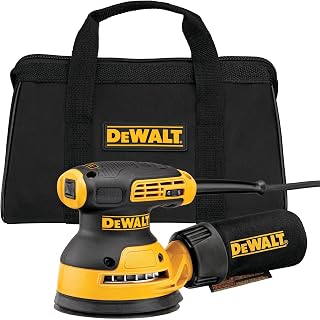
DEWALT’s DWE6423 features a 3-amp motor and a range of 8,000 to 12,000 OPM, with a separate counterweight design to reduce vibration. A dust-sealed switch enhances longevity in dusty auto body environments. It’s a strong choice for professionals who need dependable performance and smoother finishing.
Who it’s best for: pros seeking vibration reduction and reliable performance in varied body work tasks. Limitation: corded operation may restrict maneuverability on high-till areas or scaffolding.
CRAFTSMAN V20 Orbital Sander (Cordless)

Part of the V20 cordless system, this 5-inch sander offers up to 12,000 OPM with cordless convenience. It supports onboard dust collection and connection to a vacuum hose, making it adaptable for mobile or scaffold work where cords aren’t practical.
Who it’s best for: users who need flexibility and the option to work away from outlets. Limitation: cordless power may limit operation time between charges on larger projects.
GALAX PRO 13000OPM Random Orbital Sander

The GALAX PRO model features a 280W motor delivering up to 13,000 OPM with a 125 mm pad and built-in dust collection. It’s designed for smoothing rough surfaces on wood, metal, and plastic, making it a practical option for auto body prep and refinishing tasks involving painted surfaces.
Who it’s best for: users needing a higher-speed sander with integrated dust collection for larger auto body areas. Limitation: the 1.25 mm orbit may be less ideal for ultra-fine finishing compared to micro-erasive options.
Buying Guide: Key Purchase Considerations
- Power and speed range: For auto body prep, a sander with at least 8,000 – 12,000 OPM offers efficient material removal and finer finishes.
- Dust management: Dust collection improves visibility and health. Consider cyclonic dust boxes or integrated bags for easier cleaning.
- Pad size and orbit: A 5-inch pad is standard for body panels. Orbit size around 1 mm to 2 mm balances material removal with finish quality.
- Power source: Corded models provide constant power, while cordless options offer mobility. Battery life matters for large jobs.
- Comfort and control: Ergonomic grip and vibration reduction contribute to longer sessions without fatigue.
- Included accessories: Extra sanding discs, bags, and vacuum adapters add long-term value.
Frequently Asked Questions
- What size sander is best for auto body work?
A 5-inch random orbital sander is most common and versatile for panels, blending, and finishing.
- Should I choose a cordless or corded sander for auto body tasks?
Corded models provide uninterrupted power, while cordless sanders offer mobility for hard-to-reach areas. Choose based on workspace.
- Is dust collection important for auto body sanding?
Yes. It improves visibility and reduces airborne dust, which is particularly useful when working with paints and fillers.
- What is the difference between variable speed and fixed speed sanders?
Variable speed lets you tailor the RPM to the material and task, improving control and finish quality.
- Can I use finishing paper on rough auto body surfaces?
Yes, but start with a coarser grit to remove material, then progress to finer grits for a smooth finish.