Looking for an electric drill paint stirrer to speed up painting projects or resin work? This guide highlights five top options, each best suited for different volumes and viscosities. If you’re a DIYer who frequently mixes latex or epoxy, choose a high-strength, rust-resistant head for heavy batches. For hobbyists handling small jobs, a compact head with easy cleaning can save time. Below are practical picks with clear, objective reasons to help you decide which stirrer attachment fits your drill and project needs.
Summary of selected products:
| Product | Best For | Key Benefit |
|---|---|---|
| Edward Tools Paint Mixer Drill Attachment | Small to medium paint jobs, epoxy, resin | Even flow, quick cleaning |
| Paint Mixer with 4-Blade Helix | 1-5 gallon buckets, thicker mixes | 50% faster mixing; rust-proof |
| 3 Sizes/6 Pack Paint Mixer | Versatile, multiple projects | Three blade types; universal fit |
| Paint Mixer for Drill Small Head | 1-5 gallon; smaller head for tight spaces | Zinc-plated, rust-free |
| Bates Helix Paint Mixer | Epoxy and resin work | Durable, powerful |
Edward Tools Helix Mixer For 3/8” Drills

The Edward Tools paint mixer features an Even Flow design for fast, consistent mixing. It fits 3/8” and larger drills, making it a versatile choice for 1 gallon to resin batches. The head is designed for repeat use with easy-clean surfaces of metal and plastic. Best for small- to medium-volume projects where straightforward cleaning is a plus.
Best for: Home DIYers and workshop users who need reliable, repeatable results with minimal cleanup. Choose this if you frequently mix paints or acrylics in 1-gallon containers and want a simple attachment that works with most drills.
Caution: The design prioritizes consistency over extreme power; for very thick adhesives or heavy resins, consider a higher-torque option.
Paint Mixer With 4-Blade Helix (2.76”)
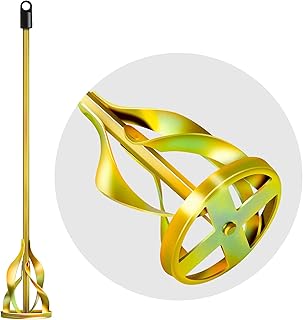
This upgraded mixer uses a four-blade helix head to improve uniformity and boosts the active head diameter to 2.76 inches for greater efficiency. It’s rust-resistant steel with a zinc-plated finish, designed for 1-5 gallon buckets and a range of liquids including paint, resin, epoxy, and slurry. Best for: users needing faster, more thorough mixing for thicker paints or resins.
Better for: Larger batches and heavier materials where speed and consistency matter. Avoid if your drill has a lighter motor and you’re mixing very small quantities.
Three Sizes/6 Pack Drill Mixer Set

This set offers three different blade types designed to fit most drills and handle low- to medium-viscosity materials like paints, epoxy resins, mud, and grout. It’s designed for easy attachment and reusability. Best for: hobbyists who need flexibility across multiple project types and containers.
Better for: Quick swaps between tasks with varied viscosity. Limitations: three blades may require more careful control for very thick materials to avoid splatter.
Paint Mixer For Drill Small Head (1-5 Gallon)

Featuring a zinc-plated, rust-free construction, this small-head mixer focuses on efficiency in tight spaces and smaller buckets. It’s compatible with standard drills and designed for paint, resin, epoxy, and concrete. Best for: users working in confined areas or with 1-gallon to 5-gallon containers who want a compact tool that’s easy to store.
Choose this if you need a compact option that still handles a range of materials without sacrificing performance.
Bates Helix Paint Mixer, 11.8 Inch

The Bates Helix Paint Mixer is designed to accelerate mixing of deep epoxy, latex paints, and other viscous liquids. It is built from durable materials and emphasizes power and reliability for demanding projects. Best for: professionals or serious hobbyists mixing hard-to-homogenize materials.
Limitation: The larger, tougher head may require more drill torque and control; ensure your drill can handle extended use with thicker mixes.
Buying Guide
How to choose the right drill mixer attachment:
- Head size and compatibility: Match the head diameter to your bucket size and your drill’s chuck size (3/8” is common). Larger heads mix more quickly but require more power.
- Material and finish: Rust-resistant steel or zinc-plated heads last longer with resin, epoxy, and paint. Easy-to-clean surfaces save time between projects.
- Viscosity handling: For thick materials (epoxy, resin), prefer four-blade or helix designs with robust attachment points.
- Drill compatibility: Ensure the attachment works with your drill type (corded or cordless) and has a secure connection to prevent wobble.
What matters in practice: balance speed, control, and durability. For frequent heavy mixing, choose a high-torque option with corrosion-resistant materials. For occasional light use, a compact, easy-clean head provides adequate performance with minimal hassle.
FAQ
- What size drill is needed for these stirrers? Most are compatible with standard 3/8” and larger drills, but always check the product’s compatibility notes.
- Are these stirrers suitable for epoxy and resin? Yes; several options are designed for epoxy, resin, and other viscous materials.
- Can I use these in a 1-gallon bucket? Yes, several models are designed for 1-5 gallon buckets and smaller heads for tight spaces.
- Will these rust over time? Some are zinc-plated or rust-resistant; choose stainless or zinc-plated for longer life in resin or epoxy use.
- Is more head diameter always better? Not necessarily; larger heads mix faster but require more power and stability from the drill.