For homeowners seeking a deep, rich ebony tone that protects exterior wood while preserving grain, these top options offer a mix of oil and water-based formulas, single-coat convenience, and durable finishes. This guide focuses on products that suit decks, fences, siding, and outdoor furniture. The best choice depends on project type, indoor/outdoor use, and preferred application method.
Summary table of selected products:
| Product | Best For | Notes |
|---|---|---|
| Varathane Ebony Wood Stain (Water-Based) | Indoor-Outdoor surfaces needing fast drying and easy cleanup | Rich color in 1 coat, low odor |
| Penofin Verde Ebony (Semi-Transparent Oil) | Natural oil look with eco-friendly ingredients | Deep penetration, sustainable oils |
| Varathane Total Control Ebony Gel Stain | Vertical surfaces and tight spaces | Thick, no-drip formula, low odor |
| Osmo One Coat Only Ebony | Low-maintenance exterior projects | Semi-transparent in a single coat |
| Penofin FSSEBGA Ebony Stain & Sealer | Penetrating oil finish with sealing | No extra steps listed |
Varathane Ebony Water-Based Wood Stain — Rich, One-Coat Color
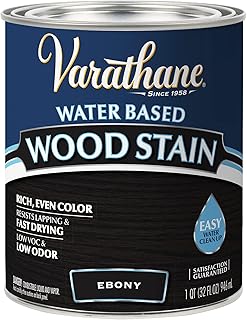
Best for: DIY projects where a fast-drying, low-odor finish is desired on wood surfaces such as furniture, cabinets, doors, and trim. This water-based stain claims rich color in one coat on most surfaces, with low odor and low VOCs, plus the option to deepen color with additional coats. The formula is well-suited for projects that require quick turnaround and easier cleanup. Caution: multiple coats may be needed for deeper ebony depth on very porous woods.
Penofin Verde Ebony Sustainable Wood Finish

Best for: Exterior wood projects where a semi-transparent oil finish with sustainable ingredients is preferred. This Brazilian Rosewood oil-based formula provides deep color while penetrating the wood rather than forming a film. It is suitable for interior/exterior use and emphasizes eco-friendly ingredients. A potential limitation is that oil finishes may require more maintenance over time to preserve color uniformity when exposed to harsh weather.
Varathane Total Control Ebony Gel Stain — Thick, No-Drip Formula

Best for: Projects requiring precision application on vertical or contoured surfaces, such as doors, banisters, and metal or fiberglass substrates. The gel formula is thick, less prone to dripping, and water-based with low odor, making it suitable for indoor use and spaces with limited ventilation. Limitation: gel stains can be less forgiving on highly porous woods compared to liquid stains, potentially requiring more coats for even color.
Osmo One Coat Ebony Exterior Finish

Best for: Exterior wood projects where a single-coat application that preserves grain is desired. Osmo One Coat Only HS Plus Ebony colors and protects in one step, with a microporous finish resistant to water, dirt, weather, and UV exposure. It’s designed to resist cracking, peeling, or flaking. Use this if you want long-term ease of maintenance and minimal reapplication. Limitation: color depth may be less intense than some oil-based ebones in fully open-grain woods.
Penofin FSSEBGA Ebony Stain & Sealer

Best for: Exterior projects that benefit from a penetrating oil finish combined with a sealer, offering color and protection in one step. This product is positioned for users who want a straightforward, no-wipe or back-brushing approach, simplifying application. Limitation: the exact exterior performance may depend on climate, wood species, and maintenance schedule; ensure compatibility with substrate.
Buying Guide: Ebony Semi-Transparent Exterior Stain
- Finish type: Water-based vs oil-based vs gel. Water-based stains dry faster and are easier to clean but may raise grain on some woods. Oil-based or penetrating oil finishes tend to deepen color and provide longer-lasting protection on dense woods. Gel stains reduce drips on vertical surfaces but may require more coats.
- Penetration depth: Semi-transparent finishes emphasize grain while tinting the wood. Consider woods with varying porosity; high-porosity woods may require more coats or a stain booster for even color.
- Durability and protection: Look for UV resistance, water repellency, and mold resistance. Exterior wood benefits from finishes that resist cracking, peeling, and weathering.
- Maintenance needs: Some finishes require re-coating every few years, while others are designed for longer intervals between applications. Consider ease of reapplication and cleanability when choosing a product.
- Application method: Gel stains are forgiving for uneven surfaces and vertical applications; water-based stains are easy cleanup; oils offer deeper color and penetration. Single-coat options reduce labor but may require precise surface prep.
- Environmental considerations: Low-VOC and eco-friendly ingredients help indoor-air quality during application and over time. Choose products with sustainable or non-toxic components when possible.
- Wood type compatibility: Some stains are optimized for specific woods (pine, cedar, redwood, oak, etc.). Verify wood compatibility to achieve the best color consistency.
Frequently Asked Questions
- What’s the difference between semi-transparent and solid stains? Semi-transparent stains tint the wood while preserving natural grain; solid stains provide more color and hide more of the wood’s texture but still allow some grain to show depending on product.
- How many coats are usually needed for ebony stain? Many ebony semi-transparent stains achieve noticeable color in one to two coats, but porous woods may require an additional coat for even color.
- Which finish lasts longest outdoors? Oil-based penetrating finishes and certain high-durability exterior oils tend to last longer in harsh climates, though maintenance intervals vary by climate and wood species.
- Can I apply stain on damp wood? It’s best to apply stains to dry wood after proper surface preparation; damp wood can hinder penetration and lead to uneven color.
- Is low odor important for exterior staining? Yes, low-odor formulas improve comfort during application, especially in enclosed spaces or on projects near living areas.
- Do these products require sanding between coats? Some water-based stains require light sanding between coats for best adhesion; gel and oil-based options often don’t require sanding between coats.