Answering the need for safe, stable drywall access, this guide highlights five top 36–48 inch stilts ideal for Sheetrock installation, painting, and finishing tasks. These selections are best for professional contractors, DIY enthusiasts tackling tall walls, and workers who require steady elevation with knee and foot protection. Each choice emphasizes non-slip design, comfortable strapping, and durable construction to help maintain balance and reduce fatigue during long days on stilts.
| Product | Best For | Key Benefit |
|---|---|---|
| VEVOR 36″-50″ Adjustable Aluminum Drywall Stilts | General drywall installs and painting | Durable aluminum with protective knee pads |
| ToolPro Professional Grade Adjustable Drywall Stilts | Advanced users needing softer straps | Soft strap bands to reduce soreness |
| GypTool Pro 36″ – 48″ Drywall Stilts (Black) | Budget-conscious buyers seeking reliability | Lightweight, simple adjustment |
The following sections compare five well-suited options. Each product is evaluated for wearer comfort, adjustability, stability, and practical limits so you can choose based on your typical projects and environment.
VEVOR 36″-50″ Aluminum Stilts

Features include adjustable height from 36″ to 50″, durable aluminum construction, a non-slip surface, and protective knee pads. Best for general drywall installation, painting, and finishing tasks where extended reach is needed. The stilts offer solid stability and a low-profile fit good for mid-wall work. Caution: ensure proper knee pad fit and secure strap tension before use to prevent knee fatigue or slips during long sessions.
ToolPro Professional Grade Adjustable Drywall Stilts

These stilts cover 36″ to 48″ and feature magnesium construction for reduced weight, an adjustable leg system, and soft strap bands designed to minimize soreness. Best for professional installers who need long days aloft with reduced fatigue and smoother transitions between work zones. Limitation: soft bands may loosen slightly under heavy use; periodic re-tightening improves stability.
GypTool Pro 36″ – 48″ Drywall Stilts (Black)
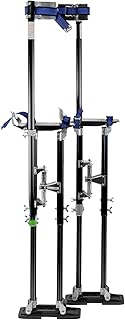
The black variant offers a reliable range from 36″ to 48″ with straightforward adjustments and a focus on value. Best for workers who need a simple, durable option that maintains solid balance. A potential drawback is that non-slip features rely on maintenance of the strap system; inspect straps and buckles regularly to avoid sudden loosening.
GypTool Pro 36″ – 48″ Drywall Stilts (Silver)

The silver model emphasizes a balanced stiffness with a slightly different rigging approach for height adjustments. Best for installers who value clear, visible adjustment marks. Choose this if you want consistent leg alignment across sessions. Limitation: aesthetics should not be mistaken for additional performance—ensure fitment matches your body size and comfort needs.
36-48 Inch Aluminium Stilts Blue

Blue 36–48 inch stilts offer a robust aluminum design with adjustable height, designed for adults working at heights. Best for contractors who value durability and a color-coded system to identify height levels quickly. Caution: ensure the stance width suits your gait to prevent wobbling on narrow work surfaces.
Buying Guide: Key Considerations for Drywall Stilts
What height range do you need? Most 36–48 inch models cover common ceiling and elevated-wall work. If you frequently work on tall scaffolds or multi-story rooms, consider stilts with a higher maximum reach and strong knee protection.
How important is strap comfort? Soft straps reduce leg fatigue but must be kept clean and tight. Look for padded bands, adjustable buckles, and secure attachment points to prevent looseness during movement.
What about weight and balance? Lightweight stilts reduce fatigue but require careful balance; heavier frames offer stability at the cost of maneuverability. Magnesium and aluminum blends are common for a balance of both.
Are safety features enough? Non-slip footplates, knee pads, and reliable ankle support are essential. Check for anti-slip surfaces, buckle reliability, and easy height adjustments to minimize slips.
Do you need quick adjustability? If you switch between tasks quickly, prioritize models with simple, repeatable height settings and clearly marked scales for fast reconfiguration.
Frequently Asked Questions
- What height range is best for drywall work? – Most 36–48 inch stilts cover typical ceiling and wall tasks, offering good reach while maintaining balance.
- Are aluminum stilts safer than magnesium? – Both materials are strong; aluminum is usually more affordable and corrosion-resistant, while magnesium can be lighter. Safety depends on fit and maintenance.
- How do I prevent knee pain when using stilts? – Use proper knee pads, ensure correct strap tension, and take breaks to reduce strain during long sessions.
- Can beginners use drywall stilts? – Yes, with proper practice on flat, clear surfaces before advancing to complex projects. Start with shorter heights if possible.
- What maintenance is required? – Regularly inspect straps, buckles, footplates, and knee pads. Clean surfaces to preserve grip and prevent wear.
- Which model is best for frequent height adjustments? – Models with clear height scales and quick-release buckles save time during project phases requiring frequent changes.
Notes on Selection and Use
These five products are chosen for stability, adjustable range, and practical use in common drywall scenarios. When selecting, consider your body size, the typical work environment, and how often you need to switch heights. The right pair of stilts will balance safety, comfort, and productivity across projects.