Finding the right drywall corner sanding tool is essential for achieving clean, smooth edges in corners, window frames, and door frames. This guide highlights five top options that balance reach, control, and durability. Each pick is suitable for DIYers and professionals working on walls, ceilings, and refinishing projects. Below is a quick comparison to help you choose the best fit for your tasks.
| Product | Best For | Key Benefit |
|---|---|---|
| BFZRDT Drywall Corner Sander (12PCS Discs) | Flat surfaces and tight 90° corners | Semi-circular design with tapered tip for hard-to-reach edges |
| ROLLINGDOG Drywall Corner Sander | Quick corner sanding with two-sided pads | Includes 6 discs, ergonomic handle |
| Drywall-Corner-Sanders (120 Grit) | Standard painters’ poles and precise corners | Feathered edges for near-perfect corners |
| FRIVASTIC Corner Sanding Tool (5 Inch, 240 Grit) | Narrow edges and window/door frames | Replaceable discs, semi-circular design |
| WAL-Board Tools Folding Radial Drywall Sander | Versatile interior corners and large walls | Folding head with 360° rotation for hard-to-reach areas |
BFZRDT Drywall Corner Sander With 12PCS Discs

The BFZRDT drywall corner sander uses a semi-circular design with a tapered tip, enabling sanding on both large flats and tight 90-degree corners. Best for projects that mix flat walls with restrained corner work. The included 12 sanding discs cover grit levels that handle initial shaping through fine finishing. A non-slip handle reduces fatigue during extended sessions. Consider this option if you frequently encounter hard-to-reach edges around doors and window frames.
Best for: DIYers and pros who need reliable corner access and a comfortable grip. Limitations: the set is disc-based, so disc replacement requires consistent grip alignment to avoid gouging near delicate trim.
ROLLINGDOG Drywall Corner Sander

This two-sided corner sander set is designed for quick, even corner work. It comes with six sheets of paper at 80/120/240 grit, making it versatile for initial shaping and finishing. The ergonomic rubber-grip handle helps control and reduces hand fatigue. A good choice for users who want a compact tool that cleanly reaches inside corners without requiring a heavy stance.
Best for: Tools users who value a straightforward two-sided pad for rapid corner work. Caution: the two-sided design may require careful alignment to prevent uneven sanding on sharp edges.
Drywall-Corner-Sanders (120 Grit)

Designed to attach to standard painters’ pole threading, this sander focuses on inner wall and ceiling corners with feathered edges for a clean finish. It’s ideal for those who already own extension poles and want a precise tool capable of smoothing corner lines without gouging adjacent surfaces. It’s best for controlled, detail-focused projects.
Best for: Users who want a feathered finish in tight corners with compatible pole threads. Limitation: 120 grit leaves less aggressive material removal than coarser options, which may require more passes for heavy material buildup.
Drywall Corner Sanding Tool With 12 Discs (9 Inch)

This tool uses an 85-degree micro-acute angle design to better fit non-square corners often found in older homes. The set includes 12 reusable discs and a comfortable grip that reduces fatigue during longer sanding sessions. The micro-acute edges help prevent over-sanding on adjacent wall surfaces, making it a precise option where edge control matters.
Best for: Projects with uneven interior corners where traditional 90-degree tools miss spots. Caution: the 85-degree angle may feel unusual if you’re strictly working with perfectly square corners.
WAL-Board Tools Folding Radial Drywall Sander
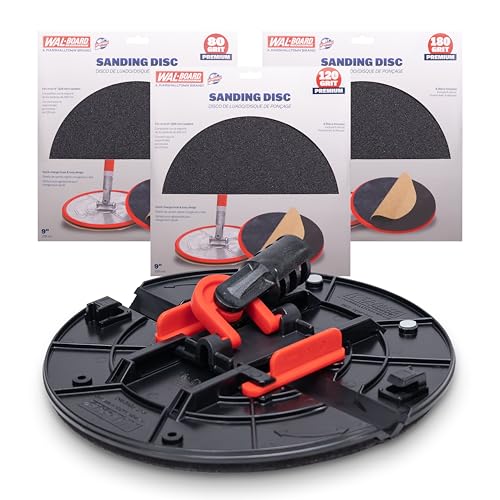
This folding radial sander combines a 9-inch head with a versatile swivel joint for 360-degree reach. The kit includes 18 sanding discs in 80/120/180 grits, addressing a wide range of prep tasks from heavy smoothing to finishing. It’s especially helpful for pros who need a single tool that works across multiple angles and surfaces.
Best for: Professionals seeking a compact, adaptable tool with a broad disc set. Limitation: folding design adds a bit of setup time and may require extra space during use to avoid bending with the flex joints.
Buying Guide: How To Choose The Right Drywall Corner Sander
- What corner access do you typically face? Semi-circular, micro-acute, and folding designs each target different corner shapes and tightness.
- What disc size and grit range do you need? For initial leveling, coarser grits (80–120) are common; for finishing, finer grits (180–240) are preferred.
- Is pole mounting important? If you already own extension poles, selecting a sander with standard threading ensures compatibility and reduces extra purchases.
- How important is comfort? Ergonomic handles and non-slip grips reduce fatigue during long sessions and help maintain control on edge work.
- Will you sand large flat areas as well as corners? Tools with multi-angle heads and additional attachments or discs are better suited for both tasks.
- What is your budget and disc-replacement plan? Reusable discs save costs over time, while replaceable sheets offer maximum versatility for varied materials.
Practical Tips For Best Results
- Start with a coarser grit to remove material quickly, then switch to finer grits for finishing.
- Keep the sanding pad flat against the surface to prevent gouging.
- Test in an inconspicuous corner to verify control and edge alignment before tackling visible edges.
- Regularly inspect discs for wear to prevent heat buildup and scorching on the workpiece.
Frequently Asked Questions
- What is the best sander for inside drywall corners? A corner-sanding tool with a tapered or semi-circular head designed for tight 90° corners often yields the cleanest results.
- Can I use these tools for ceilings? Yes, most models are suitable for both walls and ceilings, especially those with pole-thread compatibility or extended reach.
- Are reusable discs worth it? Reusable and replaceable discs can reduce overall consumable costs while maintaining consistent sanding performance.
- Which grit should I start with on drywall? Begin with 80–120 grit to remove imperfections, then move to 180–240 grit for a smooth finish.
- Is ergonomic design important for long jobs? Yes, a non-slip handle reduces fatigue and helps maintain precise control over long sanding sessions.
- Do I need special tools for old non-square corners? An 85° micro-acute corner sander can better match irregular shapes without over-sanding adjacent surfaces.