Detail hand sanding tools are essential for precise work in tight spaces, models, and fine woodworking. This guide highlights five highly applicable options, explains who each is best for, and shows how to choose the right tool for your project. Whether you’re modeling, finishing small features, or refining curves, these tools help you achieve smooth, accurate surfaces with minimal effort.
Overview of top picks at a glance:
| Product | Best For | Key Benefit | Grit Range |
|---|---|---|---|
| Warmtree Sanding Sticks 50 Pcs | Detail work in tight spaces | Dual-ended, quick grit switch | 120/280 |
| JEJIEFI Sanding Sticks 60PCS | Plastic models and delicate edges | Three shapes per end for precision | 120/280 |
| TOVPADE 54PCS Premium Micro Sander | Micro finishing and hard-to-reach areas | All-in-one kit with 9 grits | 80–800 |
| LVANJI 90PCS Micro Detail Sander Kit | Versatile projects, broad grit range | Updated 3-in-1 mini block | 60–400 |
| DITKOK 11 PCS Contour Sanding Pads | Aspects with curves and irregular shapes | Multiple profiles and radii | Various (contour grips) |
Warmtree Sanding Sticks 50 Pcs
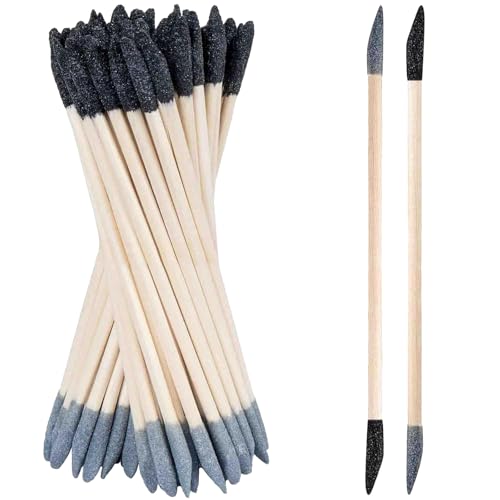
The Warmtree 50-piece set is designed for daily DIY tasks and model detailing. Its dual-ended, matchstick-style sticks offer quick grit changes with 120-grit for rough shaping and 280-grit for finishing. The compact size is ideal for tight corners and small features, such as jewelry finishes or model detailing. This kit is best for hobbyists and hobby crafters who need reliable, readily accessible grit options in a compact form. A potential limitation is that the sticks may wear faster on very hard surfaces, so keep an eye on stick integrity during heavy use.
Hand Sanding Block Set of 16 (VOLSIVE)

The VOLSIVE 16-piece set uses interchangeable foam blocks with hook-and-loop backing for quick sandpaper changes. It’s well-suited for sanding furniture edges, interior curves, and curved surfaces where a rigid tool would struggle. The assortment’s variety supports irregular shapes and small profiles, making it a practical choice for woodworkers and DIY enthusiasts who want flexibility. A caveat is that foam blocks may wear more quickly with aggressive materials, so inspect the backing if you notice loosening in use.
TOVPADE 54PCS Premium Micro Sander
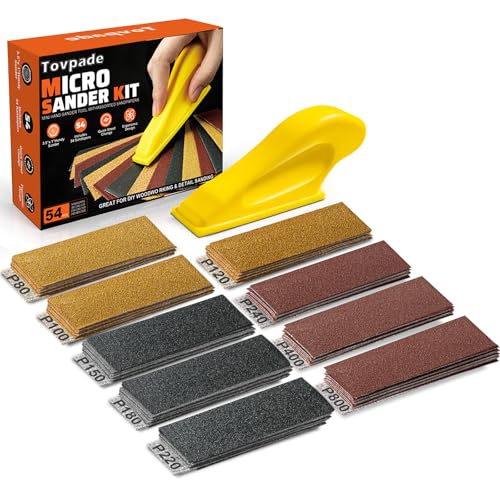
The TOVPADE kit combines a compact block with 54 sandpapers spanning 80 to 800 grit. Its 3-color grit system instantly communicates coarse, medium, and fine grades, reducing sanding errors. The quick-swap hook-and-loop backing speeds up workflows, especially when detailing tight spaces and model components. Best for model builders and small-detail finishing. A limitation is that the kit’s range may be excessive for very simple tasks, where a smaller grit selection would suffice.
LVANJI 90PCS Micro Detail Sander Kit

The LVANJI set provides a broad grit spectrum (60–400) and an ergonomic, lightweight mini sanding block. The nylon- or aluminum oxide-based sandpapers are designed for durability and resilience when sanding wood, plastics, and delicate surfaces. This kit is well-suited for both hobbyists and professionals who need a flexible set that adapts to various shapes and tight spaces. A potential drawback is the sheer number of pieces, which may be overwhelming for simpler tasks.
DITKOK 11 PCS Contour Sanding Pads

DITKOK offers 11 contour-sanding grips with multiple profiles for precise inside angles and curved surfaces. The flexible rubber grips help prevent abrasive slippage and minimize hand fatigue during long sessions. This set is ideal for smoothing beads, flutes, coves, and other rounded features in woodworking and crafts. A caution is to verify that the selected profiles match your project’s geometry, as the variety can be extensive and specific fits may be required for some shapes.
Buying Guide
What should you consider when choosing detail hand sanding tools?
- Grit range: For fine finishing, choose sets offering 80–400+ grit. For shaping and roughing, look for 60–120 grit options. A kit with multiple grits in one package speeds up your workflow.
- Tool form: Double-ended sticks, blocks, and contour grips each excel in different contexts. Consider your typical projects and whether you need reach in tight corners or flat-surfaces sanding.
- Interchangeability: Hook-and-loop backing and interchangeability save time and reduce waste by letting you swap grits quickly.
- Material durability: Look for aluminum oxide or similar durable sheets and sturdy blocks. Durability matters more in hard woods and plastics where wear is high.
- Ergonomics: Lightweight blocks and comfortable grips reduce hand fatigue during long sessions, especially in craft or model work.
- Shape variety: Conical, round, and flat profiles help address edges, concaves, convexes, and grooves. A kit with multiple shapes improves versatility.
- Intended use: Some kits are optimized for plastic models or fine woodworking; match the kit to your primary projects to maximize effectiveness.
FAQ
- What grit should I start with for delicate models? – Start with 120–180 grit for initial smoothing and move to 220–400 for finishing touches, depending on the material.
- Are contour sanding grips better than flat blocks? – Contour grips excel at curved surfaces and inside corners, while flat blocks work well for broad, flat areas.
- Can I use these sanding tools on metal? – Most are designed for wood, plastic, and soft metals; check each product’s recommended materials before use on metal.
- How do I change grits quickly? – Look for hook-and-loop backing or double-ended tools that let you flip or swap abrasives without tools.
- Is a larger set worth it for a hobbyist? – A larger set offers more versatility and reduces the need to buy replacements frequently, but assess whether you need the full range for your typical projects.
- How do I maintain sanding pads to extend life? – Clean or brush away debris after use, store in a dry area, and replace worn grit sheets promptly to prevent surface scratches.