Finding the right dark greyish blue paint depends on your project, budget, and preferred medium. This guide highlights five solid choices across acrylics and model paints, suitable for artists, crafters, and hobbyists seeking durable color with true grey-blue tones. Each option features strong lightfastness, smooth application, and practical considerations for beginners and professionals alike.
The table below compares key aspects to help you decide quickly.
| Product | Best For | Volume | Notable Benefit |
|---|---|---|---|
| Amsterdam Standard Series Acrylic Tube 120ml Greyish Blue 562 | Fine arts, wall-friendly projects | 120 ml | Very high lightfastness; durable acrylic film |
| Amsterdam Standard Series Acrylic Jar 500ml Greyish Blue 562 | Larger murals or extended sessions | 500 ml | Extra-large volume; alkali resistant |
| Liquitex BASICS Acrylic Paint, 118ml Blue Gray | Beginners and budget-conscious projects | 118 ml | Accessible for underpainting and color testing |
| Vallejo AMT-7 Greyish Blue 17ml | Airbrushing and model work | 17 ml | Free-flowing for fine details with eyedropper |
| Vallejo Grey Blue Paint, 17ml | Fine art and mixed media on durable surfaces | 17 ml | Lightfast pigments and smooth coverage |
Amsterdam Standard Series Acrylic Tube 120ml Greyish Blue 562

Brand: Amsterdam. Features include a very high lightfastness with pure, non-fading pigments and an exceptionally durable acrylic resin binding. Alkali resistant and easy to use, making it a strong choice for artists seeking longevity in wall paintings and art pieces. Best for artists prioritizing color permanence and strong film integrity. Caution: large tubes may require careful storage to prevent drying at the cap.
Amsterdam Standard Series Acrylic Jar 500ml Greyish Blue 562

Brand: Amsterdam. This jar offers the same color family as the tube with a larger volume for mural work or long-term projects. Benefits mirror the tube: excellent lightfastness, 100% acrylic resin binding, alkali resistance, and overall ease of use. Choose this if you need a substantial amount of paint without frequent reloading. Limitation: larger quantity may require more storage space and a stable painting setup.
Liquitex BASICS Acrylic Paint, 118ml Blue Gray
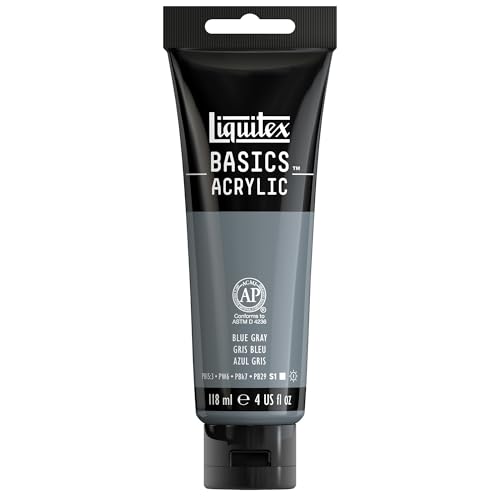
Brand: Liquitex. BASICS are designed for all painters, from beginners to pros. They use high-quality pigments with a lower pigment concentration than professional lines, offering an economical option that remains pigmented and versatile. Useful for underpainting, sketching, and color exploration. Better for budget-conscious artists who still want reliable color accuracy. Caution: not a professional-grade pigment concentration, which may affect saturation in highly detailed work.
Vallejo AMT-7 Greyish Blue 17ml Paint

Brand: Vallejo. Water-based, developed for airbrushing, and packaged in a 17 ml bottle with an eyedropper. Best for model work and smooth coverage with controlled dispensing. Suitable for hobbyists and scale painters who need precise color delivery. Limitation: primarily aimed at airbrushing and model use, which may require thinning for brush work in some applications.
Vallejo Grey Blue Paint, 17ml

Brand: Vallejo. Model color with permanent pigments for fine arts, fully lightfast and opaque. The formulation supports a very smooth, brushstroke-free film and strong adherence on challenging surfaces like metal and plastic. Best for mixed-media projects and durable art on difficult substrates. Caution: may require surface preparation for optimal adhesion on slick surfaces.
Buying Guide
What paint type should I choose for a dark greyish blue project?
Acrylic paints (like Amsterdam and Liquitex BASICS) offer quick drying times, good coverage, and easy cleanup. They are versatile for canvas, walls, and mixed media. For detail work or models, Vallejo options provide thin, precise delivery, especially with airbrush-ready formats.
How to decide between tube vs. jar?
Use tubes for portability and precision during painting sessions or smaller projects. Jars are ideal for large-scale murals or longer-term sessions where you need more paint without frequent reloading.
Which option is best for beginners?
Liquitex BASICS provides a friendly balance of pigment quality and affordability, making it a practical entry point. For best color permanence in art pieces, consider Amsterdam or Vallejo with proven lightfastness in the grey-blue family.
What substrates will affect color performance?
Lightfastness and film durability matter on walls, canvas, metal, and plastic. Alkali resistance helps with wall painting. If you work on metal or plastic, Vallejo and some Amsterdam options offer strong adherence and durability.
How important is lightfastness?
High lightfastness prevents fading over decades, preserving the original tone. This is especially important for wall art, galleries, and archival pieces. All options above emphasize strong color stability in the grey-blue range.
How should I store opened paint?
Seal containers tightly after use and store upright in a cool, dry place. For larger jars, ensure the cap is clean and free of dried paint to prevent seal failure and contamination.
FAQ
- What is the difference between tube and jar acrylics? Tube paints are portable and ideal for painting sessions, while jars provide large-volume coverage for murals.
- Are these paints suitable for wall paintings? Yes, several options are alkali resistant and ready for wall use, especially Amsterdam.
- Are the Vallejo options good for airbrushing? Yes, Vallejo AMT-7 is designed for airbrushing with a dropper bottle for precise dispensing.
- Do these paints require thinning? Liquitex BASICS can be used straight from the bottle, but thinning may improve flow for detailed work.
- Which option is best for beginners on a budget? Liquitex BASICS provides affordability with reliable color quality for learning and experimentation.
- Can I mix these brands together? Mixing brands is generally possible, but test compatibility on a scrap surface to ensure consistent color and texture.