Looking for curved shoe molding that can bend around stairs and columns? This guide highlights flexible quarter round moldings that are easy to install, self-adhesive, and adaptable to curved stairs. It’s ideal for DIY homeowners needing fast updates without costly carpentry. The top picks below are best for projects around curved stairs, wall corners, and around architectural columns.
Quick buyer snapshot: the products here focus on bendable silicone or rubber edge trims with self-adhesive backs, designed to fit curved stair edges, tall columns, and irregular wall edges. They’re well-suited for: renters seeking removable trim, new homeowners tackling quick renovations, and hobbyists who want simple, tool-free installs. The table below compares key product features at a glance.
| Product | Length | Width & Height | Material | Best For |
|---|---|---|---|---|
| Conwang (236”) | 236 inches | 0.6” W x 0.6” H | Flexible crown molding trim, silicone/rubber | Curved stairs, columns, walls |
| Conwang Black (118”) | 118 inches | 0.6” W x 0.6” H | Flexible crown molding trim, silicone/rubber | Smaller curved sections |
| Vannesse (118”) | 118 inches | 0.6” W x 0.6” H | Flexible quarter round, self-adhesive | Curved edges, tight corners |
| VOYLUX White/10–20 ft | 10 or 20 feet | 0.6” W x 0.6” H | Flexible crown molding trim, self-adhesive | Long runs, clean looks |
| URUAST 118” | 118 inches | 0.6” W x 0.6” H | Silicone caulk strip | Blocks moisture, curved surfaces |
Conwang Flexible Quarter Round Molding 236”

Best for: large curved staircases and extended perimeter edges. This long roll provides ample length to cover long stair runs and multiple corners in one piece, reducing seams. The unique winged interior increases flexibility around curved shapes, aiding a smoother finish. Use on smooth surfaces for a strong bond and a seamless look.
Caution: Ensure the surface is clean and dry before applying; adhesion relies on surface smoothness for durability. While highly flexible, very irregular textures may require surface preparation or additional adhesive.
Conwang Flexible Quarter Round 118” Black
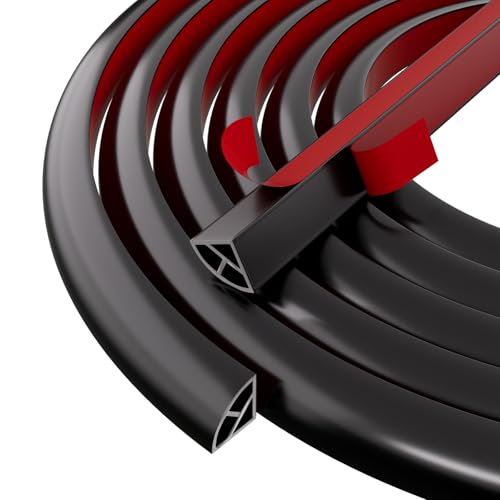
Best for: accenting stair risers and nooks where a dark, low-profile trim is preferred. The smaller length fits shorter runs without gaps, and the black color provides a modern contrast against light stairs. It shares the same bendable design and self-adhesive backing for quick installs.
Caution: Color consistency can vary between batches; confirm color match if combining with existing trim. May show seams on highly textured surfaces.
Vannesse Flexible Quarter Round 118”

Best for: versatile DIY projects around doors, windows, and baths. It’s designed with a strong self-adhesive strip, allowing tool-free installation on most smooth surfaces. The 118” length helps cover mid-size stair sections with fewer seams.
Limitation: While self-adhesive is strong, very dusty or dirty surfaces can reduce bond; clean and dry the area before application for best results.
VOYLUX White Flexible Molding 0.6” x 10ft

Best for: longer stair runs or hallways where a continuous, clean line is desired. The white finish can blend with most baseboards and walls, offering a cohesive look. It is easy to cut to size with standard tools and adheres to smooth surfaces.
Caution: The 0.6 inch width is narrow; heavy-duty use or high traffic areas may require additional edge protection or a second coat of adhesive for extra durability.
VOYLUX White 10Ft Black 0.6”
Best for: projects requiring a compact, versatile trim around curved surfaces with a bold or dark accent. The option for black adds versatility in interior design where contrast is desired. It shares the same bendable, self-adhesive properties for quick installation.
Limitation: Black finishes may show dust more readily; wipe clean to maintain a crisp appearance over time.
URUAST 118 Inch Silicone Caulk Strip

Best for: moisture-prone areas and damp environments. This silicone-based molding blocks dust, moisture, and grease while providing a clean, finished edge around curved stairs and walls. It’s suitable for bathrooms, kitchens, and basements where water exposure is common.
Limitation: Silicone caulk strips may require re-application over time if exposed to heavy cleaning or abrasion; monitor adhesion in high-traffic zones.
Buying Guide: How to Choose the Right Curved Shoe Molding
What length do you need? Measure the outline around curved stairs and walls. Longer rolls reduce seams but require more cutting and alignment patience. For tight corners, shorter lengths ensure better bend accuracy.
Which material works best? Flexible silicone/rubber trim is forgiving around curves and damp areas. Look for a winged interior design that improves flexibility and edge alignment on curved surfaces.
How important is adhesion? Self-adhesive backing simplifies installation. Prepare smooth, clean surfaces, dry completely, and press firmly. For rough textures, consider additional adhesive or primer to improve bond.
Color and finish considerations. White trims blend with most interiors, while black or dark finishes offer contrast and a modern look. Check color consistency across batches if combining multiple rolls.
Durability and maintenance. In high-traffic areas, choose a product with a robust adhesive and a finish that resists scuffs. For bathrooms, silicone-based trims provide better moisture resistance.
FAQ
- Q: Can these trims be installed without tools? A: Most options use self-adhesive backing and can be installed with basic cleaning and pressing, but some cuts may require a utility knife.
- Q: Will these trims fit round or very tight stair curves? A: Yes, the bendable design supports curved stairs, columns, and irregular surfaces, especially those with a winged interior.
- Q: Are there color options beyond white? A: Yes, several products are available in black or dark finishes to match specific design preferences.
- Q: Do I need new baseboards if I install these around stairs? A: Not necessarily; self-adhesive trims can be applied over existing smooth surfaces or baseboards for a refreshed look.
- Q: How long should the adhesive cure before heavy use? A: Allow at least 24 hours for strong initial bonding, and avoid heavy cleaning or moisture exposure during that period.