When choosing concrete paint or sealant for a foundation, look for products that block moisture, resist cracking, and stay flexible with temperature changes. The following picks are suited for basement walls, foundation patches, and below-grade masonry. They help guard against water intrusion while offering durable finishes. This guide highlights five options with clear, buyer-friendly comparisons so you can select what fits your project and climate.
| Product | Best For | Key Benefit |
|---|---|---|
| Tufinein Rubber Liquid Waterproof Sealant | Gutters, basements, and exterior foundations | Flexible rubber coating with rapid film formation and broad temperature tolerance |
| KILZ Basement And Masonry Waterproofing Paint | Basement walls and masonry surfaces | Nanotechnology-based water barrier; interior/exterior use |
| Liquid Rubber Basement And Foundation Repair Sealant (5 Gallon) | Active leaks, foundation repair, basements | High elongation and a complete waterproofing system |
| Hensire White Exterior Wall Paint For Concrete & Masonry | Exterior concrete and masonry surfaces | Strong adhesion and durable finish for brick and concrete exteriors |
| KILZ 1-Part Epoxy Acrylic Concrete & Garage Floor Paint | Concrete floors and basements | Durable epoxy acrylic formula with resistance to wear |
Note: Each product below includes a concise why-to-use section and a caution to help you decide whether it’s the right match for your project.
Tufinein Rubber Liquid Waterproof Sealant

Features include elasticity and extensibility, enabling the coating to cover small gaps and resist substrate deformation. Initial film forms within 2–4 hours, creating a flexible rubber coating for lasting waterproof protection. It withstands wide temperature ranges (-40 °C to 80 °C / -40 °F to 176 °F) and adheres well to multiple surfaces. While it’s a strong moisture barrier, it’s not ideal for walking surfaces due to tackiness after curing. Best for: basements, roofs, gutters, and exterior foundations where a flexible, weather-resistant sealant is needed.
- Best for flexible, long-lasting waterproofing on concrete, metal, and wood surfaces
- Better for non-traffic areas where temporary tackiness is acceptable
- Limitations: Not recommended as a walking surface
KILZ Basement And Masonry Waterproofing Paint
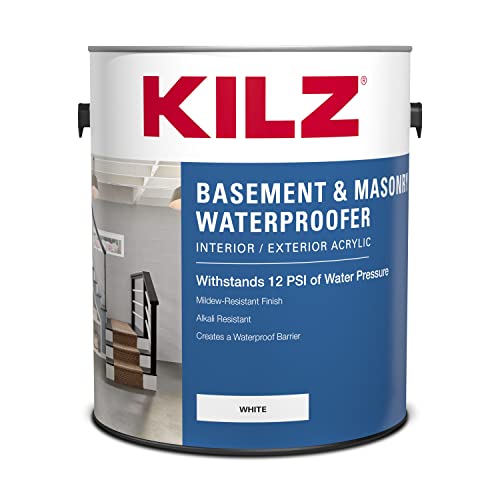
This coating utilizes nanotechnology to create a water barrier and blocks up to 12 PSI of water pressure, helping stop water infiltration on concrete and masonry surfaces. Suitable for both indoor and outdoor use, it’s ideal for protecting basement walls, stucco, brick, and concrete blocks. Not intended for floors or walls with active leaks, and surfaces should be prepped with hydraulic cement for holes prior to painting. Best for: finished or unfinished basement walls and masonry exteriors that require high moisture resistance.
- Best for: moisture-prone basement walls
- Better for: surfaces needing a water-blocking finish without floor application
- Limitations: Not for active leaks where immediate water presents a continuous path
Liquid Rubber Basement And Foundation Repair Sealant (5 Gallon)

This professional-grade sealant delivers a permanent waterproof membrane with up to 900% elongation, designed for basement waterproofing, foundation repair, and other wet environments. It forms a flexible coating that adheres to concrete, masonry, wood, metal, and foundation surfaces. It’s positioned as a complete basement waterproofing system, better than basic paints or sealers at sealing active leaks and moisture. Best for: serious foundation leakage scenarios and DIY projects needing a robust membrane. Caution: proper surface preparation is crucial for optimal adhesion.
- Best for: active leaks and foundational repair
- Better for: long-term waterproofing beyond surface coatings
- Limitations: Requires proper surface prep and curing conditions
KILZ 1-Part Epoxy Acrylic Concrete & Garage Floor Paint

This epoxy acrylic formula resists hot tire pickup, scuffing, cracking, peeling, and fading, providing a durable finish on concrete floors and basements. It’s suitable for indoor and outdoor horizontal surfaces, including basements, garages, porches, driveways, and pool decks. Not recommended for vertical applications or surfaces with hydrostatic pressure or forklift traffic. Best for: concrete floors needing a hard-wearing, low-gloss finish. Choose this if you want a durable, easy-to-clean floor coating.
- Best for: garage and basement concrete floors
- Better for: horizontal surfaces under moderate traffic
- Limitations: Not for vertical surfaces or active water leakage areas
Hensire White Exterior Wall Paint For Concrete & Masonry

Hensire’s exterior wall paint for concrete and masonry emphasizes adhesion and weather resistance. It offers a white finish suitable for exterior brick and concrete, helping to refresh and protect surfaces from moisture and UV exposure. It’s best for above-grade or sheltered exterior applications where a clean, consistent white coat is desired. Caution: color choice may affect heat absorption and surface temperature handling in direct sun.
- Best for: exterior concrete and masonry exteriors that need a clean finish
- Better for: above-grade walls and sheltered exterior areas
- Limitations: Not a dedicated interior waterproofing product
KILZ Basement and Masonry Waterproofing Paint
Note: This entry reinforces a long-lasting moisture barrier with nanotechnology and is valued for both interior and exterior use on foundational surfaces.
Buying Guide: Concrete Paint And Foundation Waterproofing
Key considerations when selecting foundation coatings and paints include substrate type, moisture level, exposure to water pressure, and whether you need interior or exterior coverage. The following questions help clarify the best fit for your project:
- Do you need a flexible sealant or a hard-wearing floor coating? Flexible sealants accommodate movement; epoxy acrylic paints resist wear on floors.
- Is there active water intrusion? Choose products designed for leaking conditions and complete waterproofing systems rather than simple surface coatings.
- What surfaces are you treating? Concrete, masonry, brick, and stucco each respond differently to coatings and sealants; check compatibility.
- Are you working indoors or outdoors? Some products are optimized for interior basements, others for exterior walls or below-grade applications.
- What temperature and weather conditions will occur during curing? Temperature tolerance affects performance and curing time.
Practical Tips For Best Results
- Prepare surfaces by cleaning, drying, and repairing cracks before application.
- Follow manufacturer guidelines on cure times and recoat windows to avoid encapsulating moisture.
- Use primer or hydraulic cement where required for holes or active cracks before coating.
- Test a small area to verify adhesion and finish before full-scale application.
FAQ
- Q: Which product is best for active basement leaks? A: A liquid rubber or waterproofing membrane that forms a flexible seal and adheres well to concrete is typically most effective for active leaks.
- Q: Can I use exterior wall paint indoors? A: Exterior-grade paints are formulated for outdoor exposure; interior use may cause off-gassing or finish issues. Prefer interior-specific products for basements.
- Q: Is a primer necessary before applying waterproofing paint? A: Yes, on rough or uneven surfaces, and for areas with cracks, to improve adhesion and sealant performance.
- Q: Do these products block hydrostatic pressure? A: Some products block low-level moisture transfer; those intended for high hydrostatic pressure may require more robust waterproofing systems.
- Q: Can I paint over a damp surface? A: Most coatings require a dry surface for proper adhesion. Allow thorough drying or address moisture before application.
- Q: How long does curing take in basements? A: Curing times vary by product; follow the manufacturer’s guidance for surface drying and recoat intervals.