Answering the question, these concrete etching stains deliver permanent color with natural variation and durable results. The top picks below are best for concrete floors, countertops, walls, and overlays, with options for beginners and professionals. This guide helps you compare color depth, application methods, and suitability for different projects.
Buyer’s summary table
| Product | Best For | Key Benefit | Limitations |
|---|---|---|---|
| Concrete Acid Stain | Tru Tint by Walttools | Professional floors and countertops | Dark, rich chocolate brown; durable, permanent color | Requires proper application for consistent color |
| Concrete Acid Stain | Vintage Umber 1 Gallon | Natural marbling looks | Permanent chemical reaction creates variegation | Color depends on concrete chemistry |
| Contractors Choice Concrete Acid Stain 1 Gallon Coffee Bean | Deep brown to black tones | Long-lasting translucent color with marbled effects | Sample testing advised for true color result |
| Quikrete Concrete Etching Stain, Olive | Olive-toned accents and texture | One-gallon option for quick projects | Color outcomes vary with concrete |
| Rust-Oleum Quick Prep 3-in-1 Cleaner Degreaser and Etch | Prep and etch in one step | Preps surface for coating; time-saving | Not a color stain itself; used for prep |
Concrete Acid Stain Tru Tint by Walttools — 1 Gallon

Best for: professional-grade color on concrete floors, walls, and countertops. This stain uses a chemical reaction to permanently color concrete, delivering a dark chocolate brown hue that deepens with reaction time. It can be sprayed, brushed, or sponged to create varied effects. The formula is designed for standard and vertical concrete, overlays, and microtoppings to achieve a consistent, durable finish.
Why selected: It offers a high level of durability and permanent color that won’t fade or peel with proper application. The diverse application methods support different project styles, from modern to rustic.
When to avoid: if you need a quick, paint-like finish rather than a chemically reactive stain, this is not a surface paint substitute. Ensure proper ventilation and surface prep for best results.
Concrete Acid Stain Vintage Umber — 1 Gallon
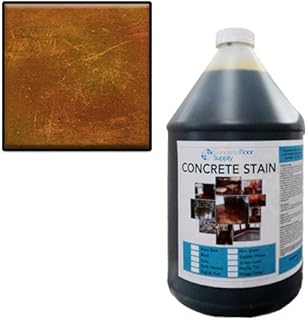
Best for: achieving a natural marbling effect with a timeless umber tone. This acid stain relies on a chemical reaction to permanently color concrete surfaces, delivering variegation that mimics natural stone patterns.
Why selected: It emphasizes a subtle, organic look ideal for living spaces and commercial areas seeking warmth. The permanent color ensures longevity with proper care.
Note: Color variability is expected due to the chemical reaction; testing on a sample slab is recommended before full application.
Contractors Choice Concrete Acid Stain Coffee Bean — 1 Gallon
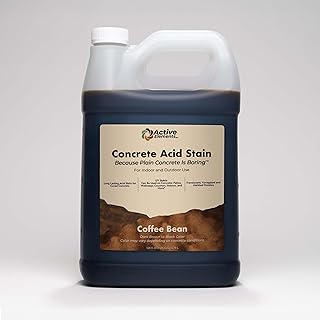
Best for: deep brown to near-black tones with translucent, marbled effects. This stain requires understanding that acid stains react with concrete chemistry to produce color, rather than applying as a paint.
Why selected: It provides a dramatic, durable finish suitable for high-traffic areas and feature pieces. It also includes guidance to perform sample testing to anticipate true color results.
Caution: The color outcome can vary; a test segment is essential to predict the final appearance.
Quikrete Concrete Etching Stain Olive — 1 Gallon

Best for: olive-toned accents that add depth to decorative flooring or overlays. Quikrete offers a straightforward option for projects needing a distinct color that complements earth tones.
Why selected: A practical choice for DIYers seeking predictable, single-step etching stain results with a translucent, marbled look typical of acid stains.
Limitation: The final color can vary with substrate composition; patch testing helps forecast results before large areas are treated.
Rust-Oleum Quick Prep 3-in-1 Cleaner Degreaser and Etch — 1 Gallon
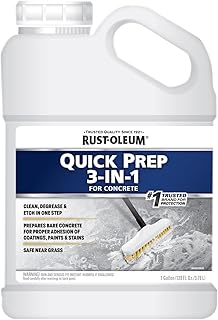
Best for: prepping bare concrete before coating; not a color stain itself. This 3-in-1 formula cleans, degreases, and etches to create a better bonding surface for sealers or coatings.
Why selected: Time-saving one-step prep helps ensure coating adhesion and long-term durability, especially on garage floors, driveways, and patios.
Caution: Do not rely on it for color; it’s a prep product. Follow safety instructions for ventilation and skin protection.
Buying Guide
What is concrete acid stain and how does it work?
Concrete acid stain is a chemical stain that reacts with lime in the concrete to create a permanent, translucent color. The final look is typically variegated, marbled, and natural, not uniform like paint.
Which color families are available?
Color options range from deep browns and olives to earthy ambers. The final shade depends on the concrete’s composition and the stain’s chemical reaction.
How much prep is required?
Prepping typically includes cleaning, degreasing, and sometimes etching with a cleaner or acid-based treatment. Proper prep improves color uniformity and adhesion of sealers or topcoats.
What should I test before full application?
Always perform a color sample on a test panel or inconspicuous area. Acid stain color can vary by slab age, porosity, and moisture content.
Which project types benefit most?
Best for floors, walls, countertops, and decorative overlays where a durable, natural color is desired. Overlays and microtoppings can benefit from acid stains to produce consistent effects across surfaces.
FAQ
- Is concrete acid stain permanent? Yes. It chemically reacts with lime in concrete to create a long-lasting color that won’t peel off when applied correctly.
- Can I use acid stains on new concrete? Yes, but the surface should be properly cured and prepped to ensure consistent color and adhesion.
- Will color vary across the surface? Yes. Natural variance is expected due to the chemical reaction and concrete composition.
- Do I need a sealer after staining? Sealing is often recommended to protect the color and enhance longevity, depending on traffic and exposure.
- Is testing necessary for color accuracy? Yes. Always test on a small area before full project to anticipate the final effect.
- Can these stains be used on vertical surfaces? Some products are formulated for vertical use; check product details and application directions for correct technique.