Looking for color pigment for cement that provides strong coverage, durability, and easy mixing? This guide highlights top cement colorants ideal for concrete, grout, plaster, mortar, and decorative stonework. The selections are suited for DIY enthusiasts, professional builders, and artists seeking weather-resistant, UV-stable color in outdoor or indoor settings. Below, you’ll find five reliable options with practical notes on best uses, limitations, and why each stands out for specific project needs. A quick buyer’s table summarizes key attributes for fast comparison.
| Product | Best For | Key Benefit | Limitation |
|---|---|---|---|
| Concrete Cement Pigment-200g (4 colors) | General concrete coloring; masonry work | Excellent covering power; waterproof and UV resistant | Requires careful ratio mixing |
| 5 Colors Matte Iron Oxide Pigment Powder | Architectural and decorative projects | Ultra-fine dispersion; versatile applications | Matte finish; may require sealer for gloss control |
| Quikrete Concrete Colorant Bottle, Terracotta | Walkway and decorative concrete | US-made; stable color in mixes | Limited color options listed here |
| Sakrete Cement Color (Buff) | Outdoor patios and garden projects | Alkali and UV resistant | Limited product details in listing |
| Quikrete Liquid Cement Color (Charcoal) | Outdoor slabs and moisture-exposed surfaces | Durable color addition; easy to mix | Charcoal shade may require test blends |
Note: All products are designed to mix with cement-based materials. Follow manufacturer instructions for ratios, safety gear, and curing times. For best results, conduct a small test batch before large-scale application and document pigment-to-cement ratios for consistency across projects.
Concrete Cement Pigment-200g In Multi-Color Set

This iron oxide pigment powder is designed for cement and related materials. It emphasizes easy coloring, strong coverage, and weather resistance, making it suitable for concrete, grout, plaster, and decorative masonry. It comes in a 0.33 lb (50 g/2 oz) bottle, with four color options (Black, Red, Blue, Yellow). Best for: homeowners and small contractors needing reliable, even color on bulk mixes or surface treatments. Limitation: mixing guidance requires careful adherence to a 1:25 pigment-to-cement ratio for uniform color outcomes.
5 Colors Matte Iron Oxide Pigment Powder
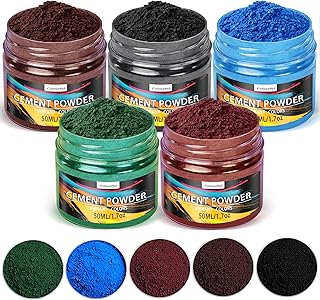
These matte iron oxide pigments are formulated for cement-based materials, including concrete, grout, plaster, and self-leveling floors. The ultra-fine 500 mesh powder promotes precise dispersion, UV resistance, and long indoor/outdoor stability. Best for: decorative architectural projects, terrazzo, and art installations where a durable, neutral-toned color is desired. Limitation: may require multiple test blends to achieve exact hues in complex mixes.
Quikrete Concrete Colorant Bottle, Terracotta, 10 oz

Quikrete’s colorant blends into concrete, mortar, sand, stucco, and related mixes to create lasting color. It’s designed to resist fading, chipping, peeling, and wear. Best for: colored surface projects where a terracotta hue is desired, such as bricks, planters, and decorative walkways. Limitation: color selection in this listing is limited to Terracotta; plan additional hues if multiple tones are needed.
Sakrete Cement Color (Buff)

Buff shade from Sakrete offers alkali and ultraviolet resistance, helping maintain color integrity in outdoor concrete projects. Best for: patios, sidewalks, and exterior masonry where durability and fade resistance matter. Limitation: product page provides limited color data beyond Buff; consider testing with a small batch to confirm the exact shade match to your design.
Quikrete Liquid Cement Color Charcoal
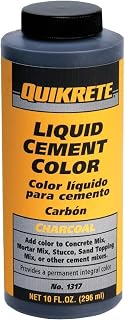
This liquid cement color offers practical color addition to cement mixes, designed for durability in outdoor and indoor settings. Best for: charcoal-toned surfaces, architectural accents, and garden pathways where a deep, lasting shade is desired. Limitation: charcoal shades can appear uneven in certain mixes if not thoroughly stirred; perform an even, controlled mix and test before large deployment.
Buying Guide
What matters most when choosing cement color pigments?
- Color stability and UV resistance: For outdoor projects, choose pigments with proven UV and weather resistance.
- Particle size and dispersion: Ultra-fine pigments mix more evenly, reducing streaks in concrete.
- Compatibility: Ensure the pigment works with your cement type (Portland cement, lime-based mortars, epoxy coatings, etc.).
- Safety and handling: Use gloves and masks when handling powder pigments; follow all mixing instructions.
- Application method: Some products are powders; others are liquids or pre-mixed colors. Choose based on your mixing workflow.
- Shade accuracy: Test blends on scrap material to confirm the final hue before committing to a project.
How to Mix Color Pigments Into Cement
- Calculate pigment amount using the recommended pigment-to-cement ratio (commonly around 1:25).
- Wear protective gear and prepare a clean mixing container.
- Add pigment to dry cement or into a separate water mix as instructed by the product.
- Mix thoroughly to achieve uniform color distribution before adding water or other additives.
- Proceed with your standard concrete, grout, or plaster mixing process.
Practical Tips For Achieving Consistent Color
- Work in batches to minimize shade variations across large projects.
- Note environmental conditions, as temperature and humidity can affect color development.
- Document the pigment-to-cement ratio and batch specifics for repeatability.
- Seal finished surfaces when appropriate to protect color longevity in outdoor settings.
FAQ
- Q: Will these pigments fade in sunlight? A: Most iron oxide pigments offer UV resistance and color stability, though outdoor sealing can further protect color.
- Q: Can I mix multiple colors to create custom shades? A: Yes, many pigments blend well; test blends in small batches first.
- Q: Are these pigments safe for indoor use? A: Many are suitable for indoor applications, but follow product safety data and ventilation guidelines.
- Q: Do I need a sealer after coloring concrete? A: Sealing is recommended for some pigments and outdoor surfaces to prolong color and protect the finish.
- Q: Can I color epoxy or plaster with these pigments? A: Some products are designed for cementitious materials and may work with epoxy or plaster in specific formulations; check each product’s compatibility.
- Q: Is there a recommended ratio for colored concrete? A: Yes, refer to the product’s instructions; a common baseline is pigment-to-cement around 1:25, adjusted for depth of color desired.