Answer: If you’re selecting casing wood trim profiles, choose solid hardwood or sustainable poplar options with authentic finished or unfinished surfaces to fit traditional or modern interiors. This article highlights five well-suited profiles for typical interior doors and windows, with clear guidance on who each is best for and why it stands out. It also covers sizing, installation considerations, and a practical buying guide to compare profiles side by side.
| Product | ||||
|---|---|---|---|---|
| EWCA49 Fluted Casing | Fluted | 5-1/8″ | Poplar ( unfinished ) | Traditional or craftsman doors |
| EWCA16 Colonial Casing (Poplar) | Colonial | 2-1/2″ | Poplar ( unfinished ) | Smaller doorways or narrow trim lines |
| EWCA16 Colonial Casing (Maple) | Colonial | 2-1/2″ | Maple ( unfinished ) | Light, premium hardwood look |
| EWCA46 Fluted Casing | Fluted | 3-1/2″ | Poplar ( unfinished ) | Moderate-wide profiles with texture |
| WM443 Americraft Colonial Casing | Colonial | 3-1/4″ | Alder ( knotty, stain grade ) | Stain-ready, knotty alder character |
EWCA49 Fluted Casing — Unfinished Poplar
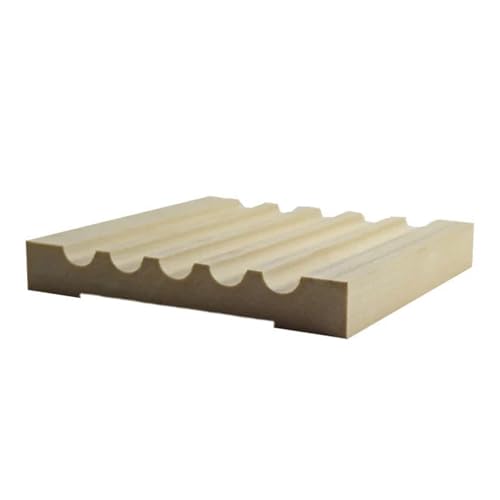
Reference features: Unfinished, natural color may vary; Made in America from sustainable, carbon-neutral wood; 5-1/8 inch wide and 3/4 inch thick. Best for traditional interiors that benefit from bold, ornamental profiles.
Who it’s best for: homeowners or builders seeking a classic, fluted door casing with a substantial presence and American-made wood. Why selected: The wide profile and fluted texture create strong architectural lines suitable for traditional craftsman or colonial aesthetics.
Cautions: Because it’s unfinished, final color will vary; plan for stain or paint consistency across pieces. Avoid if you need pre-finished color matching.
EWCA16 Colonial Casing — North American Poplar

Reference features: Colonial casing, 2-1/2″ wide, unfinished solid hardwood. Natural color may vary; Made in America from solid natural hardwood.
Best for: smaller door frames or rooms where a refined colonial profile is desired without overwhelming proportions. Why: The 2-1/2″ width gives a balanced look for standard doors while offering a clear, classic silhouette.
Limitation: Slight color variation is expected due to unfinished surface and natural wood variation; factor in final finish decisions early.
EWCA16 Colonial Casing — Maple Finish

Reference features: Maple, 2-1/2″ wide, 3/4″ thick; Unfinished solid hardwood; Made in America from solid natural hardwood.
Best for: rooms calling for a lighter, premium hardwood with a smooth grain. Why: Maple offers a subtle, refined look and a stable base for staining or sealing. Caution: Maple can darken with exposure to light; test stain compatibility.
EWCA46 Fluted Casing — Poplar

Reference features: Unfinished poplar, carbon-neutral wood, 3-1/2″ wide by 3/4″ thick; Made in America from sustainable wood.
Best for: broader door openings where a more pronounced profile is desirable, or for matching other wide trim elements. Why: The wider profile provides an accent edge without overpowering the doorway. Caution: Ensure compatibility with existing casing thickness to avoid gaps.
WM443 Americraft Colonial Casing — Alder

Reference features: Solid hardwood moulding; 3-1/4″ width; 96″ length; Stain-grade knotty alder; FAS grade wood available.
Best for: homeowners seeking a bold colonial look with visible character knots for rustic or traditional interiors. Why: Alder with knotty character adds warmth and depth, ideal for stained finishes. Caution: Knotty alder can exhibit more natural variation; plan for consistent staining across pieces.
Buying Guide: Key Purchases For Casing Wood Trim Profiles
- Profile and scale: Match the casing width to door size and wall proportion. Narrow doors benefit from 2-1/2″ profiles; wider openings respond well to 3-1/2″ or larger.
- Material choice: Unfinished solid hardwood (poplar, maple, alder) is versatile for staining or painting. Poplar is budget-friendly and sustainable; maple offers a smooth grain; alder provides character for stain-rich finishes.
- Finish decisions: Unfinished trim requires staining or painting. Pre-finished options save time but limit color flexibility. Consider uniform finish across all trim in a room for consistency.
- Origin and sustainability: American-made pieces support local mills and carbon-neutral wood supply. Check for solid wood construction vs. composite cores for durability.
- Installation considerations: Confirm thickness (commonly 3/4″) and ensure proper nailing surfaces. Some profiles include fluting or beading that may affect fit around corners and frames.
- Profile matching: If replacing existing casing, replicate the current profile or choose a complementary style to maintain architectural coherence.
- Finish durability: Unfinished wood may need sealing, especially in high-traffic areas or spaces with humidity. Plan for multiple coats in such environments.
Frequently Asked Questions
- What does “fluted” mean in casing profiles? Answer: Fluted casing features vertical channels or grooves that add texture and a classical look to trim work.
- Which casing width is best for standard doors?Answer: 2-1/2″ to 3-1/4″ is common for standard interior doors, providing a balanced frame without overpowering the door.
- Should I choose maple or poplar for unfinished trim?Answer: Maple offers a smooth, premium feel and uniform grain; poplar is more affordable and widely available, with good staining options.
- Is unfinished wood suitable for bathrooms or kitchens?Answer: Unfinished wood can be less moisture-resistant; use proper sealing and maintenance, or choose pre-finished or sealed options for high-humidity areas.
- How important is profile consistency across a room?Answer: Very important for visual cohesion; mixing profiles can appear disjointed unless used deliberately as a design feature.
- Can these casings be cut to length?Answer: Yes, all profiles can be cut to required lengths; plan for waste and cut along the grain for cleaner edges.