Looking for camo paint for plastic models, dioramas, or hunting gear replicas? This guide highlights top options that adhere well to plastic, give non-reflective finishes, and blend with natural tones. It’s ideal for hobbyists painting aircraft, military vehicles, or concealment gear. The selections below aim to balance color authenticity, durability, and user-friendliness. Each product is assessed for who benefits most, along with clear pros and cautions to help you choose confidently.
| Product | Best For | Finish Type | Notes |
|---|---|---|---|
| Micro-Mark Ground Camo Acrylic Set | Modelers seeking authentic USAF camo hues | Acrylic, smooth | Made in USA, 9 colors |
| Rust-Oleum Ultra Cover 2X Camouflage (Khaki, Army Green) | Spray-can users needing quick, broad coverage | Non-reflective spray | 12 oz cans, exterior/interior |
| Krylon ColorMaxx Italian Olive | General camouflage projects on plastic | Satin spray | Versatile, broad use |
| Arcturus Camo Face Paint Sticks | On-the-go camo for soft targets or skin-safe layering | Stick format | 6 colors, water resistant |
Micro-Mark USAF Ground Camo Acrylic Paint Set

This 9-color acrylic set targets authentic USAF ground camouflage hues across aircraft, military vehicles, and dioramas from the 1950s to modern times. The acrylic formula is designed for plastic, wood, metal, and similar modeling surfaces, delivering a smooth and durable finish. Ideal for hobbyists who prefer a water-based paint with consistent color coverage and easy clean-up. Best for modelers prioritizing USAF-accurate tones and domestic production for reliable color control.
- Best for hobbyists who want authentic USAF camo hues.
- Better for precision airbrush or brush application on plastic surfaces.
- A caution: Acrylics can lift on flexible plastics if not properly primed.
Rust-Oleum Ultra Cover 2X Camouflage Khaki Spray Paint

Rust-Oleum’s Camouflage Khaki spray is designed for quick, broad coverage with a non-reflective, ultra-flat finish. It is suitable for metal, wood, and plastic, making it a solid choice for hunting blinds, tree stands, boats, and gear that must blend with natural terrain. The paint dries to the touch in about 20 minutes and can cover up to 24 square feet per can. Best for projects needing a large-area camo coat without fine detail work.
- Best for large-scale camo coverage and exterior projects.
- Better for spray-can users who want a quick, uniform finish.
- A caution: Non-reflective finish may obscure fine texture on small models.
Rust-Oleum Ultra Cover 2X Camouflage Army Green

This Army Green variant shares the same Ultra Cover 2X formula, delivering solid hiding power and good coverage on metal, wood, and plastic. It’s designed for exterior or interior use with an ultra-flat, non-reflective appearance. Perfect for nature blinds or equipment that must disappear into woodland backgrounds. Dries to touch in 20 minutes and covers similar square footage as the Khaki variant. Best for users who want a subtle, natural green tone for larger items.
- Best for green-toned camouflage that matches foliage.
- Better for larger outdoor setups or vehicle camouflage in woodland settings.
- A caution: Thick coats can obscure fine surface details on small parts.
Krylon ColorMaxx Italian Olive
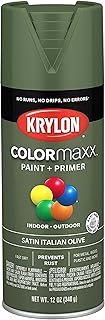
Krylon ColorMaxx Italian Olive offers a versatile satin finish suitable for a wide range of camouflage needs. While not a dedicated camo set, Italian Olive provides a realistic base or mid-tone color that blends well with natural greens and browns. This option is convenient for general camouflage projects on plastic models or dioramas requiring a durable, easy-to-spray finish. Best for those who want a reliable all-purpose olive tone rather than a dedicated camo palette.
- Best for general camouflage accents on plastic surfaces.
- Better for hobbyists who prefer a satin spray with easy application.
- A caution: Single-color usage may require additional complementary colors for authentic camo patterns.
<a href="https://www.amazon.com/sspa/click?ie=UTF8&spc=MTo3MTA1OTU1MDIwOTI3NTIxOjE3ODkyMDQ5Mjg6c3Bfc2VhcmNoX3RoZW1hdGljX2J0ZjozMDAwOTI3MzY5NDg1MDI6OjE6Og&url=%2FArcturus-Camouflage-Double-Sided-Woodland-Paintball%2Fdp%2FB00M07UMLI%2Fref%3Dsxbs_pa_sp_search_thematic_btf_sspa%3Fcontent-id%3Damzn1.sym.230701df-77c6-4675-b11d-39cf91b8bb1b%253Aamzn1.sym.230701df-77c6-4675-b11d-39cf91b8bb1b%26cv_ct_cxDcamo%2Bpaint%2Bfor%2Bplastic%26keywords%3Dcamo%2Bpaint%2Bfor%2Bplastic%26pd_rd_i%3DB00M07UMLI%26pd_rd_r%3D6368d935-44b3-4fa5-85e8-f986cdfaddfc%26pd_rd_w%3Dw0IFP%26pd_rd_wg%3DI46L1%26pf_rd_p%3D230701df-77c6-4675-b11d-39cf91b8bb1b%26pf_rd_r%3DJ0309A9VPW73P3TSVGMT%26qid%3D1789204928%26sbo%3DRZvfv%252F%252FHxDF%252BO5021pAnSA%253D%253D%26sr%3D1-2-2111c337-e22b-460d-97fe-5be1c77b95e4-spons%26aref%3DTYtcD6LBZS%26sp_csd%3Dd2lkZ2V0TmFtZT1zcF9zZWFyY2hfdGhlbWF0aWNfYnRm%26psc%3D1&aref=TYtcD6LBZS?tag=magpainting-20
Arcturus Camouflage Face Paint Sticks present a portable option for quick camo layering in field scenarios or tactical-style setups. The kit includes six colors in double-sided tubes, designed to be sweat- and water-resistant for hunting, airsoft, and paintball use. While primarily aimed at facial concealment, the earthy tones can be applied to plastic surfaces for light camo detailing or edge highlighting. Best for on-the-go touch-ups or layered concealment. A limitation: not a dedicated plastic paint, so coverage on models may be less uniform than dedicated paints.
- Best for portable, field-ready camo on flexible targets.
- Better for subtle, multi-layered texture rather than full-coverage camo patterns.
- A caution: May require a top-coat for durability on plastics in some setups.
Buying Guide: How To Choose Camouflage Paint For Plastic
What finish suit my project?
Acrylic paints provide precise control and easy cleanup, ideal for detailed plastic models. Sprays offer fast, even coverage for larger surfaces or vehicles, but require masking for clean edges. For dioramas, a mix of base coats (spray) and detail paints (acrylics) often yields the most realistic camo.
Which colors matter for terrain?
Identify the terrain you’re simulating: woodland greens and olive tones for forested areas; khaki and beige for desert or sun-bleached scenes; darker greens or grays for urban camouflage. Many sets include complementary shades to recreate typical camo patterns across military colors.
Is set vs single can better?
A set is convenient for authentic camo schemes with multiple colors. A single color can be useful for base-coating or matching specific tones, especially when you only need a base olive or earth tone.
Durability and surface adhesion
Look for paints formulated to adhere to plastic surfaces without heavy priming. Water-based acrylics generally offer good adhesion with light sanding or priming. Spray paints may require caution with small parts to prevent drips or over-spray on fine details.
Application tips
Test colors on a scrap piece of the same plastic before applying to your model. Use primer if needed to improve adhesion and color fidelity. For camo patterns, consider masking or freehand strokes to build layers and texture that mimic real camouflage patterns.
Maintenance and cleanup
Acrylics rinse with water; sprays require appropriate solvents or adherents per product instructions. After painting, seal with a clear coat to protect the camo finish and enhance durability against handling.
Frequently Asked Questions
- What is the best paint for camo on plastic models? Acrylic paints are ideal for detailed camo work and touch-ups, while sprays are better for large surfaces or quick coverage.
- Do camo paints affect plastic compatibility? Most modern acrylics and sprays are designed for plastic, but always test on a hidden area and consider a primer if your surface is glossy or prone to chipping.
- Can I mix camo colors from different brands? Yes, but ensure compatibility. Allow adequate drying time between layers and seal with a compatible top coat.
- How do I achieve a realistic camo pattern? Start with a base coat, add several mid-tones, and finish with darker accents. Use masking for sharp edges or freehand for organic shapes.
- Should I seal camo paint? Yes, a clear top coat protects the finish and extends durability, especially on handling-heavy dioramas and models.
- What surface preparation is needed? Clean the plastic, lightly sand if necessary, and apply a primer when recommended by the paint manufacturer.