For DIYers and professional painters alike, achieving sharp, straight paint edges without taping is the gold standard. The right edge painting tool reduces bleed, speeds setup, and delivers pro-grade lines on walls and ceilings. Below are five top options, each chosen for precision, ease of use, and edge-control performance. The buyer profiles help you pick the best tool for your project: DIY homeowners tackling quick rooms, semi-professional painters refinishing spaces, or pros needing versatile, long-reach solutions.
| Product | Best For | Why It Stands Out |
|---|---|---|
| 12-Inch Paint Edger & Trim Guard (Stainless Steel) | Those who want fast, tape-free ceilings and baseboards | Rigid stainless steel blade delivers straight lines with less bleed-through; ergonomic ABS handle reduces fatigue |
| 12 Inch Painter’s Trim Guard & Paint Edger Tool (Yellow) | Budget-friendly, versatile edging for walls and ceilings | Compact 12-inch design with easy handling and simple cleanup; durable plastic body resists paint buildup |
| Paint Edger Trimmer with Replacement Pads | All-in-one edge set with replacement pads | Includes pads and replacement-pod style design for quick pad changes; compatible with latex and oil-based paints |
| Paint Edger Tool With 74″ Adjustable Rod | High ceilings and hard-to-reach areas | 34-74 inch extendable pole with replaceable pads for crisp lines from a distance |
| RSL43 Paint Edge Trimmer Plus Two Pads (BANCOO Store) | Edge work around ceilings, baseboards, and moldings | Guide wheels and rotatable handle for flexible control; dense bristles for smooth film |
12-Inch Paint Edger & Trim Guard, Stainless Steel Straight Edge Tool

This edger uses a rigid stainless steel blade to produce crisp, straight lines along ceilings and trim. It reduces bleed-through compared with freehand painting, especially on smooth, non-textured surfaces. The ABS handle is light yet sturdy, aiming to minimize hand fatigue during longer jobs. Best for DIYers who want pro-like lines quickly and without taping. A limitation is that performance may decrease on highly textured surfaces where tape-free precision is harder to maintain.
Who it’s best for
- DIY homeowners seeking fast, clean edges without tape
- Projects with smooth walls and ceilings where straight lines matter most
Why selected
- Straight, control-oriented design
- Time-saving by eliminating tape prep
- Pro-grade line quality on non-textured surfaces
Caution
Not ideal for heavy texture; textured edges may require a different tool or light touch to maintain sharp lines.
12 Inch Painter’s Trim Guard & Paint Edger Tool, Yellow

The Qyueyue 12-inch edger emphasizes ergonomic handling and easy cleanup. Its durable plastic construction supports a versatile range of applications for walls and ceilings, making it suitable for both DIYers and professionals who want a budget-friendly option without sacrificing edge control. Slight drawbacks include potential wear on the plastic body with heavy, frequent use and less resistance to heavy texture than metal-edged tools.
Who it’s best for
- DIY enthusiasts and professionals seeking a balance of price and performance
- Projects with smooth to lightly textured surfaces
Why selected
- Ergonomic and easy to handle
- Compact 12-inch size covers large areas efficiently
- Simple cleanup and storage
Caution
Plastic construction may show wear with frequent heavy-duty use; ensure pad replacement is timely to maintain precision.
Paint Edger Trimmer with Replacement Pads

This edger set includes replacement pads and a flexible plastic frame that supports effective edge cuts along ceilings, baseboards, and switch plates. The pads are designed to absorb paint evenly, helping to achieve a smooth finish. It works with both latex and oil-based paints, offering versatility for various projects. A practical limitation is that pad life depends on paint type and application pressure; replacements are quick but require ongoing maintenance for best results.
Who it’s best for
- Projects requiring a complete edging kit with ready-to-use pads
- Home improvement tasks involving multiple edge areas in one session
Why selected
- All-in-one tool with replacement pads
- Compatibility with common paint types
- Easy pad replacement process
Caution
Plastic frame may wear faster under heavy use; monitor pad condition to maintain edge sharpness.
Paint Edger Tool For Walls & Ceilings, 74″ Rod

This professional edge-cutting tool features a 34-74 inch adjustable pole to reach high walls and ceilings, with two replaceable painter pads for clean lines along edges and corners. The long pole reduces ladder use, while the ergonomic grip mitigates fatigue. Best for tackling extensive rooms or vaulted ceilings. A trade-off is that longer reach tools can be heavier and harder to maneuver in tight spaces.
Who it’s best for
- Pros and DIYers working on tall walls or ceilings
- Projects requiring long reach without ladders
Why selected
- Adjustable length for versatile reach
- Two replaceable pads for extended use
- Efficient edge control across large areas
Caution
May be bulky in tight corners; use smaller tools for precision near obstacles.
RSL43 Paint Edge Trimmer Plus Two Pads
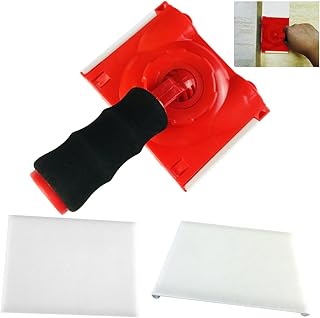
The BANCOO Store edge trimmer emphasizes guide wheels for precise lines around ceilings, baseboards, and moldings. The rotatable handle supports left, right, up, and down adjustments, enabling customized control for awkward angles. The tool includes a dense bristle pad for high paint absorption and a smooth finish. Best for users who need flexibility in edge orientation and consistent coverage. A potential limitation is the need to lock the handle to prevent rotation during application.
Who it’s best for
- Painters who require adjustable angles and robust edge control
- Projects with tight corners and moldings
Why selected
- Rotatable handle for versatile positioning
- Guide wheels promote stable, sharp lines
- High absorption bristles for even paint films
Caution
Ensure the handle is securely locked before use to avoid unwanted rotation during edges.
Buying Guide: Edge Painting Tool Essentials
What to consider before buying
- Surface type: Smooth, lightly textured, or heavily textured surfaces affect edge crispness. Metal blades typically perform better on smooth surfaces; plastic bodies can be lighter but may wear on rough textures.
- Reach: Do you need a long pole for high ceilings or a compact tool for tight spaces? Adjustable rods add flexibility but can add weight.
- Pad design and replacement: Reusable pads save time; replaceable pads reduce long-term costs and maintain consistency across rooms.
- Ergonomics: A comfortable grip reduces fatigue during long sessions; consider weigh and balance for extended use.
- Maintenance: Tools with easy cleanup and minimal paint buildup save time between rooms.
Practical usage tips
- Prep surfaces by removing loose paint and smoothing edges for best results.
- Keep a light touch to avoid pressing excess paint into corners; let the pad do the work.
- Test on a small area first to gauge bleed and line sharpness before proceeding room-wide.
Edge tool vs. traditional tape
- Edge tools reduce prep time by skipping tape application and removal, but may require practice to master consistent lines.
- For intricate corners, a combination approach using a trim guard plus a fine brush can yield optimal results.
FAQ
- Why use an edge painting tool instead of tape?
– It saves time by eliminating taping steps and can produce crisper lines on smooth surfaces. - Can these tools work with both latex and oil-based paints?
– Yes, many models are designed to handle both paint types; check the pad material for compatibility. - What surfaces are best suited for edge edgers?
– Smooth or lightly textured walls and ceilings, where a firm guide blade can produce clean lines. - Do I need replacement pads?
– Replacement pads extend the tool’s life and help maintain consistent edge quality as pads wear. - Is a longer pole necessary for all projects?
– Not for small rooms; use shorter models for precision. Long poles help with tall ceilings and hard-to-reach areas.