Answer: For basement walls and foundations, choose elastomeric liquid rubber coatings or specialized masonry sealants that form flexible, long-lasting barriers against moisture. This guide highlights five top options and who they suit best, helping you pick the right product for below-ground walls, poured foundations, or block interiors. Ideal buyers include DIY homeowners sealing small leaks, renovators protecting basements, and professionals sealing large basement projects.
| Product | Best For | Key Benefit |
|---|---|---|
| Ames Block & Wall Liquid Rubber (1 Gal) | Small to mid-sized basements | Good adhesion and elasticity |
| KILZ Basement and Masonry Waterproofing Paint | Indoor/outdoor masonry walls | Nanotech water barrier |
| Ames Block & Wall Liquid Rubber (5 Gal) | Larger basement areas | Higher coverage and durability |
| TUFINEIN Rubber Sealant (53 oz) | Cracks, gaps, multi-surface | Flexible, fast-curing seal |
| Ames Blue Max Waterproofer (1 Gal) | Below-grade foundations | Very high elongation, robust protection |
The products below are organized to help you compare application type, surface compatibility, and practical limitations. Each entry notes who should consider the product, why it’s selected for that use, and a small caution to keep expectations realistic.
Ames Block & Wall Liquid Rubber Waterproofer – 1 Gal
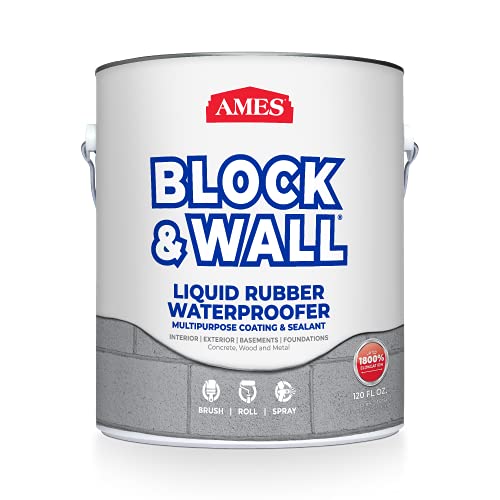
Ames Block & Wall Liquid Rubber Waterproofer is a thick elastomeric coating designed for concrete walls, cinder block, and similar surfaces. It provides flexible, long-lasting moisture resistance and is suitable for basement walls with minor surface irregularities. Best for DIY projects where a simple brush or roller application is desired. Data notes: available in white; weight about 9.25 lb. Limitation: not a rapid-drying solution for very damp or actively leaking walls.
KILZ Basement and Masonry Waterproofing Paint
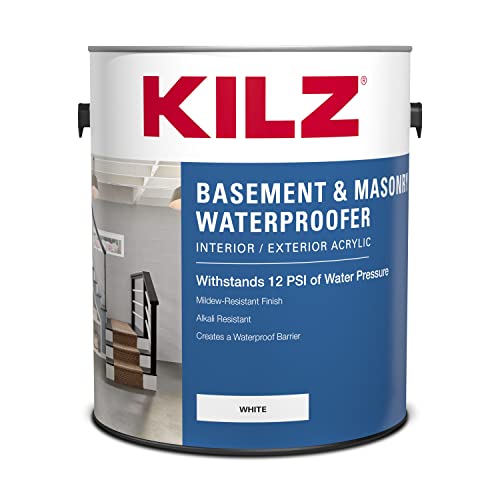
Best for interior or exterior masonry walls, including concrete, brick, and cinder blocks. The nanotechnology-driven formula creates a protective water barrier that can resist up to 12 PSI of water pressure, helping prevent infiltration. Not recommended for floors or walls with active leaks before patching. Ideal for basements with stable, non-active seepage and for those seeking a decorative finish alongside moisture protection.
Ames Block & Wall Liquid Rubber Waterproofer (5 Gal)

Five-gallon coverage suits larger basements or multiple wall sections. This product shares the same elastomeric chemistry as the 1 Gal version and adds more durability and surface-fill capability, including the ability to fill cracks up to ⅛ inch. Best for contractors and serious DIYers tackling bigger projects. Caution: heavier container means more labor for mixing and handling.
TUFINEIN Rubber Liquid Waterproof Sealant

A flexible, quick-drying sealant designed to cover gaps and small cracks. Its elastic film maintains adhesion across varying temperatures and surfaces, making it suitable for basement walls and other below-grade structures. Best for homeowners who need a versatile sealant for multiple surfaces such as concrete, metal, or wood. Limitation: not a surface that will bear foot traffic once cured; not ideal for walking surfaces due to tackiness when cured.
Ames Blue Max White Liquid Rubber Waterproofer

Blue Max White offers high elasticity and strong adhesion, designed for foundation waterproofing both below and above grade. It can be applied to concrete, wood, metal, and more, with a 900% elongation that helps resist cracking and peeling. Best for basements and insulated concrete foundations where movement is likely. Caution: heavier finish may require multiple coats for full coverage in porous surfaces.
Ames BMX5RG Blue MAX Waterproofer (5 Gal)

Durable elastomeric membrane with 1200% elongation, suitable for above- and below-grade basements and foundations. This larger pack is intended for extensive basement projects, ICFs, or underlayment scenarios. Best for contractors or homeowners planning to seal larger areas with a long-lasting, flexible barrier. Limitation: heavier and harder to maneuver than smaller containers.
Buying Guide: How To Choose Basement Wall Waterproofing coatings
- Surface assessment: Identify concrete, block, or stucco surfaces. Some products are best for masonry walls, while others work well on a variety of substrates.
- Active leaks: For active leaks, patch with hydraulic cement first or choose products formulated for crack bridging before sealing.
- Elasticity vs. barrier: Elastomeric coatings offer flexibility to accommodate movement. Barrier-based paints provide a hard, protective shell but may crack if the substrate shifts.
- Drying time and coverage: Consider curing times and the number of coats required to achieve full coverage on large walls.
- Indoor vs. outdoor: Indoor-waterproof coatings should limit odors and VOCs. Outdoor or below-grade surfaces may demand more durable finishes that resist moisture and soil pressure.
- Application method: Select a product compatible with your preferred method—brush, roller, or spray—and ensure you have proper ventilation if applying indoors.
- Cautionary notes: Some sealants are not suitable for floors or active leaks; verify use-cases on product labels to match your project needs.
FAQ
- What is the best coating for basements with minor dampness?
- Are elastomeric coatings suitable for cinder block walls?
- Can I use waterproofing paint on exterior basement walls?
- Do I need to differe between a primer and a waterproofer?
- How long should a waterproofing coating cure before staining or finishing?
- Is a larger 5-gallon container worth it for a small basement project?