Looking for baseboard molding that stands up to bathroom moisture, is easy to install, and enhances your decor? The best baseboard trim for bathrooms combines waterproof or moisture‑resistant PVC or vinyl with a self‑adhesive backing for quick DIY upgrades. This guide highlights five strong picks, explains who each is best for, and shows how to install them for a clean finish.
| Product | Width × Length | Material | Best For |
|---|---|---|---|
| Duzzy Flexible Baseboard Molding Trim (4″ × 20 ft) | 4″ × 20 ft | Vinyl | Small to medium bathrooms; DIY quick installs |
| Vinyl Wall Base Baseboard Molding Trim (4″ × 20 ft) | 4″ × 20 ft | Vinyl | Moist environments; budget-friendly projects |
| Kikerike Vinyl Baseboard Molding Trim (4″ × 20 ft, White) | 4″ × 20 ft | PVC | Bathrooms, kitchens, damp spaces |
| Nayotaa Self-Adhesive Flexible Baseboard Molding Trim (20 ft) | Typically 4″ or 5″ width options; 20 ft length | PVC Vinyl | Curved walls or uneven floors; quick covers |
| YYGCL Flexible Baseboard Molding Trim (3″ × 20 ft, White) | 3″ × 20 ft | Vinyl/Rubber mix | Small channels and tight spaces; flexible corners |
Duzzy Flexible Baseboard Molding Trim — 4 Inch

Best for: Small to medium bathrooms seeking fast, no‑fuss installation. The 0.1 inch thick vinyl trim with a self‑adhesive backing provides a snug fit and wall protection, while a toe design helps cover gaps between wall and floor. Choose this if you want a quick upgrade without tools.
Why selected: It’s flexible, durable, and widely applicable to smooth surfaces like tile or lacquered walls. The peel‑and‑stick method reduces installation time, making it ideal for renters or DIYers.
Caution: For textured walls or very cold spaces, heating the adhesive slightly with a hair dryer can improve initial bond strength.
Vinyl Wall Base Baseboard Molding Trim — 4″ x 20 ft

Best for: Dry–bathrooms and kitchens where a simple, seamless look is desired. This 4″ wide vinyl baseboard with a strong self‑adhesive backing installs easily and covers minor wall inconsistencies.
Why selected: The design is simple and tidy, and its 20 ft length minimizes seams. It’s a practical choice for economical bathroom projects or renovation touch‑ups.
Limitation: If the room remains cooler than 68°F, warming the adhesive before sticking helps ensure a solid bond.
Kikerike Vinyl Baseboard Molding Trim — 4″ × 20 ft

Best for: Damp spaces where moisture resistance matters. This PVC baseboard is water‑resistant and designed to resist deformation and cracking over time.
Why selected: Its waterproof, easy‑to‑clean surface is suitable for bathrooms and other damp rooms, while the adhesive backing supports quick installation. It also helps shield walls from scuffs and moisture exposure.
Caution: Like other peel‑and‑stick products, performance improves on smooth surfaces. On textured walls, heat the adhesive and press firmly for stronger adhesion.
Nayotaa Self-Adhesive Flexible Baseboard Molding Trim
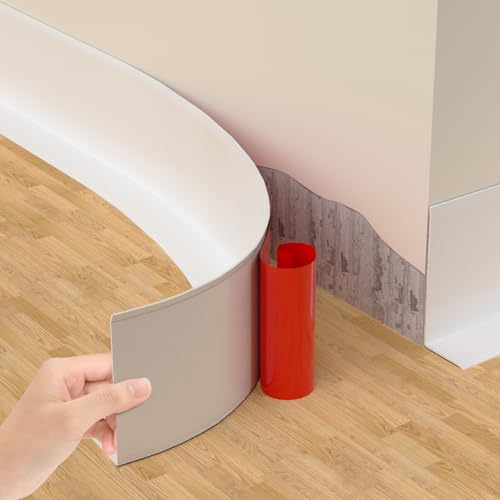
Best for: Bathrooms with uneven floors or curved walls where standard baseboards won’t fit neatly. The flexible vinyl helps seal gaps and hides imperfections.
Why selected: It emphasizes both protection and decoration, guarding walls from moisture while offering a clean finish. The design is compatible with smooth surfaces like tiles and painted walls, and it’s designed to be heat‑assisted if needed for stronger bonding on cold days.
Limitation: The product emphasizes sealing gaps; ensure the wall is clean and smooth before application for best results.
YYGCL Flexible Baseboard Molding Trim — 3″ × 20 ft

Best for: Narrow spaces or tight corners in bathrooms where 3″ width is preferable. Its flexibility helps it adapt to curved edges and uneven floors.
Why selected: The slim profile still provides moisture protection and a tidy finish, making it a versatile option for small bathrooms or decorative accents. The toe design aids dust concealment and keeps maintenance minimal.
Limitation: Slightly narrower width means more joints on longer walls; plan for seam placement to minimize visibility.
Buying Guide: Key Purchase Considerations
- Moisture resistance: In bathrooms, prioritize PVC or vinyl with waterproof or moisture‑resistant properties to prevent warping and staining.
- Adhesive quality: Self‑adhesive backing simplifies installation, but ensure surfaces are clean and smooth for maximum bonding. Warming or heating may help in cooler rooms or textured walls.
- Width and profile: Choose 3″, 4″, or 5″ widths based on wall height and desired visual impact. Toe designs help conceal gaps along irregular bases.
- Surface compatibility: Verify the baseboard sticks well to tile, painted walls, lacquered surfaces, and smooth wood—rough or heavily textured walls may require additional preparation.
- Durability and maintenance: Look for easy‑to‑clean finishes and materials that resist deformation in humid environments.
- Installation approach: Peel‑and‑stick is fastest; consider temporary templates or trim tools for precise alignment if you’re new to DIY.
Frequently Asked Questions
- Q: Is peel‑and‑stick baseboard suitable for bathrooms with high humidity? A: Yes, provided the material is vinyl or PVC and the surface is smooth and clean for adhesion.
- Q: Do I need special tools to install self‑adhesive baseboard? A: No tools are required beyond surface prep; a roller helps secure the adhesive and remove air bubbles.
- Q: Can I install baseboard over existing baseboards? A: It depends on height and fit; you may need to remove or cut back old trim for a flush finish.
- Q: How do I handle corners and uneven floors? A: Use flexible vinyl or PVC trim with a toe design to bridge gaps; heat adhesive if needed for better bonding.
- Q: Will these trim pieces protect walls from moisture splashes? A: They help shield walls in damp areas by sealing the gap between wall and floor, reducing moisture exposure.
- Q: How long does installation typically take? A: For a standard 10–15 ft wall, installation can often be completed in under an hour for a single room.