Answering the question, these air-powered dual-action polishers deliver swirl-free finishes and fast material removal for auto body prep, wood finishing, and metal polishing. They’re best for hobbyists and professionals who want lightweight, vibration-reducing tools that don’t rely on cords. The top picks below are selected for versatility, pad compatibility, and ease of use across different materials and project scopes. A quick buyer’s table follows to compare key options at a glance.
| Product | Best For | Key Feature |
|---|---|---|
| PROSHI 2″ & 3″ Dual Action Mini Sander | Detail work on small areas | 2″ & 3″ pads with adjustable speed |
| 5-Inch Air Palm Random Orbital Sander | General auto body and woodworking prep | 10,000 RPM, standard 5″ pad |
| Chicago Pneumatic CP870-6 Inch Sander | Blending and smoothing filler | 6″ PSA, non-vacuum, high speed |
| Cordless Car Buffer Polisher Kit (6-Speed) | Cordless convenience for detailing | Two 21V batteries, LED display |
| AOBEN 6-Inch Dual Action Polisher | Versatile car detailing and waxing | 6 speeds, detachable handle |
PROSHI 2″ & 3″ Dual Action Mini Sander

Best for detailed spots and small panels, this mini sander combines two pad sizes (2″ and 3″) with a Velcro-backed system for quick pad changes. It supports sanding, polishing, and light grinding across iron, wood, plastic, metal, rubber, stone, and marble. The built-in regulator lets you tailor speed to the task, improving control on delicate finishes or tight curves. This is a strong pick for hobbyists or professionals who regularly tackle small-area work or corner finishes. Limitations include a smaller sanding footprint, which makes larger surface jobs slower.
5-Inch Air Palm Random Orbital Sander

Designed for broader surfaces, this 5-inch dual-action palm sander uses a standard 125mm pad and delivers a swirl-free finish with a high-speed 10,000 RPM motor. It’s a solid choice for auto body prep, woodworking, and metal finishing where faster material removal is beneficial. The dual-action design helps even out sanding patterns, reducing the risk of visible scratches when finishing large panels. Choose this if you need a balance of speed and surface area; it may be heavier than micro-mini models for extended sessions.
Chicago Pneumatic CP870-6 Inch Sander
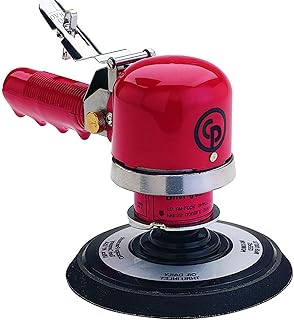
This 6-inch PSA-style sander prioritizes speed and durability for blending, smoothing filler, feather edging, and pre-paint prep. It’s best for larger areas where a consistent, aggressive finish is desired. The tool’s non-vacuum design reduces maintenance and is compatible with a variety of abrasives. A potential limitation is that it may generate more dust and require external collection for extensive dust management, depending on the job.
Cordless Car Buffer Polisher Kit (2x 21V Batteries)

This cordless dual-action polisher offers the convenience of battery power, with two 21V 2000mAh cells and six speeds. It’s ideal for on-the-go detailing, scratch removal, and wax application without dragging cords. Best for beginners and professionals who value portability. A caution: battery-runtime is task-dependent, and high-speed use can trigger overheating protection during long sessions, requiring breaks to cool down.
AOBEN Car Buffer Polisher

The 6-inch AOBEN polisher provides six speed settings from 1000 to 4500 RPM, a detachable handle, and multiple discs for polishing, waxing, and sealing glaze. It’s suitable for cars, boats, furniture, and metal objects, offering a flexible setup for varied projects. A potential limitation is that higher speeds may require steadier technique to avoid swirl marks; users should follow recommended pressure and speed guidelines to maximize results.
Buying Guide
What should you consider when choosing an air dual action polisher?
- Pad size and versatility: Smaller 2″–3″ pads are ideal for detail work; larger 5″–6″ pads cover bigger areas efficiently. Choose a model offering at least two pad sizes if you work on varied projects.
- Speed range and control: A adjustable speed range helps tailor aggression to the material and finish. Look for a regulator or RPM indicator for precise control.
- Ergonomics and weight: Lightweight designs reduce fatigue during extended use. A secondary handle improves stability on larger surfaces.
- Power source: Corded units provide consistent performance; cordless options add portability but may have runtime restrictions. Consider batteries, charging time, and compatibility with your existing tools.
- Dust and debris handling: Vacuum-ready or dust-separator compatibility can improve cleanliness on auto and woodworking projects. Non-vacuum models may require external collection.
- Intended material and finish: For auto bodies, swirl-free finishes are critical. For wood and metal, consider how aggressive the tool can be before marring edges or textures.
FAQ
- What is a dual-action polisher? A tool that uses two simultaneous movements to produce swirl-free finishes and more even polishing compared to single-action tools.
- Are air-powered polishers better than electric? Air-powered tools can be lighter and require less electrical load, but they need an air compressor. Choice depends on workspace, noise, and power preferences.
- Can I use standard sanding discs with these polishers? Many units use hook-and-loop (Velcro) pads; confirm pad compatibility before purchasing to ensure correct discs.
- Who should use a cordless polisher? Beginners and professionals who need portability and a cord-free setup. Be mindful of battery life for longer sessions.
- What surfaces are best suited for dual-action polishers? Auto bodies, wood furniture, metal fittings, and other detailed surfaces where swirl-free finishes are desired.
- How do I avoid swirl marks? Use the correct pad for the material, maintain even pressure, and operate at recommended speeds. Move consistently and avoid dwell time in one spot.