Finding the right adjustable drywall corner tool can save time and improve the finish on interior corners. This guide highlights five top options suited for different workloads and skill levels, including pro-grade versatility, ease of cleaning, and durable materials. The best picks cover a range of angles from 88° to 150°, making them suitable for new constructions, renovations, and DIY projects. The buyer types below note who will benefit most from each tool and why it was selected.
Summary table of chosen products:
- Lobo Tools Adjustable Drywall Inside Corner Trowel — Versatile angle range, stainless blade, quick wing-nut adjustments. Best for trades needing fast angle changes.
- MARSHALLTOWN Exact Angle Inside Corner Trowel — Easy-to-clean nylon blade, 90°–154° adjustability. Best for precision finishes and easy maintenance.
- ToolPro Adjustable Corner Trowel — Large 3 x 5 in blades, broad coverage, 88°–150° range. Best for high-coverage drywall work.
- Medusa Stainless Steel Adjustable Drywall Tool — Reversible blades extend tool life; versatile feathering control. Best for durability and edge finish.
- Buddy Tools D-Wing Corner Trowel — Bi-directional, 7.5″ blade for interior corners; smooth finish. Best for speed and uniform edges.
Lobo Tools Adjustable Drywall Inside Corner Trowel
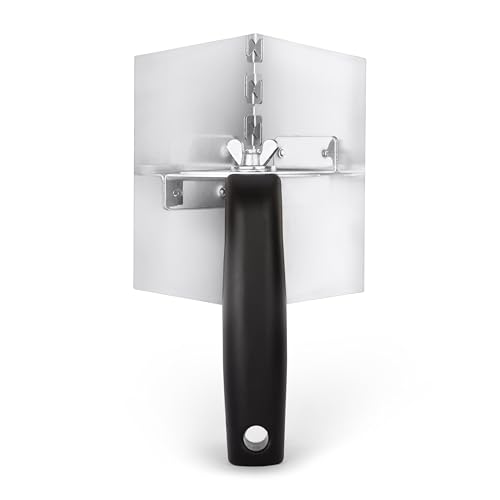
Inside corners are adjustable from 88° to 150°, letting one tool cover multiple angles. The 3″ x 5″ stainless steel blade resists rust and maintains a smooth compound application for consistent finishes. A quick wing-nut system enables fast angle changes to match standard 90° joints or wider off-angles. Best for professionals who work across varying corner geometries and need a single tool that adapts on the fly. Limitation: stainless steel blade requires mindful cleaning to prevent streaks on anodized or painted surfaces.
MARSHALLTOWN Exact Angle Inside Corner Trowel

This trowel offers an adjustable blade that fits corner angles from 90° to 154°, with a nylon blade that cleans easily and won’t mark walls. The DuraSoft handle prioritizes comfort during extended use. Best for finish work where precise feathering and easy cleanup matter. Choose this if you want a reliable interior corner tool that minimizes wall marks and is simple to maintain. Caution: nylon blade may wear differently under heavy repeated use compared with stainless options.
ToolPro Adjustable Corner Trowel

The ToolPro tool adjusts from 88° to 150°, offering a wide range for inside corners and off-angles. It provides smooth compound application with large 3″ x 5″ blades suitable for high-coverage work. Best for general contracting and professional finishers who value quick angle changes and broad coverage. Limitation: larger blade size may be less precise for tight or intricate corner details in small rooms.
Medusa Stainless Steel Adjustable Drywall Angle Tool

Made of stainless steel, this tool features reversible blades, extending tool life by allowing a second edge when the primary edge wears. The angle is adjustable, enabling feathering along inside corners for a pristine finish. Best for users who want durable blades that can be rotated instead of replaced quickly. Caution: some users may prefer a tool with simpler blade changes for very frequent reconfigurations.
Buddy Tools D-Wing Corner Trowel
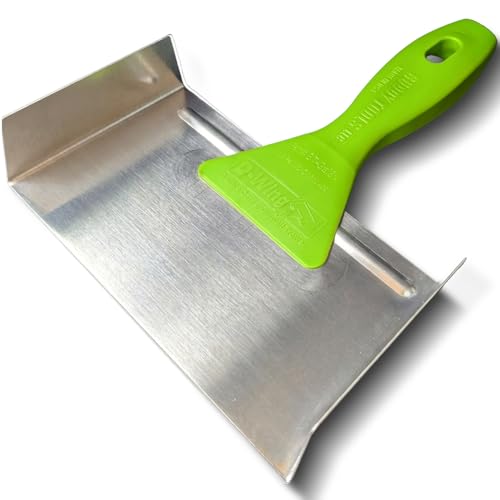
The 7.5″ blade is designed to smooth compound in interior corners while the 1.5″ wing feathers the adjacent surface for a clean edge. It features a rigid stainless-steel blade with a polymer over-mold for rust resistance and easy cleaning. Best for speeding up interior corner finishing with a wider reach. Limitation: wider blade may be less nimble in tight or small-space corners.
Buying Guide: Key Considerations for Adjustable Drywall Corner Tools
What angle range do you actually need? If most work sits close to 90°, a tool that covers 88°–150° is versatile, while pros working with unusual corner geometry may favor models with broader ranges or reversible blades.
Blade material matters. Stainless steel blades resist rust and wear evenly, while nylon or other composites can be easier on walls but may wear differently. Reversible or replaceable blades extend tool life and reduce replacement costs.
Blade size influences finish and coverage. Larger blades (3″ x 5″) speed up wide joints but can sacrifice detail in tight corners. Smaller blades offer precision but require more passes for full coverage.
Weight and grip affect fatigue. Tools with ergonomic handles (soft grips, DuraSoft, or polymer over-molds) help during long finishing sessions. Consider whether you prefer a fixed handle or a rotating/adjustable handle as you work.
Maintenance and cleaning. Tools with simple blade changes and rust-resistant constructions are easier to maintain in busy environments. Some models feature easy-to-clean nylon blades that resist wall marking.
Practical buying questions
- Which tool is best for high-coverage inside corners? ToolPro and Lobo Tools offer wide 3″ x 5″ blades and broad angle ranges for faster application.
- What if I need a durable edge that can be rotated? Medusa’s reversible stainless blades provide extended life without frequent replacements.
- Do I work mostly in standard 90° corners? MARSHALLTOWN’s Exact Angle handles 90° to 154° with easy cleaning, making it a versatile all-rounder.
- Is speed a priority in renovations? Buddy Tools D-Wing’s wider blade helps cover more joint area quickly, reducing rework.
FAQ
- Q: Are adjustable corner trowels suitable for beginners? A: Yes, many models are designed for easy angle adjustments and straightforward use, though some practice helps achieve consistent finishes.
- Q: Can these tools be used for plaster or EIFS work? A: Several models are designed for drywall and plastering; verify blade compatibility and angle range for EIFS applications.
- Q: Do any tools require special maintenance? A: Tools with stainless steel blades or reversible blades tend to last longer with standard cleaning after use.
- Q: Which tool offers the best balance of price and performance? A: Models with adjustable angles, durable blades, and comfortable grips—such as ToolPro or MARSHALLTOWN—often provide strong value.
- Q: How important is blade size for finishing? A: Larger blades speed finishing on wide joints, while smaller blades yield more precise control on tight corners.
- Q: Are there multi-tool options that replace several tools? A: Some 3-in-1 or bi-directional tools claim to reduce tool clutter while offering adjustable angles for various tasks.