When choosing a velcro backing pad, pick a model that fits your sander, matches your project speed, and provides reliable hook-and-loop performance. This guide highlights five strong options, explains who they’re best for, and compares features to help you buy confidently. Ideal buyers include DIY hobbyists looking for affordable versatility, woodworkers needing smooth finishes, and professionals seeking durable, refillable pads for frequent use.
Below is a quick comparison of the five recommended 6-inch velcro backing pads. Use this at-a-glance table to identify which pad aligns best with your equipment and project needs.
| Product | Best For | Key Benefit |
|---|---|---|
| NEIKO 30267A | General woodworking and polishing | Flexible edge and 24-thread compatibility |
| UPWOOD 2 pcs | Budget setups and spare kits | Two pads per pack with 5/16″ thread |
| SPTA 6″ Backing Pad | Heavy polishing and finishing | High RPM tolerance up to 12,000 |
| Drilax 6 Inch Pad | Flat surfaces and edges | Low-profile, rigid backing |
| TCP Global 6″ DA Plate | Universal compatibility | Reinforced inner construction |
Neiko 30267A Flexible-Edge Backing Pad

The Neiko 30267A is a 6-inch, 24-thread backing pad designed for orbital sanders, polishers, and buffing devices. Its flexible edge helps maintain contact on curved surfaces while protecting both the tool and the sanding disc. This pad operates at up to 10,000 rpm, which makes it suitable for general sanding and finishing work. Best for hobbyists and light-to-medium duty projects where a flexible backing is beneficial. A notable limitation is that extremely aggressive sanding on hard materials may require a stiffer pad to prevent pad flexing.
UPWOOD 2 Pack 6″ Hook and Loop Backing Pad

The UPWOOD kit provides two 6″ backing pads with 5/16″ threads (24 threads). This makes it a cost-effective option for those who want a spare pad for busy jobs or multiple machines. The pads offer strong hook-and-loop grip for quick disc changes and reliable retention during use. Choose this if you want a budget-friendly pair for ongoing projects, but be mindful that two pads may not cover extended intensive use without rotation and rotation schedules.
SPTA 6″ Hook and Loop Backing Pad

The SPTA backing pad uses high-quality polyurethane to balance rigidity and flexibility. It supports up to 12,000 rpm, enabling fast material removal and smooth finishes. The hook-and-loop system allows fast disc changes, and the pad is compatible with most 5/16″ shafts. Best for heavy polishing or finishing tasks where consistent speed and a robust pad can reduce burn-through. Limitations include potential heat buildup on extended high-speed use with smaller discs.
Drilax 6 Inch Hook and Loop Backing Pad

The Drilax 6-inch backing pad is designed with a rigid low-profile body and a 5/8-11 thread, making it suitable for angle grinders and polishers. Its rigidity helps maintain flat contact on large surface areas and reduces uneven sanding. This pad is ideal for flat-panel work or edges where precision matters. A caution is that the rigidity might be less forgiving on highly contoured surfaces, where a more flexible pad could yield better results.
Pro-Graad 6″ Hook and Loop Backing Pad
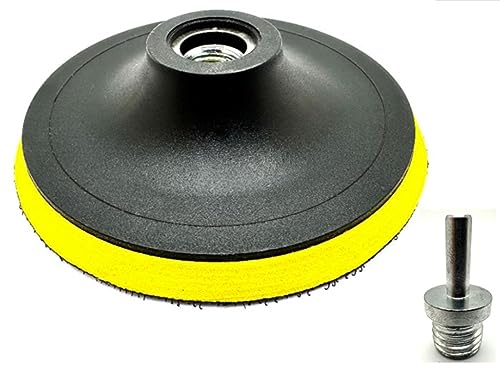
Pro-Graad offers a 6″ backing pad with 5/8″-11 internal thread and a drill adapter included. Constructed from phenolic plastic and premium urethane with nylon hooks, it combines durability with efficient heat management and balance for vibration-free operation. Rated up to 12,000 RPM, it suits a broad range of polishing and grinding tasks. Best for professionals who need a robust pad with a quick-change capability. A potential limitation is that the included drill adapter may require additional tools for installation on some machines.
Buying Guide
What should I consider before choosing a velcro backing pad?
Key factors are pad diameter (6 inches is standard for most DIY kits), thread size (5/16″ x 24 is common), compatibility with your sander or polisher, and RPM rating. A flexible edge can help on curved surfaces, while a rigid pad is better for flat areas. Look for pads with durable polyurethane or phenolic bodies for heat resistance and long life.
How does RPM affect pad performance?
Higher RPM pads enable faster material removal and better finishes but can generate more heat. Choose a pad with an RPM rating that matches your tool’s maximum speed and your material type. If you frequently work at high speeds, prioritize pads rated for higher RPM and good heat dissipation.
Is buy-one-get-one or multi-pack better?
Multi-packs are cost-effective for ongoing projects or when sharing tools among multiple users. They also reduce downtime by providing spares. For occasional use, a single reliable pad may suffice, but keep a spare handy to avoid workflow interruptions.
What are common compatibility notes?
Ensure the backer pad matches your sander’s thread size and shaft diameter. Some pads fit most dual-action sanders, while others are specific to certain models. Confirm whether a drill adapter is included if you intend to use the pad with a drill or different tool type.
Maintenance tips
Keep the hook-and-loop surface clean to preserve grip. Clean discs after use to prevent buildup, which can reduce adhesion. Inspect the pad for wear or cracking and replace when the surface is no longer uniform or detaches easily.
What if I’m working on curved surfaces?
Choose a flexible-edge pad or a pad with a softer backing to follow contours without creating flat spots. Pads with better surface balance typically deliver more even finishes on complex shapes.
FAQ
- Q: What backing pad size should I choose for a 6-inch sander?
A: A 6-inch backing pad with a compatible thread (commonly 5/16″-24) is standard and widely supported. - Q: Can I use the same pad for sanding wood and polishing metal?
A: Yes, if the pad supports both functions and the discs/pads you attach are suitable for the material. - Q: How do I know if a pad is too rigid for my project?
A: If you notice excessive chatter or uneven wear on curved surfaces, a more flexible pad is likely needed. - Q: Do pads come with discs or polish pads?
A: Most listings show the backing pad only; discs or polishing pads are usually sold separately. - Q: Are there pads designed for both dry and wet polishing?
A: Some interface pads advertise water-resistance or suitability for wet polishing; verify the product details before use. - Q: How often should I replace a backing pad?
A: Replace when the hook-and-loop surface wears out, the pad becomes unbalanced, or it no longer firmly holds discs.