Choosing the right swimming pool paint can extend the life of plaster, fiberglass, and concrete surfaces while delivering vibrant color and protecting against water exposure. The selections below highlight epoxy and acrylic options from trusted brands, focusing on coverage, drying time, and compatibility with fresh or saltwater pools. Each entry includes core features to help compare performance and value at a glance.
Summary of Chosen Products
- Olympic Pool Paint – Zeron White (Kelley Technical Coatings) — 1 gallon, two-part epoxy, plaster/fiberglass/steel/aluminum compatible.
- Olympic Pool Paint – Zeron Blue Ice (Kelley Technical Coatings) — 1 gallon, two-part epoxy, plaster/fiberglass/steel/aluminum compatible.
- INSL-X Waterborne Semi-Gloss Acrylic Pool Paint in Royal Blue — 1 gallon, quick-drying, for fresh or saltwater pools.
- INSL-X Waterborne Semi-Gloss Acrylic Pool Paint in Ocean Blue — 1 gallon, quick-drying, for fresh or saltwater pools.
- Olympic Pool Paint – Optilon Bikini Blue (Kelley Technical Coatings) — 1 gallon, synthetic rubber-base enamel for synthetic and chlorinated rubber surfaces.
Olympic Zeron White Pool Paint — Two-Part Epoxy

Product from Kelley Technical Coatings uses a two-part epoxy system designed for one-coat coverage on plaster, fiberglass, steel, and aluminum pools. The kit includes a gallon base and a quart catalyst, with the base short-filled to allow catalyst addition. Thorough mixing and timely use are essential to prevent hardening. Coverage estimates range from 125 to 150 square feet per gallon, making it a solid choice for mid-sized pools that require a durable, long-lasting finish.
Olympic Zeron Blue Ice Pool Paint — Two-Part Epoxy

This Blue Ice variant uses the same two-part epoxy system as the White Zeron, designed for one-coat coverage on common pool materials. Included are a base gallon and a catalyst quart, with a finished volume of one gallon after mixing. Proper mixing and timely usage are crucial to avoid premature hardening. Coverage is approximately 125–150 square feet per gallon, offering a robust protection layer against pool water exposure.
INSL-X Royal Blue Waterborne Pool Paint
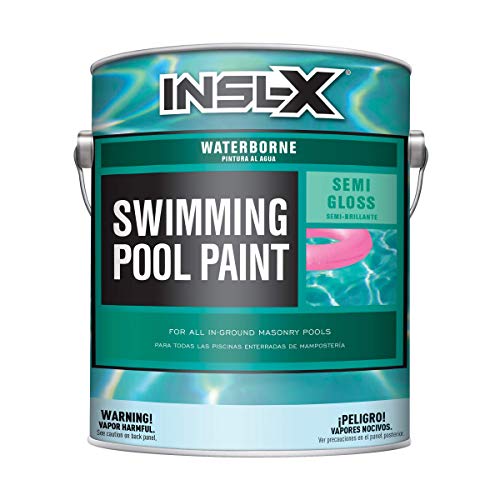
INSL-X offers a waterborne, semi-gloss acrylic pool paint in Royal Blue. Suitable for use in fresh or saltwater pools, this quick-drying acrylic emulsion provides an easy-to-apply option with lower odor and simpler cleanup compared to solvent-based epoxies. It is well-suited for DIY projects and repairs where rapid return-to-swim is desired, especially on concrete, plaster, or masonry surfaces that require a vivid blue finish.
INSL-X Ocean Blue Waterborne Pool Paint
Another option from INSL-X, Ocean Blue, is a waterborne acrylic pool paint designed for use in both fresh and saltwater environments. This quick-drying finish shares the same ease of application and maintenance advantages as the Royal Blue variant, making it a versatile choice for pools seeking a cooler, coastal tone while maintaining a protective water-resistant film on plaster, concrete, or masonry.
INSL-X White Waterborne Pool Paint
INSL-X also offers a White option in its waterborne acrylic line, ideal for those who want a clean, bright pool interior. As with other INSL-X acrylics, this is suitable for fresh or saltwater pools and dries quickly, which helps minimize downtime during painting projects on plaster, concrete, or masonry surfaces. White can serve as a reflective base or a complementary shade for multi-tone pool designs.
Olympic Optilon Bikini Blue Pool Paint

Optilon Bikini Blue is a synthetic rubber-base enamel designed for synthetic and chlorinated rubber surfaces, as well as bare plaster and concrete pools. The one-gallon package covers approximately 250–275 square feet per gallon, offering a more economical option for larger pools or projects requiring significant surface area coverage. Note that results may vary by surface texture and porosity, and color accuracy on digital displays should be considered when choosing this shade.
Buying Guide: Key Purchase Considerations
- Surface compatibility: Epoxy-based coatings typically bond well to plaster, fiberglass, steel, aluminum, and concrete, delivering durable, long-lasting finishes. Waterborne acrylics are generally easier to apply and maintain but may require more coats for high-traffic or aggressive chemical environments.
- Drying and curing: Quick-drying acrylics minimize swim downtime, while epoxy systems require careful mixing and curing times. Always follow manufacturer directions for mixing ratios, pot life, and recoat windows.
- Water exposure: Freshwater vs. saltwater compatibility varies by product. Ensure the chosen paint is rated for your pool’s water chemistry to prevent premature degradation.
- Coverage: Per-gallon coverage estimates help plan the project. Epoxy coatings often offer strong coverage per gallon, but actual results depend on surface texture and porosity.
- Finish and color: Semi-gloss acrylics provide a bright, reflective surface and easier cleaning, while epoxy systems can offer deeper, more durable color on various substrates. Consider light reflection and pool ambiance when selecting a shade.
- Maintenance and longevity: Epoxy paints generally resist abrasion and chemical wear longer than some acrylic finishes, but maintenance requirements vary with pool use and climate. A proper surface prep and primer (if required) improves longevity.
- Safety and ventilation: Some solvent-based paints require good ventilation and protective gear during application. Waterborne acrylics tend to have lower odors and fewer volatile organic compounds (VOCs).
- Application conditions: Temperature and humidity affect drying times and final finish. Plan painting during favorable weather and avoid applying in extreme heat or cold.
- Color accuracy: Digital images and product photos may not precisely reflect final color. Request color samples or consult the manufacturer’s color guide when color matching to existing features.
- Surface preparation: Proper cleaning, etching, and repairing of cracks or spalls improve adhesion and lifespan of the paint layer.