Protecting exterior cinder block walls from water intrusion and freeze-thaw damage starts with a solid sealant plan. This guide highlights five reliable products chosen for sealing, waterproofing, and repairing cinder block surfaces. Each option is explained for who it’s best for, along with practical cautions to help you decide. Whether you’re sealing a basement exterior, a patio wall, or a foundation, these selections offer durable moisture barriers and long-lasting finishes.
| Product | Best For | Key Benefit |
|---|---|---|
| KILZ Basement and Masonry Waterproofing Paint | Indoor/Outdoor walls | Nanotechnology water barrier |
| Rain Guard Concrete Sealer | All concrete surfaces | Deep penetration and water repellency |
| Rain Guard Stucco Sealer | Porous stucco and masonry | Long-lasting weatherproof seal zonder yellowing |
| Americrete A-1325 Clear Matte Sealer | Floors, blocks, and exterior concrete | Non-toxic, matte finish |
| DAP Elastopatch | Crack repair before sealing | Flexible, crack-filling formula |
Buyer profile snapshot: Homeowners tackling exterior block sealing will appreciate products that prevent moisture ingress, are easy to apply, and suit below- and above-grade conditions. Contractors may prioritize durability and fast curing. For those dealing with active leaks or cracks, combining a penetrating sealer with a crack filler yields the best results.
KILZ Basement And Masonry Waterproofing Paint
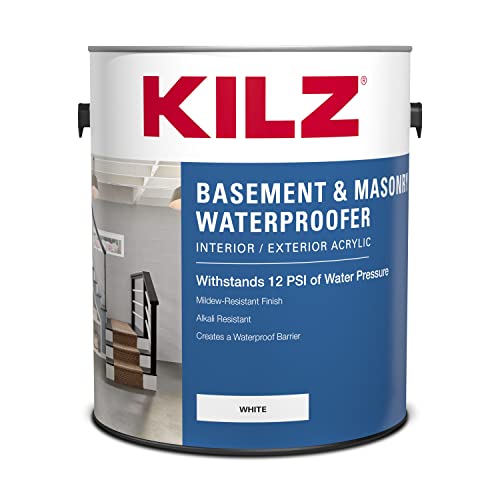
Best for: Basement walls and masonry surfaces that need a robust moisture barrier. This paint uses nanotechnology to block up to 12 PSI of water pressure, helping to stop infiltration in concrete, brick, and cinder block walls. It is versatile for both indoor and outdoor use, making it a practical choice for below- and above-grade projects when preparation is done correctly.
Why selected: It combines waterproofing with a durable finish that stands up to high humidity, alkali conditions, and repeated moisture cycles. The finish resists alkali buildup, supporting a long-lasting appearance on challenging surfaces like basements and unventilated exterior walls.
Caution: Not suitable for walls with active leaks or for use on floors. For below-grade applications, fill holes and cracks with hydraulic cement before painting to maximize waterproofing performance.
Rain Guard Concrete Sealer 1 Gallon

Best for: Broad concrete surfaces—patios, driveways, walkways, and foundation walls. This deep-penetrating silane/siloxane sealer creates a protective water-repellent barrier that reduces moisture absorption and guards against salt and freeze-thaw damage.
Why selected: It offers a straightforward application, quick drying, and durable protection against weather and wear without visible surface change. The formula emphasizes long-term resilience, making it a practical option for exterior concrete blocks paired with other porous substrates.
Caution: While effective against moisture, it may not stop active leaks by itself. For leaks, combine with appropriate crack fillers or hydraulic cement where needed.
Rain Guard Water Sealers Stucco Sealer

Best for: Porous stucco and other masonry surfaces where weatherproofing and a natural finish are desired. It penetrates well, forming a long-lasting barrier without altering surface texture, color, or appearance.
Why selected: The Micro-Lok technology improves filtration and barrier formation, delivering durable protection against wind-driven rain, UV exposure, and freezing conditions. It’s well-suited for exterior walls that require invisibility of the sealant while maintaining a natural finish.
Caution: This is a concentrate; follow mixing directions to achieve the correct coverage. Improper dilution can affect penetration and performance.
Americrete A-1325 Clear Matte Concrete Sealer

Best for: Surfaces requiring a non-toxic, matte-finish sealant that preserves the natural look of cement, blocks, and stone. Suitable for indoor and outdoor concrete elements on walls and floors that benefit from a quiet, uniform appearance.
Why selected: The sealer is non-toxic and easy to apply, making it a safe option for homes with pets or children nearby. The matte finish helps prevent yellowing and maintains a natural, understated sheen on sealed surfaces.
Caution: While durable, it may not offer as high a gloss or surface sheen as other finishes. Ensure compatibility with any colored coatings or paints planned for the project.
DAP Elastopatch Textured Crack Filler

Best for: Crack repair prior to sealing on walls of drywall, plaster, stucco, and concrete. This textured, flexible patching compound fills and stabilizes cracks without shrinking.
Why selected: Cracks in cinder blocks or masonry can compromise sealants. Elastopatch provides a flexible, durable repair that improves the effectiveness of subsequent waterproofing layers and reduces future crack propagation.
Caution: This product is a crack filler and not a stand-alone waterproofer. Apply before sealing to maximize performance and adhesion of subsequent sealants.
Buying Guide
What kind of sealant should you choose for exterior cinder blocks?
- Penetrating vs. film-forming: Penetrating sealers block water intrusion by soaking into the pores, while film-forming sealers create a protective surface layer. For block walls, penetrating silane/siloxane sealers are often preferred for long-term moisture control with minimal surface alteration.
- Surface condition: Clean, dry surfaces yield the best adhesion. For below-grade areas or active leaks, prep with hydraulic cement and repair cracks before applying a sealer or paint.
- Finish preference: Matte vs. glossy finishes affect appearance and maintenance. Matte sealers hide imperfections; glossy finishes are easier to wipe but may show imperfections more readily.
- Cure time and odor: Water-based sealers typically offer low odor and quicker return to use, ideal for occupied spaces. Oil-based options may provide longer durability but require ventilation.
- Color and tinting: Some sealers are tintable for a uniform color or to match surrounding surfaces. Check compatibility with your chosen topcoat if planned.
FAQ
- Q: Do I need to seal exterior cinder block walls every year?
A: Most modern sealers provide multi-year protection, but climate, moisture levels, and sun exposure affect durability. Inspect annually and re-seal as needed. - Q: Can I seal a wall that has active leaks?
A: For active leaks, address the source first and use appropriate crack fillers or hydraulic cement. Sealing alone may not stop ongoing water intrusion. - Q: Is a primer necessary before sealing cinder blocks?
A: Primers are not always required, but applying a compatible primer can improve adhesion and uniformity on weathered surfaces. - Q: Can I apply sealer on painted walls?
A: Some sealers require bare or appropriately prepared surfaces. Check the product’s instructions for compatibility with painted blocks. - Q: How long should I wait before exposing sealed surfaces to moisture?
A: Most water-based sealers cure within a few hours and reach full protection after 24–72 hours, depending on humidity and temperature.