Looking for the best acrylic pouring paints to create flowing, marbled, or cellular art? This guide highlights top ready-to-pour sets that suit beginners and seasoned artists alike. Each option is evaluated for ease of use, surface versatility, and color range. Whether you’re painting on canvas, glass, wood, or rocks, these picks help you achieve vibrant, long-lasting effects with minimal prep.
Summary of chosen products
| Product | Best For | Key Benefit | Approx. Bottle Size |
|---|---|---|---|
| Abeier Metallic Acrylic Pouring Paint Set | Colorful metallic abstracts | Pre-mixed high-flow and ready to pour | 2 oz / 59 ml |
| Nicpro 18 Colors Metallic Pour Kit | Vibrant metallic projects | Large color variety, ready to pour | 8.45 oz / bottle |
| Nicpro Titanium White Pour Paint | Cell creation and layering | Large 33.8 oz white base | 33.8 oz |
| Nicpro 14 Colors Pour Kit | Beginner to intermediate sets | Mixed kit with tools and surfaces | 8.45 oz / bottle |
| Nicpro 24 Colors Pour Kit | Comprehensive palette | Includes 22 classic + 2 metallic | 8.45 oz / bottle |
ABEIER Metallic Acrylic Pouring Paint Set

Best for shoppers seeking a ready-to-pour metallic palette. This 18-shade set provides vibrant metallics that can create striking cellular effects. The paints are pre-mixed with pouring medium, so you can pour directly into a cup or onto your surface without additional blending. Suitable for canvas, glass, wood, and ceramics, these paints are designed to be water-resistant after drying and resistant to fading. A caution: metallic finishes may require controlled layering to avoid color bleeding on very dark backgrounds. Best for artists who want a cohesive metallic look in one kit.
Nicpro 18 Colors 8.45oz Metallic Pour Paint Kit
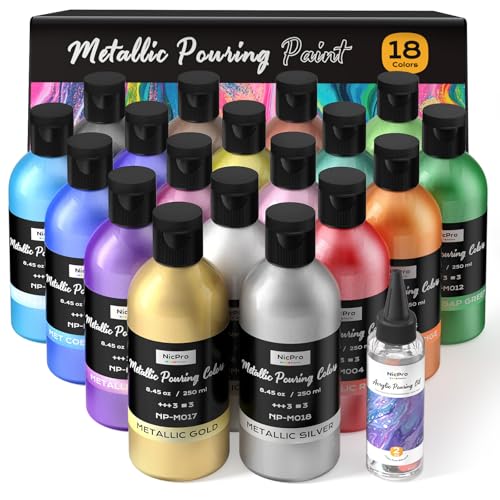
Best for large-volume projects with a broad metallic color range. This kit includes 18 colors in 8.45 oz bottles, with a primer assortment that includes white, gold, and silver, plus 15 additional metallics. The paints are ready to pour, formulated to tilt, swipe, and puddle, and they work on multiple surfaces including canvas, glass, and wood. Ideal for artists who want a strong metallic baseline and the option to mix for shimmering, dimensional effects. Limitation: ensure you have adequate ventilation during pouring if using silicone oils to avoid fumes near beginners’ workspaces.
Nicpro Titanium White Pour Paint
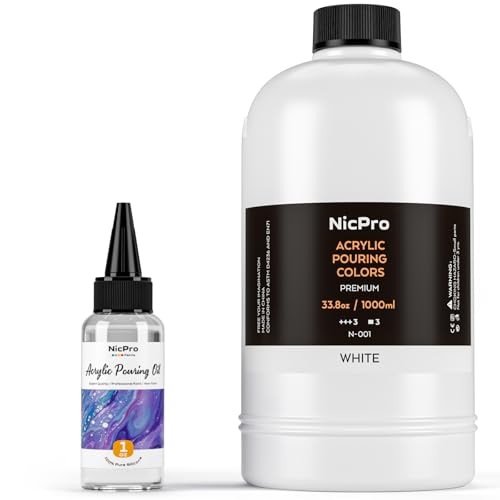
Best for creating cells and layered effects as a dominant base or highlight. This product provides a large 33.8 oz white pour paint plus a small amount of silicone pour oil, paired with gloves. It’s designed to flow easily without additional mediums, producing one-step pours. Best for artists who want a single, expansive base with predictable behavior. Caution: it is thinner than traditional acrylic, so it may behave differently from standard acrylics in some pour techniques.
Nicpro 14 Colors 8.45oz Pour Kit

Best for versatile beginner-to-intermediate sets with built-in tools. This kit includes 14 colors (12 classic and metallic Gold & Silver) in ready-to-pour form, plus pouring oil, gloves, and assorted accessories. It provides enough surface to complete multiple projects, including small canvases and wood slices. The right ratio of pouring medium is already mixed, so you can start pouring right away. Limitation: the included tools are basic; advanced artists may want to supplement with higher-quality strainers or pipettes for finer control.
Nicpro 24 Colors 8.45oz Pour Kit

Best for a complete palette with expanded metallics and a broad color range. This 24-color kit includes 22 standard colors plus 2 metallic tones, all in 8.45 oz bottles. Ready-to-pour formulation means less prep and quicker setup for large or multi-piece projects. It works on canvas, glass, wood, and stone. Limitation: with a wide color mix, it can be easy to overpaint; plan color paths to avoid muddy blends when layering.
Buying Guide
What should you consider when choosing acrylic pouring paints?
- Mix and pour readiness: Pre-mixed, ready-to-pour formulations save time and reduce mess, especially for beginners.
- Color range: Decide between a large mixed palette (more color variety) or a focused set (specialty metallics or whites for cells).
- Consistency and flow: High-flow pours help create cells and seamless blends; check for the presence of a pouring medium in the formula.
- Surface compatibility: Most sets work on canvas, glass, wood, and stone; confirm if you plan to work on fabric or tile.
- Non-toxicity and safety: Non-toxic formulas are safer for homes and classrooms; consider ventilation when using silicone or oil additives.
- Tools and accessories: Some kits include gloves, pouring oils, strainers, and cups; assess whether you need these extras.
Practical tips for choosing
- Begin with a smaller starter set to test pour behavior before committing to a large kit.
- Assess your project size: larger canvases benefit from bigger bottles to avoid running out mid-project.
- Plan your color scheme: a balanced mix of primaries, neutrals, and metallics reduces muddy results.
How to get the best results
- Prepare your workspace with drop cloths and gloves for a cleaner process.
- Pour on a sealed or primed surface to improve longevity and reduce warping.
- Use a silicone oil or pouring medium as recommended to achieve desired cells and lacing.
FAQ
- What is ready-to-pour paint?
Ready-to-pour paints come pre-mixed with the pouring medium, eliminating the need to blend mediums separately.
- Are metallic pours suitable for beginners?
Yes, but they may require more planning to avoid over-saturation and ensure even coverage.
- Can these paints be used on multiple surfaces?
Most sets are designed for canvas, wood, glass, and ceramic; always test a small area first.
- Do I need extra silicone oil?
Some kits include silicone oil; if not, you can purchase separately for cell creation, following the kit’s guidance.
- What should I avoid when pouring?
Avoid excessive mixing, which can dull color brightness, and use proper ventilation when using additives.
- Is white necessary for balance?
White often helps to create contrast and stimulate color interaction; many sets include a white base or pearls.