Finding the right color chart for concrete stain helps owners, contractors, and DIYers plan attractive, durable surfaces. This guide highlights five highly suitable options, explaining who each product is best for and why they were selected. Use these picks to match your project goals—indoor patios, outdoor driveways, or decorative indoor floors. The included summary table helps you compare core details at a glance.
| Product | Best For | Why It Stands Out |
|---|---|---|
| Walttools Tru Tint Copper (1 Quart) | Professional decorative projects | Water-based, low VOC, easy color control |
| CC Concrete Coatings Vivid Acid Stain – Weathered Terracotta (4 oz) | Natural mottling, outdoor or indoor | Variegated color, penetrating and long-lasting |
| Walttools Tru Tint Espresso (1 Quart) | Rich, dark finishes | Water-based, customizable intensity |
| 8 Color Sample Pack – Concrete Resurrection | Color testing and quick previews | Fast-drying, UV-stable |
| CC Concrete Coatings Vivid Acid Stain – Coffee / Caramel (4 oz) | Warm natural tones | Permanent reactive color, versatile |
| Surecrete Eco Stain Water-Based – Spanish Red (4 oz) | Environmentally friendly options | Zero VOCs, professional-grade |
Walttools Tru Tint Copper 1 Quart

Best for decorative interiors and outdoor cement, this water-based stain creates rich, translucent copper tones. It’s designed for concrete, cement, and masonry surfaces, offering easy layering and color control. The low-VOC formula reduces odor and is safer to use in indoor projects compared with acid stains or solvent-based dyes. Choose this if you want a warm, metallic hue with flexible dilution for mottled or layered finishes. A limitation is that color depth depends on dilution and surface porosity, so test a sample area first.
Walttools Tru Tint Espresso 1 Quart
Best for deep, espresso-toned finishes on concrete floors, patios, or countertops. This product shares the same water-based, low-VOC formula and allows you to control color intensity by dilution, enabling subtle to dense looks. It’s well-suited for spaces needing a refined, darker palette. Best paired with a sealant to protect the color. A potential limitation is that very light-colored backgrounds may require a base coat or additional layers to achieve full saturation.
Walttools Tru Tint Coronado 1 Quart
Best for artists and designers seeking versatile color depth, Coronado provides the same safe, water-based foundation with a focus on translucence. It enables layered effects and varied tones across floors and vertical surfaces. Optimal for projects where you want a natural, blended look rather than a single flat color. Caution: surface prep and test patches remain essential to prevent uneven appearance on highly absorbent substrates.
CC Concrete Coatings Vivid Acid Stain – Weathered Terracotta 4 oz
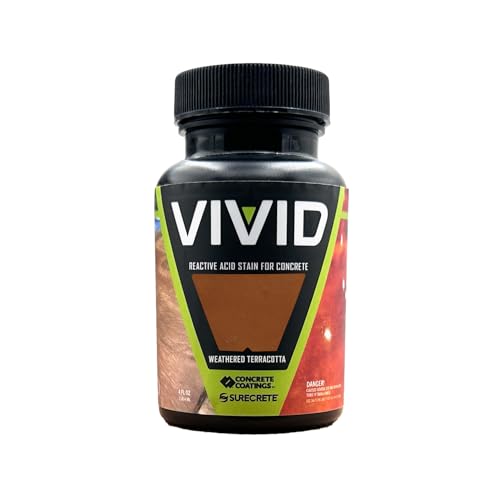
Best for achieving natural variegation with a timeless terracotta palette. This acid-based stain chemically reacts with concrete for long-lasting color that won’t peel or chip. It’s versatile for patios, walkways, or interiors and performs well in outdoor conditions. Best for projects that require strong, enduring color with a classic mottled finish. Limitation: acid stains require careful handling and proper surface preparation due to chemical reactions.
Buying Guide
What to consider when choosing a concrete stain color chart
- Project location: Indoor uses favor low-odor, low-VOC water-based stains; outdoor projects may benefit from durable, UV-stable acid stains for longevity.
- Color depth and effect: If you want subtle warmth, consider copper or espresso tones with dilutable formulas. For dramatic results, layer multiple applications or choose a dark base.
- Surface type and porosity: Porous surfaces absorb color more deeply; test on a small area to determine the number of coats needed and the dilution ratio.
- Color variation: Variegated finishes add natural variation. Acid stains tend to create organic mottling, while water-based stains offer more control over uniformity.
- Safety and environmental impact: Water-based stains are generally lower in odor and VOCs, making them preferable for indoor use near occupants and pets.
Practical questions answered
- Which stain is best for beginners? A water-based stain with clear dilution guidance is typically easiest to control for first-time projects.
- What color should I choose for a smaller space? Lighter, neutral tones tend to brighten small rooms; deeper tones can add drama if balanced with proper lighting.
- Do I need a sealer after staining? Sealing is recommended to protect color and improve stain longevity, especially in high-traffic or outdoor areas.
- Can I mix colors to create custom shades? Yes, many water-based stains are designed for diluting with water to reach desired depth and effect.
- Are acid stains safer indoors? Acid stains require extra ventilation and safety precautions; water-based options are usually safer for interior use.
Quick product comparison at a glance
- Color range: Walttools Tru Tint Copper, Espresso, Coronado offer a broad palette; CC Concrete Coatings expands with terracotta and coffee tones.
- Formulation: All Walttools products are water-based and low-VOC; CC products include acid-based options in addition to water-based variants.
- Finish feel: Water-based stains yield flexible, controllable finishes; acid stains create natural variation and a lasting, reactive color.
- Best use case: Indoor and outdoor decorative floors, patios, and overlays are well-served by the Walttools line; acid stains from CC are ideal for natural, durable mottling.
Frequently asked questions
- What is the difference between water-based and acid stains? Water-based stains are easier and safer to use with controllable color depth; acid stains chemically react with concrete to produce natural, variegated tones.
- Can I apply stain on sealed concrete? Yes, but adhesion and color depth may vary; a prep layer or light scuffing is often recommended.
- Do these products require a topcoat? Sealing after staining helps protect color and prolongs life, especially on outdoor surfaces.
- Will stains darken with more coats? Yes, additional coats usually deepen the color, but test first to avoid uneven results.
- Are there color-fast options for outdoor use? Yes, most outdoor-friendly stains are UV-stable and designed for exterior exposure.