Selecting the right roof coating products can extend the life of flat and low-slope roofs by improving water resistance, reflecting heat, and preventing cracking. This article highlights five top options, including elastomeric coatings and liquid rubber sealants, to help American homeowners and contractors compare performance, application, and versatility. Each entry includes essential features to guide a purchase aligned with roof type, climate, and maintenance needs. A concise buying guide follows with practical considerations to weigh before buying.
| Product | Brand | Key Benefit |
|---|---|---|
| Rust-Oleum Elastomeric Roof Coating | Rust-Oleum | High reflectivity and quick rain resistance |
| Liquid Rubber Waterproof Sealant | Liquid Rubber | Flexible, durable barrier; versatile surface use |
| AMES Maximum Stretch Roof Coating | AMES | High elongation and reflective finish |
| BEEST RV Roof Repair Kit | BEEST | All-in-one kit for EPDM/TPO roof restoration |
| Qiveaory Liquid Rubber Roof Coating | Qiveaory | Complete repair kit with accessories for easy application |
Rust-Oleum 4.75 Gallon Elastomeric Roof Coating, 710 White

Rust-Oleum’s elastomeric roof coating is designed for flat and low-slope surfaces where durability and reflectivity matter. The product delivers high initial reflectivity and strong weathered performance, helping reduce heat buildup and energy costs. It can handle typical roof movements without cracking, and its rain-resistance is notable within hours of application, making it suitable for schedules that demand rapid return-to-service. The 4.75-gallon size provides extensive coverage for larger projects while maintaining a user-friendly application process.
Application considerations include proper surface preparation and multiple coats for optimal membrane thickness. The coating is compatible with various substrates commonly encountered on residential and commercial roofs, contributing to long-term water protection and reflective benefits. As with any elastomeric coating, verify wind and temperature conditions to ensure proper curing and adhesion.
Liquid Rubber Waterproof Sealant – 5 Gallon

Liquid Rubber is a versatile, industrial-strength sealant designed to create a seamless waterproof membrane on flat and low-slope roofs, foundations, gutters, and more. Its premium bitumen formula delivers excellent flexibility with elongation exceeding 950%, helping maintain adhesion through movement and temperature changes. It resists UV damage and cracking, offering a durable barrier against water infiltration. Coverage varies by surface type and coat thickness, with guidance indicating heavy coats for a thicker membrane on flat or standing-water surfaces and lighter coats for vertical surfaces like foundations.
This product suits projects requiring a durable, flexible membrane over large areas or surfaces prone to movement. It’s compatible with brush, roll, or spray application, enabling a range of installation approaches. For best results, factor climate, substrate porosity, and desired membrane thickness into your planning and perform multiple coats as recommended.
AMES Maximum Stretch Roof Coating, 1 Gallon
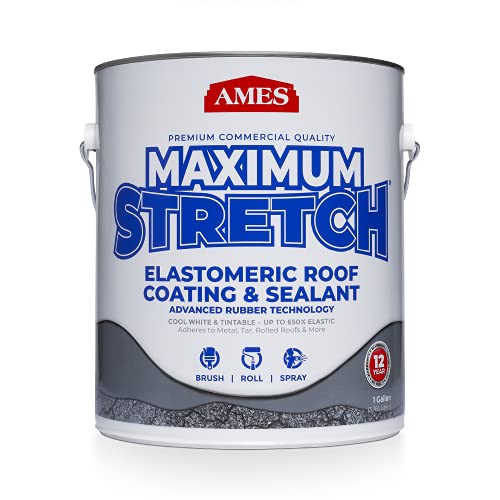
Ames Maximum-Stretch is a white elastomeric coating designed for low-slope roofs, offering up to 650% elongation to resist cracking and peeling. With high reflectivity (approximately 88%), it helps reduce surface temperatures and cooling costs. The product adheres to metal, tar, rolled roofs, and similar substrates, and is suitable for various applications including RV roofs and waterproof sealing. Application methods include brush, roller, or spray, enabling flexible project setups. This white coating contributes to heat management while delivering protective coverage against moisture ingress, making it a solid choice for restoring aging roof membranes.
Consider the expected roof exposure, existing coatings, and substrate compatibility when choosing Ames Maximum Stretch. Proper surface prep and multiple coats can maximize adhesion and longevity, and the coating’s elasticity aids in accommodating minor substrate movements without compromising performance.
BEEST RV Roof Repair Kit

The BEEST RV Roof Repair Kit is a comprehensive all-in-one solution designed for EPDM and TPO roof maintenance. It includes a 5-gallon RV roof coating, 1 gallon of primer, roof cleaner, two packs of self-leveling and non-leveling lap sealants, a seam roller, and gloves. The kit emphasizes temperature-reducing properties and Cool Roof rated standards, aiming to lower surface temperatures when applied. With a focus on maximum adhesion, particularly on EPDM and TPO substrates, this bundle seeks to simplify roof restoration while delivering consistent coverage and durable seals across seams and edges.
Prospective buyers should confirm compatibility with existing roof materials, surface cleanliness, and environmental conditions during application. The included primer and sealants facilitate robust adhesion, though homeowners may need additional tools if large areas are involved. The kit’s bundled approach can reduce the number of separate purchases and simplify project planning, especially for DIY roof refurbishment.
Qiveaory 1Gal Liquid Rubber Roof Coating Kit

The Qiveaory kit provides a complete set for RV and other roof coatings, including a 1-gallon liquid rubber coating, brushes, gloves, a putty knife, drywall tape, and a roller. The self-leveling formula helps fill tiny gaps and cracks to create a continuous waterproof barrier. The product emphasizes water-based, UV-resistant materials designed to withstand temperature fluctuations while reducing the risk of leaks on curved and flat surfaces alike. The inclusion of tools supports DIY applications, making it a convenient starter package for household roof repairs.
Key considerations include surface readiness, compatibility with existing coatings, and the intended roof type. While the kit offers convenience, large or structurally challenging roofs may require additional material or professional assessment to ensure uniform thickness and durability over time.
Buying Guide
- Roof type and surface compatibility: Flat, low-slope, metal, or EPDM/TPO membranes respond differently to coatings and sealants. Check substrate compatibility on the product label and select formulations designed for your roof material.
- Reflectivity and energy savings: White or light-colored coatings provide solar reflectivity that can reduce cooling costs. Consider climate and shading when choosing a finish.
- Elasticity and movement: Roofs experience temperature-driven expansion and contraction. Higher elongation values reduce cracking and improve longevity in flexible membranes.
- Application method and coverage: Brush, roller, or spray applications have different requirements. Verify surface prep steps, coat thickness, and total coverage per gallon to project waste and cost.
- Durability and UV resistance: Ultraviolet exposure and weathering affect coating longevity. Choose products with proven UV stability and weather resistance for your region.
- Primer and sealants: Some bundles include primers and sealants to strengthen adhesion at seams. Ensure compatibility with the coating and substrate to maximize effectiveness.
- Maintenance and repairs: For ongoing maintenance, consider products that offer easy reapplication and compatible touch-up options to extend roof life without extensive removal.
- Safety and environmental factors: Review safety data sheets, ventilation needs during application, and any VOC considerations for indoor or occupied spaces.
- Professional vs. DIY: Larger projects or complex roof systems may benefit from professional assessment, especially when handling EPDM, TPO, or multi-material roofs.
When selecting a roof coating or sealant, weigh the product’s primary role—waterproofing, reflectivity, or flexible sealing—against project scope, climate, and substrate. The options above provide a spectrum of functionality, from heavy-duty liquid rubber membranes to elastomeric coatings designed for high reflectivity. For mixed-material roofs or DIY home projects, bundles like the BEEST kit can simplify procurement, while standalone coatings may offer greater control over thickness and finish.