When you need a reliable, stable surface to stretch watercolor paper, a dedicated stretcher board or art board is essential. This guide highlights top options that suit different workflows, from studio work to field sketching. Ideal buyers include students, hobby painters, professional artists, and crafters who want durable, reusable boards that resist warping and allow easy paper securing.
| Product | Best For | Why It Stands Out |
|---|---|---|
| Grafix Incredible Art Board (16″ x 24″) | Watercolorists on the go | Lightweight, durable foam core; easy to secure and reuse |
| Grafix Incredible Art Board (24″ x 32″) | Larger papers and ambitious pieces | Same foam-core stability in a bigger format |
| HXILAJM 13×17 Inch Drawing Board | Travel-friendly sketching | Portable with adjustable clips and elastic bands |
| Ampersand Aquabord Panel (9×12) | Wet media like watercolor/gouache | Clay-coated surface; colors lift and stay vibrant |
| Ampersand Museum Series Hardbord AMHB12 (12×16) | Primed painting grounds | Archival, moisture resistant, eco-friendly |
Grafix Incredible Art Board — 16″ x 24″

This ½” foam-core art board provides a solid, reusable base for stretching watercolor paper. It has hard-shell-like surfaces on both sides to keep paper flat and secure while you work. Best for artists who need a lightweight, portable board that can handle repeated stapling or taping without warping.
Best for: watercolorists who travel or paint in multiple spaces, and educators who require portable boards for demonstrations. Better for: mid-size sheets and flexible mounting. Choose this if you want a dependable, re-stretchable surface that travels well.
Caution: The foam core is lightweight, so excess moisture should be managed to prevent slight edge bow over time.
Grafix Incredible Art Board — 24″ x 32″

A larger version of Grafix’s art board, this ½” foam core surface accommodates bigger watercolor sheets while providing a stable base for locking in paper with staples or tapes. Its size makes it ideal for ambitious projects or classrooms that require more workspace.
Best for: artists handling larger works or teaching groups needing a shared but sturdy stretching platform. Better for: larger formats, studio setups. Avoid this if you frequently travel with minimal setup space.
Caution: Heavier than the smaller option; plan for a larger carrying solution if you move between locations often.
HXILAJM 13×17 Inch Drawing Board
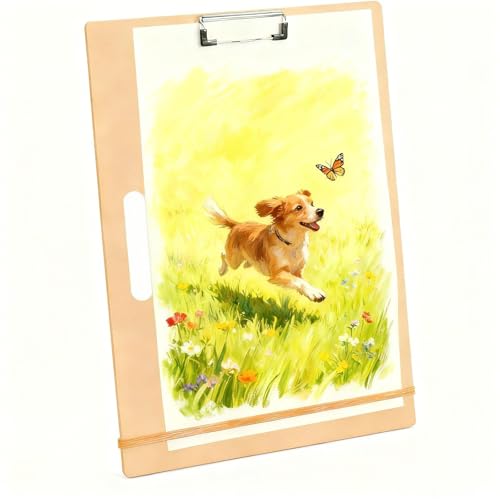
This portable drawing board features a 13×17-inch working area with an ergonomic handle and adjustable metal clips plus thickened elastic bands to secure paper. It serves well as a compact painting or drafting surface in studios, classrooms, or field sessions.
Best for: artists who prioritize portability without sacrificing paper security. Better for: on-the-go sketching, field en plein air, quick layouts. Choose this if you want a lightweight, all-in-one board that travels easily.
Caution: 5 mm board thickness is sturdy but may not suit very heavy media without proper support on thicker papers.
Ampersand Aquabord Panel — 9×12

Aquabord is a clay-coated hardboard designed for watercolor and gouache. The surface allows lifting and erasing colors while wet or dry, preserving color purity and vibrancy longer than some traditional papers. It’s suitable for artists who want the tactile feel of watercolor with the control of a panel.
Best for: painters seeking a bare-surface, reusable panel for wet media. Better for: lifting effects and crisp color retention. Avoid this if you need a traditional paper texture or are working on a very large piece.
Caution: Priming and proper moisture control are essential to maximize performance and longevity of the surface.
Ampersand Museum Series Hardbord AMHB12 — 12×16

This artist-grade hardboard offers a solid painting ground with moisture resistance and formaldehyde-free content. It ships with priming instructions and is designed for archival, eco-friendly use. It’s a reliable choice for careful, long-lasting watercolor or mixed-media work on a sturdy base.
Best for: artists seeking archival-ready surfaces and consistent priming outcomes. Better for: studio work that benefits from a stable, primed base. Choose this if you want a durable, formaldehyde-free option with a long lifespan.
Caution: Requires priming before painting; untreated surfaces may not deliver optimal results for all media.
Buying Guide
Key considerations for choosing watercolor paper stretchers or boards include material, size, portability, and reusability. Below are practical questions to guide your decision.
- What surface do you prefer? Foam-core boards offer lightweight stability and reusability, while hardboards or Aquabord panels provide archival quality and texture control.
- What size suits your workflow? Smaller boards suit field work and quick studies; larger boards support ambitious, water-rich pieces.
- How will you secure the paper? Look for boards with clamps, elastic bands, or built-in clips to prevent warping or slipping during wet media work.
- Is priming important? Some options require priming, especially for acrylic or gouache on hardboards; others are pre-tested for watercolors.
- How portable must it be? If you travel or paint outdoors, prioritize lightweight, compact designs with comfortable handles or straps.
- Can it be reused? Reusable boards that resist tearing, warping, or buckling save time on subsequent projects.
Frequently Asked Questions
- What is the main advantage of a watercolor paper stretcher board?
It keeps paper flat and taut, reducing cockling and warping during wet media application. - Are foam-core art boards durable enough for watercolor?
Yes, they are lightweight and reusable, though care is needed to prevent edge damage from moisture. - Can I use these boards with gouache or acrylics?
Some boards are good with gouache; for acrylics, choose primed hardboard or Aquabord for best results. - Do I need to prime hardboard before painting?
Many Ampersand hardboards require priming to ensure optimal paint adherence and longevity. - Which board is best for large-format watercolor?
Grafix 24″ x 32″ or Grafix 16″ x 24″ can handle larger formats with strong stability. - What should I consider for field painting?
Look for lightweight, clip-secure boards with ergonomic handles and compact dimensions.