Choosing the right ceiling paint color is less about color alone and more about how it interacts with lighting, room size, and texture. White remains the go-to for maximizing brightness, but modern ceiling paints offer options that improve coverage, hide marks, and reduce odors. This article highlights top white ceiling paints and how their color and finish can influence a room’s look and feel.
| Product | Brand | Notes |
|---|---|---|
| INSL-X Color-Changing Acrylic Ceiling Paint | INSL-X | Disappearing pink color-change technology helps you see coverage as you apply. |
| Zinnser Covers Up Stain Sealing Ceiling Paint | Zinsser | Stain-sealing performance with a white finish. |
| KILZ Stainblocking Ceiling Paint | KILZ | Stainblocking, dries to white, with quick recoat times. |
| Glidden White Flat Ceiling Interior Paint | Glidden | Ready-mixed, affordable white ceiling paint with good hide. |
| PRESTIGE Interior Ceiling Paint | PRESTIGE | Premium acrylic finish with low spatter. |
The following selections focus on white ceilings, combining ease of application, stain resistance, and favorable drying times while avoiding strong color shifts that can complicate lighting in American homes. Each product section includes practical guidance to help you choose the right finish and coverage for your space.
INSL-X Color-Changing Ceiling Paint
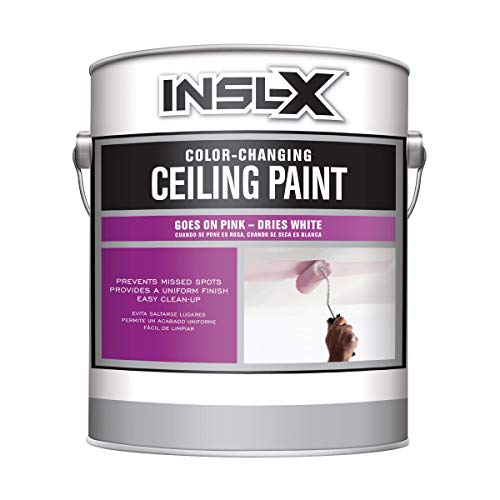
Product overview: An acrylic ceiling paint featuring disappearing pink color-change technology to reveal missed spots while painting, aiding a uniform finish on smooth or textured ceilings. The color-change feature helps reduce missed areas during application, and the formulation supports easier cleanup with water-based tools. Suitable for interiors, this paint aims to deliver a clean white final appearance after the color shift.
Zinnser Covers Up Stain Sealing Ceiling Paint

Product overview: This white ceiling paint combines stain-sealing capabilities with a finish designed to provide even coverage. It is suited for rooms with prior water stains or smoke marks where a clean white appearance is desired. The product emphasizes hiding stains and delivering a smooth, uniform ceiling surface with fewer coats in many scenarios.
KILZ Stainblocking Ceiling Paint

Product overview: A practical ceiling paint featuring stain-blocking technology with a pink-to-white color transition, indicating coverage as it dries. It dries to touch in about an hour, with recoat possible after two hours. This product is designed for interior ceilings and supports multiple coats for comprehensive hide of stubborn stains or marks. It’s a solid choice where stain resistance matters most.
Zinsser Ceiling Paint & Primer in One

Product overview: This 5-gallon container provides both paint and primer in one, designed to streamline projects. The finish is flat white, reducing surface imperfections and offering low odor characteristics. It dries relatively quickly and covers substantial areas per gallon, making it suitable for larger ceiling spaces where a primer base is beneficial for uniform color and stain resistance.
PRESTIGE Interior Ceiling Paint

Product overview: Ultra premium acrylic latex ceiling paint designed for interior ceilings with low spatter and smooth application. It’s formulated to deliver a bright white finish that helps brighten spaces while maintaining easy application. The product is suitable for living areas and hallways where a refined, clean look is preferred without heavy odor or long dry times.
Buying Guide: Key Purchase Considerations for White Ceiling Paint
- Finish and sheen: Flat or matte finishes help minimize wall imperfections and glare, making ceilings look smooth. Consider a low-sheen option if you expect higher moisture exposure in kitchens or bathrooms, but avoid high-sheen for most ceilings to prevent highlighting flaws.
- Coverage and hiding power: Look for paints labeled as stain-blocking or stain-sealing if you’re painting over marks, water stains, or discolorations. Coverage per gallon varies by surface texture and porosity; textured ceilings may require more coats.
- Primer-in-one vs. separate primer: Primer-in-one products can save time on projects with minimal staining. For heavily stained or very porous ceilings, pairing a dedicated primer with paint can improve finish and durability.
- Drying time and recoat window: Shorter dry times enable faster completion, but ensure the surface is clean and dry before recoating. A typical recoat window is a couple of hours, but always follow label directions.
- Odor and ventilation: Low-odor formulas benefit indoor air quality and are preferable in occupied homes. Adequate ventilation reduces drying times and improves comfort during application.
- Application method and cleanup: Water-based acrylic paints are user-friendly with soap and water for cleanup. Consider tools (rollers or sprayers) suited to ceiling texture and room height to ensure even coverage.
- Color stability: While white is the default, some products incorporate color-change technology or primers to enhance visibility of coverage. If this feature matters for you, it can reduce missed spots during painting.
- Texture compatibility: Smooth ceilings require precise technique, while textured ceilings can benefit from slightly longer drying times or thicker nap rollers to prevent roller marks.
Choosing the best color for ceiling paint involves balancing brightness with practicality. For most American homes, white ceilings paired with a flat or matte finish create a sense of openness and reflect more natural light. If you’re addressing stains or prior imperfections, select a product with stain-blocking or primer-in-one capabilities to reduce the number of coats and improve overall appearance. For large rooms or open floor plans, higher-coverge formulas can minimize the need for frequent touch-ups and help achieve a consistent look across spaces.