Outdoor concrete paver stains add color, depth, and protection to walkways, patios, and driveways. This guide focuses on water-based and acid-based stains that deliver semi-transparent to translucent color without peeling like paint. The best options suit DIYers seeking ease of use, lasting color, and minimal odor or environmental impact. Ideal buyers include homeowners refreshing a patio, landscapers updating a walk, and property managers aiming for durable, low-maintenance surfaces. Below, five top products are highlighted with clear comparisons to help you choose the right stain for your project and climate. A quick buyer’s table follows to summarize key details at a glance.
| Product | Best For | Finish | Notes |
|---|---|---|---|
| Classic Coatings Simple Stain (Dark Slate) | Eco-conscious DIYers | Semi-transparent | Zero VOC, UV stable |
| Cement Stain Concentrate – Mocha | Layered color effects | Semi-transparent | Water-based pigment |
| Acid Concrete Stain Professional Grade – Western Saddle | High-contrast variegation | Variegated semi-transparent | Acid-based |
| Cement Stain Concentrate – Onyx | Indoor/outdoor flexibility | Semi-transparent | Same family as Mocha, 32 oz |
| Cement Stain – Brick Red | Vibrant color blocks | Semi-opaque top layer | Decorative color |
Classic Coatings Simple Stain – Dark Slate

This water-based stain is easy to mix and apply, making it ideal for beginners and pros who want fast, even coverage. It’s a concentrated formula that can be diluted with water, allowing you to control intensity on patios, sidewalks, or interior concrete floors. The product is zero VOC and UV-stable, supporting color longevity outdoors. Best for eco-friendly DIYers seeking a simple, low-odor option that still delivers bold, semi-transparent color.
Who it’s best for: homeowners or contractors prioritizing ease of use, quick drying, and safe indoor/outdoor application. Why selected: it combines user-friendly application with environmentally conscious chemistry and strong color retention. Caution: ensure surfaces are clean and properly sealed for best adhesion and plan for multiple thin coats to achieve uniform depth.
Cement Stain Concentrate – Mocha

This concentrated, water-based pigment penetrates clean, porous concrete, avoiding a painted look and enabling semi-transparent color on floors, patios, and walkways. It’s designed to layer colors while wet to create marbling and variegated finishes, ideal for patios, pool decks, and driveways. Best for: projects requiring a decorative, customizable finish with depth. Caution: apply in well-ventilated areas and test color on a small area first to preview layering effects.
Acid Concrete Stain Professional Grade – Western Saddle

This acid-based formula chemically reacts with concrete to create a permanent, semi-transparent finish with unique marbled variations. It’s UV-stable for indoor and outdoor use and suitable for floors, patios, driveways, and entryways. Best for: surfaces where a rich, variegated look and long-lasting color are desired. Caution: for best results, ensure proper surface prep and ventilation, as acid stains require careful handling and safety measures.
Cement Stain Concentrate – Onyx

This 32-ounce version mirrors the Mocha line with the same water-based pigment chemistry. It penetrates clean, porous concrete and supports layered, translucent color across interior and exterior surfaces. Best for: projects seeking adaptable, semi-transparent color with the option to blend multiple tones. Caution: test blending on a small area before full application to manage color intensity.
Concrete Stain – Brick Red
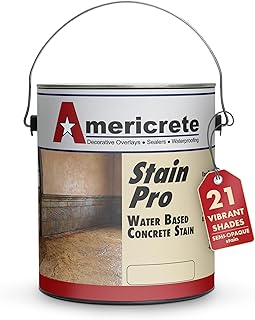
This semi-opaque topical stain provides vibrant color with a penetrating base, suitable for concrete, stone, wood, tile, and porches. It’s designed for decorative color that remains durable against outdoor wear. Best for: projects needing a bold, uniform brick-red finish. Caution: may require sealing for high-traffic areas; color may vary with substrate texture and porosity.
Buying Guide: Key Purchase Considerations
How do you choose the right outdoor concrete paver stain? Consider the base chemistry (water-based vs acid-based) and desired finish. Water-based stains are easier to apply, less hazardous, and versatile for interior/exterior use, while acid stains create natural-looking variegation but require careful handling and prep. Evaluate environment exposure, substrate porosity, and whether you want a translucent look or a more opaque color layer. For multi-tone effects, choose products that support layering or marbling. Always test color on a small area before full project execution and plan for surface preparation like cleaning and sealing.
Finish and durability matter for longevity. UV stability protects color in sunlight, while the chosen sealer or topcoat determines gloss level and moisture resistance. Application considerations include ventilation, tooling, and drying times. If you’re new to staining, prefer products marketed as easy-to-use or concentrated formulas that let you adjust strength. For experienced users, acid-based stains or layered color concentrates can deliver sophisticated, high-end results.
Environmental and safety aspects are important. Zero-VOC formulas reduce odor and emissions, making them preferable for indoor use or spaces with limited ventilation. Always wear protective gear and follow manufacturer instructions for safety. When selecting a product, ensure compatibility with your substrate and verify that the stain is appropriate for exterior exposure if used outdoors.
Frequently Asked Questions
- What is the main difference between water-based and acid stains?
Water-based stains color by penetration and are easier to apply; acid stains react with concrete to create variegation and marble-like patterns and require careful handling. - Can I apply multiple colors or layers?
Yes, many ceramic or cement stains support layering or marbling while wet to achieve custom finishes. - Is this stain safe for indoor use?
Most water-based stains are suitable for indoor and outdoor use; check product specifics for VOC content and ventilation needs. - Do stains require sealing after application?
Sealers or topcoats are often recommended to protect color and extend life, especially in high-traffic outdoor areas. - How long does staining typically take to dry?
Drying times vary by product, temperature, and humidity; follow label directions for cure times and recoat windows. - Will staining hide surface imperfections?
A translucent stain can accentuate texture while masking minor imperfections; for heavy defects, consider suitable surface prep or repair.