Answering your search for effective interior wall sealants and primers, this guide highlights products that help seal, prime, and protect walls from moisture, mold, and cracking. Best for homeowners tackling bathrooms, kitchens, basements, and high-humidity rooms, these picks balance ease of use with durable performance. The top five selections range from mold-proof interior paints to bonding primers and waterproof sealants, each with clear, practical uses. Use the quick reference table below to compare key traits at a glance.
| Product | Best For | Why It Stands Out |
|---|---|---|
| Zinsser 02774 PERMA-WHITE | Moisture-prone interiors | Mold & Mildew-Proof film, self-priming, long-term cleanliness |
| Zinsser Peel Stop Bonding Primer | Problem surfaces | Seals and extends life of chalky, cracking surfaces |
| Zinsser Bulls Eye Water-Base Primer & Sealer | New or repaired drywall and wood | Low-odor stain blocking, fast drying, versatile |
| Invisible Waterproof Sealant Agent | Cracks, leaks, and joints | Clear, waterproofing action with insulating properties |
| Zinsser Covers Up Ceiling Paint & Primer Spray | Ceiling refinishing | Overhead spray, hides water stains with primer |
Zinsser 02774 PERMA-WHITE Mold & Mildew Proof Interior Paint

Best for mold-prone spaces, this product features a self-priming formula that requires no sanding. Its mold and mildew-proof film claims protection for up to five years and resists dirt and moisture on the coating. Best used on bathroom walls, basements, or kitchens where humidity is constant. A potential limitation is that color options may be limited in some kits, so match to your decor before purchasing.
Zinsser 60004 White Zinsser Peel Stop Bonding Primer
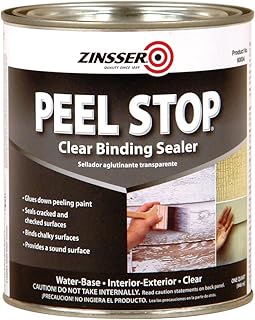
Choose this if you’re dealing with problem surfaces. This water-based interior and exterior sealer bonds cracking, chalking, and peeling surfaces, helping to extend paint life. It pairs well with topcoats in environments where old finishes are lifting or flaking. Limitation: like many bonders, it can require proper ventilation during cure and may be less forgiving on very glossy surfaces without light abrading.
Zinsser Bulls Eye Water-Base Primer & Sealer

This white, water-based primer and sealer is designed for interior surfaces such as walls, doors, trim, plaster, and concrete. It offers a low-odor formula with strong stain blocking, helping hide dark or porous surfaces. Dries quickly, covering up to about 100 sq. ft. per quart. Use this when you need a reliable base that reduces bleed-through before finishing coats. Caution: on rough or highly textured surfaces, extra coats may be required for even coverage.
Invisible Waterproof Sealant Agent

Best for sealing leaks on walls and joints, this clear, water-based bonding and insulating coating creates a waterproof protective layer. It’s suitable for interior and exterior repairs, including cracks and leaks. Practical limitation: it’s a coating, not a paint; it’s best used as a sealant layer under or alongside paint coats for full wall coverage. Best for garages, basements, and areas with recurring moisture issues.
Zinsser Covers Up Ceiling Paint & Primer Spray

Best for overhead projects, this ceiling spray provides flat white finish with built-in primer to hide water stains. It’s a convenient solution for quick ceiling refreshes without rolled or brushed coats. Choose this when ceiling staining is moderate and you need fast, uniform coverage. Limitation: spray application may require masking to prevent overspray on adjacent walls.
Buying Guide
Key considerations when selecting interior wall sealant paint products:
- Moisture and mold resistance: For bathrooms and basements, prioritize mold/mildew-proof paints like PERMA-WHITE and stain-blocking primers to prevent moisture damage.
- Surface condition: If you’re dealing with peeling, chalking, or cracking surfaces, Peel Stop Bonding Primer helps restore adhesion before finishing coats.
- Ventilation and odor: Water-based primers (like Bulls Eye) typically offer lower odor and faster drying, suitable for in-use homes.
- Surface versatility: Look for products that work on drywall, wood, plaster, concrete, and painted surfaces for a cohesive project.
- Application method: Consider whether you prefer traditional brushing/rolling or spray applications, especially for ceilings or overhead areas.
- Color and finish: If you need a bright, flat ceiling or white primer, choose products that match your finish goals and decor.
Frequently Asked Questions
- What is the difference between a sealant and a primer?
Answer: A primer prepares surfaces for paint by improving adhesion and blocking stains; a sealant provides a moisture barrier and fills gaps or cracks. - Is mold-proof interior paint worth it in a bathroom?
Answer: Yes, in humid spaces, mold-resistant coatings help limit mold growth on the wall film when properly applied. - Can I use a clear sealant over existing paint?
Answer: A clear sealant can seal joints and leaks, but for painting over, you may still need a primer for adhesion. - How long does interior sealant paint take to dry?
Answer: Dry times vary by product; many water-based primers dry to touch within 30 minutes, with full cure in several hours. - Should I sand between coats?
Answer: For many self-priming formulas, sanding is not required, but light abrasion can improve adhesion on glossy surfaces. - Which product is best for ceilings prone to leaks?
Answer: Ceiling-focused products with stain-blocking capability, like Covers Up, are designed for overhead applications and staining issues.