Answers to common buyer questions about flexible joint compounds for drywall cracks. This guide highlights five top products, each suited to different damage types and user needs—from renters fixing nail holes to homeowners sealing wide cracks. The summary table helps compare core uses and limitations at a glance.
| Product | Best For | Notes |
|---|---|---|
| DIYSELF 9 Pack Drywall Repair Kit | General cracks, nail holes, surface gaps | Comprehensive repair kit for quick, easy fixes |
| Flex Caulk Hybrid Polymer Sealant | Wet or dry areas, kitch en/bath seals | Waterproof, paintable, no caulk gun needed |
| Acuteye Drywall Mesh Tape | Patches and seams | Fiberglass, self-adhesive for patching |
| Flexible Epoxy Wood Filler | Wood cracks and rot repair | Dual cartridge epoxy, exterior-capable |
| DAP ElastoPatch | Crack bridging across surfaces | Elastomeric, paintable, dries tack-free |
DIYSELF Drywall Repair Kit

Best for renters and DIY homeowners tackling multiple small cracks, nail holes, and gaps with a single toolset.
Flex Caulk Hybrid Polymer Sealant
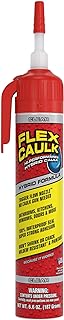
Best for sealing wet or dry areas such as kitchens, baths, or window frames, where paintability and elasticity matter. Choose this if you want a flexible, waterproof seal without a caulk gun. Caution: If you need heavy-duty app coverage, consider a dedicated sealant with higher build for large gaps.
Acuteye Drywall Mesh Tape
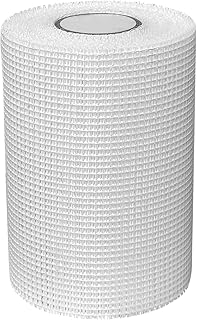
Best for patching holes and seams before applying joint compound. Suitable for clean, quick repairs with durable adhesion. Use this with a compatible filler for a smooth finish. Caution: For very large or irregular cracks, tape alone may not provide sufficient bridging.
DAP ElastoPatch Patching Compound

Best for multiple surface types including drywall, plaster, and stucco with elastomeric performance. It resists shrinking and cracking and paints smoothly. Drying time is practical for medium-size repairs. Caution: May require a second coat for deep cracks or heavy texture mismatches.
Flexible Epoxy Wood Filler

Best for exterior wood cracks and rot where a durable, waterproof filler is needed. Dual cartridge epoxy formulation requires a dispensing gun. Caution: Requires proper curing conditions and ventilation; not ideal for interior drywall cracks without wood framing.
A Quick Reference On Choosing Your Product
Choosing the right product depends on crack size, surface type, moisture exposure, and painting needs. For small cracks and renters’ repairs, a multi-pack repair kit may be most cost-effective. For bathrooms or kitchens, a flexible sealant that tolerates moisture is preferable. For wood repairs, epoxy fillers offer superior durability. If in doubt, start with a patch plus a flexible filler for long-term performance.
Buying Guide
- What is the crack type and wall material? Choose products tested for drywall, plaster, or stucco as needed.
- Moisture exposure matters. In wet areas, opt for waterproof or elastomeric formulations.
- Ease of application. Self-adhesive tapes and semi-fluid fillers simplify quick fixes; epoxy fillers require dispensing tools.
- Paint compatibility. Look for paintable formulas to ensure a seamless finish.
- Curing and recoat times. Consider projects where a quick set is beneficial versus longer working times.
FAQ
- What is the difference between flexible joint compound and regular joint compound?
Flexible joint compounds accommodate movement in walls and seal small cracks without cracking again, while regular compounds may re-crack with movement. - Can I use these products on painted walls?
Yes, most are paintable, but follow the manufacturer’s guidance for surface prep and drying times. - Are these products suitable for renters?
Yes; kits and patching compounds provide quick, reversible fixes with minimal demolition. - Do I need tools beyond the product?
Some products, especially epoxy fillers, may require a dispensing gun and basic sanding tools for best results. - How should I prep the surface before applying?
Clean debris, dust, and loose material; lightly sand edges and ensure the area is dry for optimal adhesion. - What is a good method for a seamless finish?
Apply multiple thin coats, allow curing between layers, and finish with light sanding and primer/paint as needed.