Clear answer: Additives that improve flow, leveling, and open time minimize brush marks and create a professional, smooth look on walls, trim, and cabinetry. These products are especially helpful for latex or acrylic paints and for painters seeking a cleaner, edge-to-edge finish. The top options below are suited for DIY homeowners, hobbyists, and professionals who want consistent results with less drag and lap lines.
Summary table of selected products:
| Product | Best For | Key Benefit |
|---|---|---|
| Flood Floetrol Latex Paint Additive & Conditioner | General walls, trim, cabinets | Improved flow and self-leveling; reduces brush marks; sprays smoothly |
| Liquitex Professional Effects Medium, Flow Aid | Acrylic artists and staining effects | Breaks water tension; increases flow and transparency |
| Winsor & Newton Professional Acrylic Medium, Flow Improver | Fine detail and hard-edge acrylic work | Reduces surface tension; minimizes brush marks without thinning color |
| JB Industries Latex Paint Conditioner Additive | Latex paints for spray, brush, or roller application | Improves flow and leveling; reduces drag and marks |
| JB Industries vs Bates Trim Brush (brush-only item) | Trim work and detail painting | Not an additive; selected as a precision tool for minimizing visible brush lines |
Flood Floetrol Latex Paint Additive

Best for overall flat work and trim. Floetrol conditions latex and acrylic paints to flow smoothly, self-level, and dry with a professional finish without thinning. It extends open time, helping to erase lap lines and brush strokes on walls, trim, cabinets, and doors. It also behaves like an oil-based spray aid by reducing tip clogging in some water-based sprayers.
Who it’s best for: DIY homeowners and painters seeking an all-rounder additive to reduce brush marks without altering color. Why selected: broad compatibility and proven leveling characteristics make it a reliable first-choice option.
Limitation: It may require small experimentation to dial in the exact amount for high-coverage colors or dense paints. Best used as directed with your base paint.
Liquitex Professional Effects Medium, Flow Aid

Best for acrylic workflows requiring increased flow and lower film tension. This binder-free aqueous solution reduces surface tension with surfactants, improving flow and lowering viscosity. It’s useful for staining effects on raw canvas and works well when increasing flow and absorption are desired without changing color strength.
Who it’s best for: acrylic artists and mixed-media painters needing enhanced openness and smoother brush lines. Why selected: adds flow without diluting color intensity, supporting smoother application.
Limitation: It’s a specialty additive; ensure compatibility with your chosen acrylics before broad use in large areas.
Winsor & Newton Flow Improver

Best for fine-detail work with acrylics. The flow improver reduces surface tension to improve paint flow, minimizing brush marks while preserving color integrity. It supports hard-edge painting techniques and slightly slows drying for better leveling.
Who it’s best for: professional painters and artists needing controlled, detailed applications with reduced streaking. Why selected: specifically designed to improve flow while preserving color characteristics for precise finishes.
Limitation: Use with care to avoid over-thinning in very bright or saturated colors.
JB Industries Latex Paint Conditioner Additive

Best for thinning water-based latex paints without sacrificing color or coverage. It enhances flow and leveling, allowing smooth glide for spray, brush, or roller applications. Reduces drag and streaking to achieve an even, professional finish.
Who it’s best for: homeowners and contractors who spray or roll latex paints and want a reliable finish with fewer brush lines. Why selected: strong flow and leveling improvement across application methods.
Caution: like any additive, test compatibility with your base color to avoid unexpected changes in finish or dry time.
Bates Trim Paint Brush Set
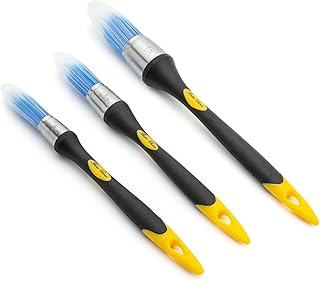
Best for precise trim work and edges. While not an additive, a quality trim brush reduces visible brush marks by enabling cleaner, controlled lines during finish work. The ergonomic handle helps maintain accuracy during extended sessions.
Who it’s best for: painters focusing on trim, corners, and detailing where brush strokes are most visible. Why selected: pairing a dedicated trim brush with flow-improving additives provides the cleanest edge results.
Limitation: brush-only tool cannot replace proper technique or drying conditions; use in combination with compatible paint additives for optimal results.
Buying Guide: Key Considerations For Reducing Brush Strokes
What base paint are you using?
Most additives are formulated for latex or acrylic paints. Check compatibility with your base coat to avoid color shifts or inconsistent drying. Water-based systems typically respond well to flow aids and conditioners.
How important is open time and leveling?
Open time helps you maintain workability, especially on large walls. Look for products that extend open time and improve leveling to minimize lap lines and brush marks.
Do you need compatibility with spraying?
Some additives also reduce tip clogging and improve spray performance. If you plan to spray latex or acrylic coatings, choose additives designed to work with spray equipment.
What about color fidelity and drying time?
Choose additives that maintain color strength and do not excessively slow drying. If you need quick project turnaround, prioritize products that balance flow with reasonable drying times.
How should you test before large applications?
Test a small patch on a sample surface or hidden wall section. Adjust dosage gradually and observe flow, leveling, and brush mark reduction before committing to a full project.
What tools will accompany your additives?
Consider using a quality trim brush for edges; pairing with a flow-providing additive tends to yield the smoothest results on trim and walls alike. Ensure brushes and rollers are compatible with water-based paints.
Frequently Asked Questions
- What additive best reduces brush marks on walls? Floetrol and similar flow-improving additives are widely used to reduce brush marks by improving flow and leveling on latex paints.
- Can I mix multiple additives? Only if the manufacturers explicitly allow it. Mixing can alter drying times and performance in unpredictable ways.
- Will additives affect color brightness? Most modern additives preserve color strength, but test on a small area to confirm.
- Are these products safe for indoor use? They are designed for typical indoor painting projects; follow label directions for ventilation and safety.
- How do I choose between flow aid and flow improver? Flow aids reduce surface tension and improve flow; flow improvers are similar but may be optimized for particular acrylic or varnish systems.
- Should I still sand between coats? Yes, light sanding between coats enhances smoothness, especially after using flow-improving additives.