When choosing an oil-based primer sealer undercoat, look for strong stain blocking, excellent adhesion, and suitability for multiple substrates. The following five products are well-suited for interior and exterior wood, drywall, metal, and more. This guide helps buyers identify which primer best fits likely projects—whether you’re staining knots, tannins, or preparing a surface for paint or varnish. The table below summarizes each option to help compare coverage, odor, and best-use scenarios at a glance.
| Product | Best For |
|---|---|
| Zinsser Cover-Stain Stain-Blocking Primer (Quart) | Stain blocking on wood, drywall, metal; interior/exterior |
| Zinsser High Hide Cover-Stain Primer (32 oz) | Dark color hiding; exterior/interior on varied substrates |
| Zinsser Cover-Stain Oil-Base Primer-Sealer Spray | Sprayed applications; fast, even coverage |
| Zinsser Bulls Eye 1-2-3 Water-Base Primer & Sealer (White, Quart) | All-surface primer; water-based option with stain blocking |
| Rust-Oleum Zinsser Odorless Oil-Base Stain Blocker | Low-odor oil-based option for indoor use |
Zinsser Cover-Stain Stain-Blocking Primer, Quart

Reference features: Oil-based stain killer primer/sealer; adds extra shine; manufactured in the United States. This product is best for buyers who need robust stain blocking and deep adhesion on interior/exterior wood, drywall, and metal. It excels where tannin bleed or smoke stains must be sealed before topcoating. Caution: Strong odor and longer cure times typical of oil-based primers; ensure proper ventilation.
Zinsser High Hide Cover-Stain Primer, White

Reference features: Exterior/Interior use on painted drywall, cured plaster, wood, metal, concrete; hides dark colors; blocks tannin bleed; dries to touch in 35 minutes and covers up to 100 sq ft. This choice is better for projects needing substantial hide on mixed substrates with tannin concerns. Best for rooms or exteriors with heavy color changes. Caution: May require multiple coats for very dark underlying colors.
Zinsser Cover-Stain Oil-Base Primer-Sealer Spray, White

Reference features: Oil-base stain-blocking spray; seals stains; great adhesion; requires no sanding; hides dark colors and prevents tannin bleed. Best for fast, uniform coverage on larger or irregular surfaces where brushing is impractical. Caution: Sprays can produce overspray; use in a well-ventilated area and protective gear.
Zinsser Bulls Eye 1-2-3 Water-Base Primer & Sealer
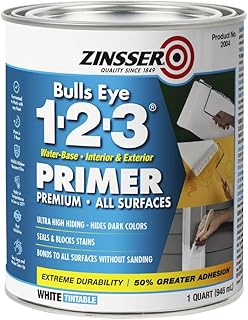
Reference features: All-surface stain-blocking primer; interior and exterior; bonds to glossy surfaces without scuff sanding; 35°F low application temperature. Best for projects that require a water-based alternative with strong adhesion on varied surfaces. Caution: While versatile, it may not provide the same deep blocking on heavy tannin bleed as oil-based formulas in some cases.
Rust-Oleum Zinsser 3954 Odorless Oil-Base Stain Blocker Primer

Reference features: Interior use on wood, drywall, plaster, concrete, masonry; low-VOC oil-based primer; dries to touch in 30 minutes; covers up to 100 sq ft. Best for projects requiring lower odor and environmental considerations without sacrificing stain-blocking power. Caution: Oil-based formulas, even odorless, still require ventilation and cure time before topcoating.
Buying Guide: Oil-Based Primer Sealer Undercoat Essentials
- What is your surface type? Consider oil-based primaries for wood knots, tannin bleed, and metal, but ensure compatibility with your topcoat.
- Do you need fast drying or heavy stain blocking? Some products emphasize quick touch-dry times; others emphasize deeper stain sealing.
- What about odor and ventilation? Oil-based primers typically have stronger odors; look for low-odor or odorless options if indoor use is a priority.
- Finish and sheen? Some primers add a slight sheen; consider this if you’re aiming for minimal topcoat changes.
- Application method? Sprays offer speed; brushes and rollers can offer better control on edges and detailed surfaces.
- Substrate versatility? If you face mixed substrates, a multi-surface oil-based primer may save time and improve adhesion.
Frequently Asked Questions
- Q: Why choose an oil-based primer over a water-based one? A: Oil-based primers typically offer stronger stain blocking and adhesion on wood, metal, and tannin-prone surfaces, especially for exterior projects.
- Q: Are oil-based primers safe for indoor use? A: Yes, but ensure proper ventilation and follow label instructions due to odor and solvent emissions.
- Q: Can I topcoat any oil-based primer with latex paint? A: Most oil-based primers are compatible with latex paints, but always verify manufacturer recommendations.
- Q: How long does it take to dry? A: Dry times vary by product; many touch dry within 30–35 minutes, but full cure may take longer depending on conditions.
- Q: Should I sand between coats? A: Light surface prep is recommended; some oil-based primers can be left as is, while others benefit from a light scuff for topcoat adhesion.
- Q: Do these products meet low-VOC or odor requirements? A: Some options are labeled low-odor or odorless; verify product specs to match your project’s needs.