Choosing the right concrete foundation paint can protect a home’s basement walls, seal Masonry, and improve long-term durability. This guide highlights five reliable options designed for interior and exterior use, including waterproofing, crack resistance, and alkali tolerance. Each product is selected for performance on concrete, brick, stucco, and block surfaces, with practical application tips for DIYers and professionals alike.
| Product | Brand | Type | Best For |
|---|---|---|---|
| KILZ Basement and Masonry Waterproofing Paint | KILZ | Waterproofing Paint | Basement walls, above/below grade |
| Liquid Rubber Basement and Foundation Repair Sealant | Liquid Rubber | Liquid Rubber Sealer | Active leaks, foundation cracks |
| INSL-X WaterBlock | INSL-X | Masonry Waterproofing Paint | Vertical walls, interior/exterior |
| INSL-X TuffCrete | INSL-X | Waterborne Acrylic Stain | One-coat stain or two-coat finish |
| KILZ Self-Priming Masonry | KILZ | Self-Priming Paint | Textured masonry, stucco, brick |
Note: This selection excludes price listings and focuses on performance characteristics, suitability for concrete and masonry, and coverage versatility across interior and exterior surfaces.
KILZ Basement and Masonry Waterproofing Paint
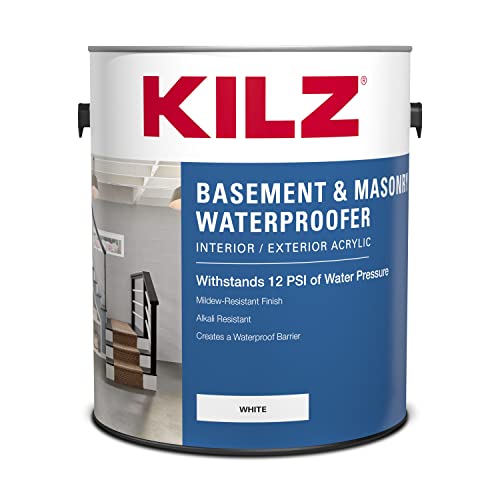
This premium interior/exterior paint is formulated to waterproof and seal porous concrete and masonry surfaces both inside and outside the home. It uses nanotechnology to form a barrier against water infiltration, while an alkali-resistant coating provides a long-lasting decorative finish. Suitable for properly prepped above and below grade basement walls, masonry walls, retaining walls, cinder blocks, stucco, and brick. Not recommended for floors or walls with active leaks. Apply with a high-quality 1/2″-3/4″ nap roller, a 4″ nylon/polyester brush, or an airless sprayer delivering 2200-3200 PSI with a .023″- .025″ tip.
Key considerations:
- Best for sealing and protecting porous concrete and masonry surfaces.
- Not intended for actively leaking walls or floors.
- Versatile application methods support DIY and professional workflows.
Liquid Rubber Basement and Foundation Repair Sealant

Liquid Rubber provides a superior flexible sealant that creates a permanent waterproof membrane for basement waterproofing, foundation leaks, and general moisture control. With 900% elongation, it remains flexible across temperature changes, reducing future cracking. It is designed for complete basement waterproofing and is compatible with self-leveling concrete applications. It also functions as a versatile crack filler and adheres well to concrete, masonry, wood, metal, and foundation surfaces, supporting a wide range of DIY projects.
Key considerations:
- Excellent long-term flexibility to handle movement and temperature shifts.
- Effective for active leaks and continuous moisture challenges.
- Broad substrate compatibility expands project options beyond concrete.
RUST-OLEUM Epoxy Shield Gray Base
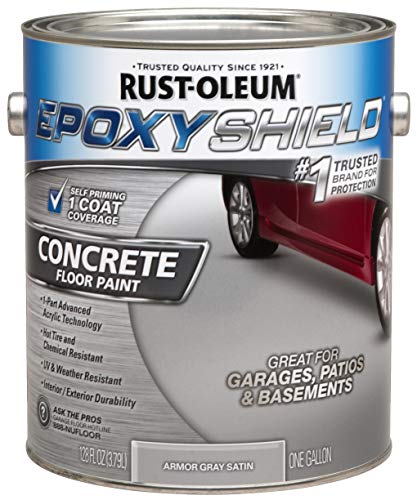
Rust-Oleum Epoxy Shield provides an epoxy-based acrylic paint solution intended for concrete floors and related surfaces. This product emphasizes an elegant design with a smooth finish. It is manufactured in the United States and is suitable for areas that require a durable, visually appealing floor coating. Note that this option is typically chosen for flooring applications rather than vertical walls, and coverage and prep specifics should be checked for concrete foundational surfaces.
Key considerations:
- Strong, long-lasting floor finish with durable appearance.
- Primarily targeted at concrete floors; not the first choice for vertical walls.
Ames Block & Wall Liquid Rubber Waterproofing
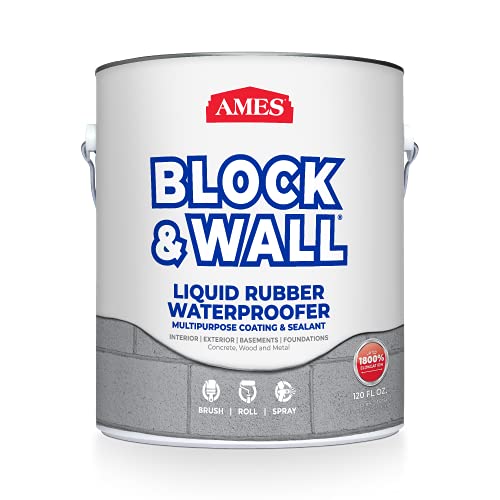
This multi-purpose coating and sealant provides a white waterproofing layer ideal for basements and foundations. It is designed for multi-surface use and is made in the USA. The product attributes include a relatively light weight and versatile domestic origin, which can be important for certain project specifications and regional supplier considerations.
Key considerations:
- Suitable for basements and foundations as a general waterproofer.
- Light color helps reflect heat and can improve visibility during application.
INSL-X WaterBlock Acrylic Masonry Waterproofer
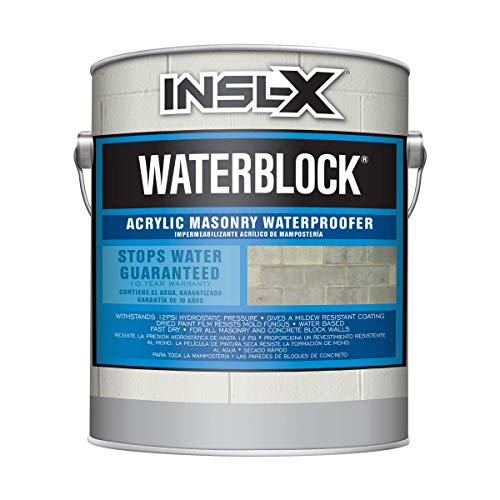
WaterBlock is a water-based coating designed to seal vertical interior and exterior concrete walls, including basement walls, foundations, and retaining walls. It dries quickly to form a waterproof film with high alkali resistance up to pH 13. The coating is suitable for masonry surfaces such as cinder blocks, stucco, and brick, and cleans up with soap and water. It supports versatile applications for both DIY and professional settings.
Key considerations:
- High alkali resistance to protect from concrete alkalinity.
- Fast drying for rapid project progression.
INSL-X CST231009A-01 TuffCrete
TuffCrete is a waterborne acrylic concrete stain paint designed for interior or exterior use on vertical or horizontal masonry surfaces. It can be applied in one coat as a stain or two coats for an opaque finish. The coating is non-fading, fast-drying, and durable, with resistance to detergents, oils, grease, and scrubbing. Its versatility makes it suitable for walls and other masonry surfaces where a stain or finished look is desired.
Key considerations:
- One-coat stain option for rapid transformation.
- Durable finish that resists detergents and scrubbing.
KILZ Self-Priming Masonry, Stucco and Brick Paint

This acrylic latex water-base interior/exterior paint features excellent hiding properties, strong adhesion, and water repellency on textured masonry surfaces. It self-priming for proper finishes on smooth, rough, and textured masonry, drywall, stucco, and brick. Alkali-resistant up to pH 12.0, it’s easy to apply and cleans up with soap and water. Suitable for rolling, brushing, or spraying, it provides a versatile solution for masonry projects requiring a reliable finish.
Key considerations:
- Self-priming capability reduces prep steps.
- Strong adhesion on diverse masonry textures.
Buying Guide: Key Purchase Considerations
To choose the best concrete foundation paint, consider surface type, moisture level, and intended lifespan. Here are the main factors to compare across products:
- Surface compatibility: Ensure the paint or sealant is suitable for concrete, cinder blocks, stucco, brick, or masonry surfaces in your project area (interior vs. exterior).
- Waterproofing vs. coating: Determine whether your priority is moisture blocking, crack bridging, or simply improving appearance. Some products prioritize waterproofing membranes, while others serve as decorative finishes.
- Alkali resistance: Concrete’s high alkalinity can degrade coatings. Look for products with high pH resistance to maintain adhesion and durability.
- Flexibility and movement: Foundations shift slowly; flexible sealants and membranes tolerate microcracks without failure.
- Application method: Rolling, brushing, or spraying—consider the equipment you have and the product’s recommended method for best results.
- Curing and drying times: Fast-drying formulas help shorten project timelines, but longer cure times may be required for full film strength in outdoor conditions.
- Color and finish: Decide between opaque finishes, stains, or white/gray bases that can be tinted or left as-is to suit your design goals.
- Maintenance and durability: For basements and foundations, choose products with long-term resistance to moisture, mildew, and cleaning agents.
When selecting a product, read labels for coverage estimates, prep requirements (cleaning, etching, priming), and safety data. Always follow manufacturer guidelines for surface preparation, ventilation, and curing conditions to maximize performance and longevity.