Choosing the right wood paint remover involves evaluating effectiveness, safety, and ease of use. This guide highlights five top options designed to strip multiple layers of acrylic, latex, oil, and water-based paints and varnishes from wood surfaces, while keeping the process manageable for DIYers and professionals alike. Each product below is evaluated on performance, user experience, and surface compatibility to help you pick an option that fits your project and environment.
Summary Table Of Chosen Products
| Product | Brand | Key Benefit | Size |
|---|---|---|---|
| Smart ‘n Easy Paint & Varnish Remover Gel | Safe ‘n Easy | Non-caustic, citrus scent, effective on multiple layers | 32 oz |
| All Purpose Paint Remover Spray 22oz | Max Strip | No drip spray gel; versatile on many surfaces | 22 oz |
| Smart Strip Advanced Paint Remover | Dumond | Removes up to 15 layers; water-based and non-caustic | 1 quart |
| Motsenbocker’s Lift Off 41301 Latex Paint Remover Spray | Motsenbocker’s Lift Off | Water-based, multi-surface; convenient spray format | 22 fl oz |
| Max Strip Latex Paint Remover 22oz | Max Strip | Fast-acting gel; softens latex paint on multiple surfaces | 22 oz |
Smart ‘n Easy Paint & Varnish Remover Gel

Safe ‘n Easy’s water-based remover is designed to avoid caustic chemicals while delivering effective paint and varnish removal. It is formulated to work on a variety of wood surfaces common in furniture restoration, cabinetry, decks, and trim. The product’s citrus scent improves user experience and helps minimize harsh odors during use. A key benefit is its ability to strip multiple layers in a single application when the coating is compatible. It’s advised to test a small area first to gauge dwell time and coating responsiveness. This option is particularly suitable for DIY projects that prioritize safety and ease of use without sacrificing results.
Features emphasize non-caustic chemistry and skin-friendly handling, which reduces the risk of irritation during application. The product’s user instructions recommend testing for coating compatibility and applying a single coat before evaluating removal progress. While the strong performance is evident, dwell times may vary based on coating thickness and substrate condition. For those working on wood furniture, cabinets, or decorative trim, this gel offers a reliable balance between safety and efficiency.
All Purpose Paint Remover Spray 22oz
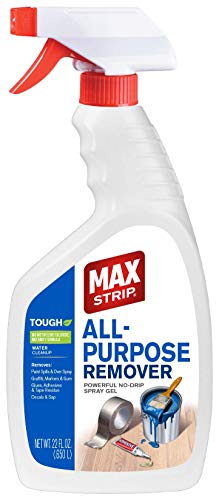
This Max Strip formulation is a water-based adhesive and paint remover designed to deliver fast action with no methylene chloride or NMP. The spray gel format helps minimize mess and dripping, making it well-suited for overspray remediation, spray-painted surfaces, and spot cleaning on wood, metal, and masonry. The product’s versatility extends to surfaces such as brick, concrete, tile, glass, stone, plaster, and fiberglass, enabling a broad approach to restoration projects. For homeowners who want a spray solution that reduces downtime and cleanup, this remover provides a practical option with straightforward usage.
Application involves applying the spray, monitoring progress every 15 minutes, and scraping off loosened material as needed. A notable advantage is its multi-surface compatibility, enabling use on furniture refinishing projects and exterior repairs alike. Because it avoids caustic formulations, users often experience a milder handling experience compared with harsher removers. This makes it a compelling choice for beginners tackling small to medium wood refinishing tasks while maintaining reliable results on varied surfaces.
Smart Strip Advanced Paint Remover

Smart Strip Advanced combines water-based, non-caustic chemistry with strong performance on multiple coating types. It is designed for both indoor and outdoor use, making it adaptable for projects ranging from kitchen cabinet restoration to exterior siding maintenance. The product is best used with a dwell time determined by a test patch due to variations in coating thickness and substrate material. It remains wet during the removal process to prevent premature drying, which helps maintain effectiveness until the coatings loosen.
The remover is capable of stripping up to 15 layers of paint, varnish, stain, or other coatings in a single application under suitable conditions. The formula emphasizes safety and environmental considerations, which is beneficial for DIYers who require a more eco-conscious option without compromising on results. For professionals, it offers predictable performance with a reputation for reliability across various wood finishing tasks.
Motsenbocker’s Lift Off 41301 Latex Paint Remover Spray

Lift Off is a water-based, multi-surface formula designed for latex paint removal and cleanup. It’s particularly useful for wood projects, but its versatility extends to fiberglass, brick, upholstery, tools, and even clothing. The spray format supports targeted application, allowing control over the amount used on intricate woodwork or detailed cabinetry. The product is known for leaving paint solids behind for easier disposal and cleanup, reducing the risk of smearing or smudging during removal.
Key advantages include its safe profile for indoor use and its capability to remove a range of coatings, including acrylics and latex enamels. The system is designed to minimize tool damage and facilitate paint cleanup, which is convenient for hobbyists who work with brushes, rollers, and drop cloths. While effective, the dwell time can vary with coatings’ age and thickness, so testing remains a recommended step before broader application.
Max Strip Latex Paint Remover 22oz

Max Strip Latex Paint Remover offers a fast-acting water-based formulation designed to loosen latex and acrylic coatings on wood, metal, and concrete. The low-VOC approach helps reduce odors and environmental impact while maintaining effective performance on overspray, drips, and spills. Its gel-like consistency reduces run-off, making it suitable for vertical surfaces such as cabinet doors or trim without excessive drips. The product emphasizes a balance between speed and safety for both indoor and outdoor applications.
For wood refinishing projects, this remover can simplify messy cleanup tasks and improve workflow by enabling quicker restoration cycles. It’s particularly helpful when dealing with layered finishes or stubborn coatings that resist standard scrubbing. Users should follow dwell-time guidance and perform a patch test to ensure compatibility with the wood species and finish type being removed.
Buying Guide: Key Purchase Considerations And Comparisons
- Coating compatibility: Always verify that the remover is suitable for the specific coatings on your wood surface (latex, acrylic, oil-based, varnish). Some formulas excel at latex removal, while others address multiple layers more efficiently.
- Surface safety: Consider whether the remover is non-caustic and has a mild odor. Water-based options generally offer a safer handling profile, especially for indoor use and DIY environments with limited ventilation.
- Application method: Sprays, gels, and liquids have different application patterns. Sprays minimize waste but may require careful targeting, while gels reduce dripping on vertical surfaces. Gels and pastes can provide longer dwell times for stubborn coatings.
- Drying and dwell time: Test patches to determine dwell time, which varies by coating type and thickness. Some products perform in 15–30 minutes for light finishes, while others may require longer periods for multiple layers.
- Ventilation and safety: Use in a well-ventilated area and wear protective gloves as appropriate. Although many formulas are non-caustic, skin and eye protection remains prudent for prolonged use.
- Cleanup and disposal: Consider the ease of cleanup after removal and whether the product leaves residue that necessitates washing surfaces or tools. Some removers enable simpler disposal due to water-based chemistry.
- Surface versatility: If you work on multiple surfaces—wood, brick, concrete, metal—choose a versatile remover to minimize product variety and streamline your inventory for projects.
- Environmental impact: If sustainability is a priority, compare VOC content, biodegradability, and whether the formula avoids methylene chloride and NMP.
Summary of the main trade-offs: non-caustic and low-odor formulas often offer safer handling but may require longer dwell times or multiple applications for very thick coatings. Gel-based products minimize drips and are helpful on vertical surfaces, while spray formats provide fast coverage but may need careful application on ornate woodwork. For projects involving furniture restoration or cabinetry, a non-caustic, water-based remover that can handle multiple layers in a single application tends to deliver the best overall value. Always perform a patch test and follow manufacturer instructions for optimal results and tool safety.