When choosing a surface for watercolor painting, you want a board that stays flat, holds your paper securely, and resists buckling as you layer washes. This guide highlights five top boards that are well-suited for watercolor work, designed for artists who paint at home, in classrooms, or on the go. Each option targets different needs—from portable clipboard boards to archival hardboards—so you can pick the one that matches your technique and workspace.
Buyer types: students and hobbyists who move between desk and outdoors benefit from lightweight, clip-secure boards. Professionals or serious hobbyists who value archival quality and texture may prefer hardboard or canvas boards. This selection covers portability, paper-holding strength, and surface suitability for watercolor techniques like washes, dry brushing, and lifting.
Overview Of Selected Watercolor Boards
Summary of top picks and their strengths:
- PHOENIX Watercolor Canvas Boards (multi-size pack): Ideal for artists seeking a blend of canvas texture and watercolor behavior; great for experiments beyond traditional paper.
- Ampersand Museum Series Hardbord AMHB12: Archivally friendly, moisture resistant, and priming-ready for layered water media.
- Ampersand Museum Series Hardbord AMHB11: Similar archival surface with flexible priming potential; a good option for varied compositions.
- Mkobon 13″ x 17″ Sketch Drawing Board: Durable hardboard with secure clips and a portable handle; best for on-the-go painting and sketching with watercolor paper.
- Falling in Art 13×17 Professional Sketch Board: Strong clip, two elastic bands, and a lightweight build; designed for classroom and studio use with reliable paper stability.
PHOENIX Watercolor Canvas Boards — 12 Pack

Best for artists exploring watercolor on a durable, textured ground beyond traditional paper. These 12 boards provide a cotton surface with medium texture that mimics a paper feel but behaves differently. The primer supports lift and control after drying, enabling adjustments without destroying the surface. Best for dry brush and controlled washes; however, heavy wet-in-wet may create pooling effects that some artists use creatively. Choose this for experimentation and mixed-media projects where color blooms are part of the plan.
Best for: artists who want an alternative to paper and enjoy lifting and reworking areas. Good for studio practice and students exploring new techniques. Avoid if you require strict traditional watercolor paper behavior or heavy continuous wet washes on every piece.
Ampersand Museum Series Hardbord AMHB12

Hardboard painting ground designed for archival quality art making. The AMHB12 surface is moisture resistant and formaldehyde-free, offering a robust base for primed painting. This board is suitable for watercolor and mixed-media processes where you want a stable, rigid support that resists warping with moisture. It’s ideal for experienced painters who prime the surface and work in layered washes. Note that priming instructions should be followed to achieve the best results.
Best for: artists seeking archival, moisture-resistant surfaces with long-term stability, especially when priming is part of the workflow. Better for those who prioritize a traditional hardboard texture and a sturdy ground over flexible surfaces. Caution: requires priming before painting to maximize longevity and performance.
Ampersand Museum Series Hardbord AMHB11
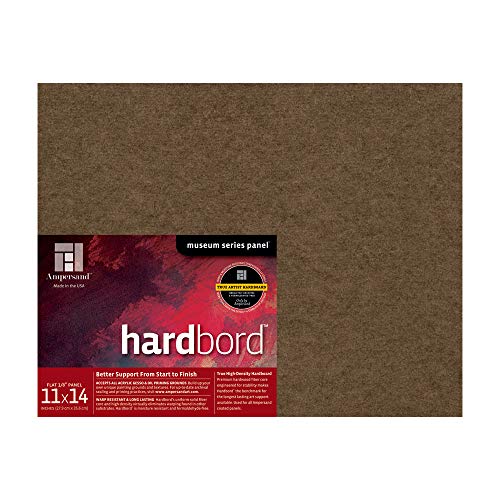
This 11-inch depth board from Ampersand offers the same archival quality and priming flexibility as AMHB12, but in a different size. Its formaldehyde-free composition and moisture resistance make it suitable for watercolor techniques that benefit from a flat, stable ground. The priming instructions enable specialized textures and grounds for mixed-media work. Best for: artists who want a reliable, primed hard surface that scales to smaller pieces. Limitation: smaller format may not suit large washes or expansive compositions.
Mkobon 13″ x 17″ Sketch Board

Spacious 13″ x 17″ drawing board with a handle and secure hold. This board is designed for indoor and outdoor use, catering to watercolor artists who sketch, plan, and paint in various environments. It features a sturdy metal clip and elastic band to hold paper in place while you work, reducing movement during washes. Best for: artists needing a portable, warp-resistant surface that can double as a drafting board. Caution: the depth and surface texture may feel less premium than high-end archival boards for very delicate paper types.
Falling in Art 13×17 Sketch Board

Sturdy sketch board with a reliable metal clip and two elastic rubber bands to secure artwork. The 13×17 size provides ample space for watercolor paper and larger sketches. Rigid construction supports a flat, stable work surface and a comfortable cutout handle for portability. Best for: classroom and studio settings where students need a dependable board for washes and line work. Limitation: may be heavier than clipboard-only options for daily commuting artists.
Buying Guide: What To Consider When Choosing A Watercolor Board
What surface texture should I look for?
Texture influences paint behavior. Canvas- or textured-board surfaces hold pigment differently than slick hardboards. If you prefer lifting and subtle bloom control, medium texture or primed canvas boards can help.
How important is portability?
For plein air work or classroom use, a board with a handle, light weight, and secure paper clips is advantageous. Clip strength and pen/marker compatibility can affect performance in active settings.
Should I prime the board?
Priming improves paint grip, prevents feathering, and allows for layering with better control. Some Ampersand boards specify priming instructions; follow them for best results and archival longevity.
How big should the board be?
Consider your paper sizes (A4, letter, legal, 11×14, 12×16, 13×17). Larger boards offer more space for washes and expansive scenes, but heavier boards may be less convenient for travel.
What about durability and longevity?
Hardboard and archival boards resist moisture and warp when properly primed and used with appropriate papers. If your process involves heavy moisture and long-term storage, prioritize moisture resistance and formaldehyde-free materials.
FAQ
- What is the main difference between canvas boards and hardbord for watercolor?
Answer: Canvas boards provide texture that interacts with paint differently and can accept lifting and lifting-friendly techniques, while hardbord offers a rigid, archival-friendly base that remains flat when primed. - Can I use these boards with any watercolor paper?
Answer: Generally yes, but ensure your paper size matches the board and that the paper stock can be secured by the board’s clips or bands. - Is priming necessary for all these boards?
Answer: Not always, but priming improves adhesion, reduces warping, and enables better layering and lifting in many watercolor practices. - Which board is best for travel?
Answer: Boards with integrated handles and lightweight construction, such as clip boards and portable wooden/hardboard options, are typically best for travel. - Should I avoid any boards for watercolor?
Answer: Avoid models that lack secure paper retention or show signs of warping under moisture. Choose boards with strong clips or elastic bands for stability.