When choosing a spray gun air regulator with gauge, precision, compatibility, and ease of use are essential. This guide highlights top options that help you dial in airflow for clean, consistent finishes across automotive, woodworking, and DIY projects. Each product is selected for clear readings, reliable construction, and practical features suitable for hobbyists and professionals alike. This overview also notes who each regulator is best for and potential limitations to consider before you buy.
Buyer’s quick reference summary:
- LE LEMATEC Paint Spray Gun Air Pressure Regulator with Gauge — Best for precise flow control and automotive projects.
- QWORK Air Pressure Regulator Kit — Best value with a durable aluminum build and easy setup.
- Lyhubmh G1/4 Air Pressure Regulator Kit — Best for fast adjustments and versatile use with pneumatic tools.
- REFINE Spray Gun Regulator Kit — Best for easy readability and dependable airflow stability.
- ENDOZER Oil Water Separator with Regulator — Best for keeping tools clean and extending life of spray systems.
LE LEMATEC Paint Spray Gun Regulator With Gauge

Best for: Automotive refinishing and fine-detail work requiring stable, repeatable airflow. This inline regulator features a 0-150 PSI gauge, enabling precise monitoring of air volume from the main compressor. It helps minimize overspray and material waste while improving finish quality.
Why selected: Its integrated gauge and universal 1/4 NPT fit simplify connections to most compressors and spray guns, making it a reliable, easy-to-set-up option for consistent results.
Limitation: The device is a straightforward regulator without advanced automatic shut-off features, so continuous monitoring is still beneficial during long sessions.
LE LEMATEC Digital Paint Gun Regulator With LED Gauge
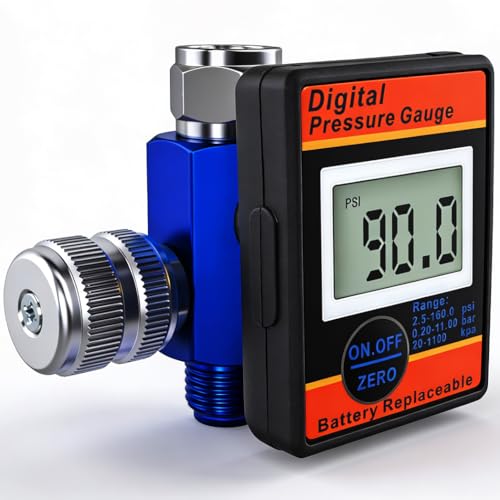
Best for: Projects requiring precise readings across multiple units—PSI, BAR, and KPa. The LED gauge helps you read pressure in low-light environments, and the auto shut-off feature promotes energy efficiency and longer regulator life.
Why selected: Its digital readout and universal 1/4 NPT compatibility provide a modern, reliable option for precise control across painting, woodworking, and inflation tasks.
Limitation: Some users may prefer mechanical gauges for quick glance readings in noisy environments.
QWORK Air Pressure Regulator Kit With Gauge

Best for: Users seeking a durable, compact regulator with a straightforward 0-150 PSI range. Its combined regulator and valve design simplifies setup for spray guns and air tools.
Why selected: Aluminum construction provides corrosion resistance and light weight, making it a practical all-around choice for workshops and garages.
Limitation: The kit may require additional adapters for certain tool threading beyond 1/4″ NPT.
Lyhubmh G1/4 Air Pressure Regulator Kit

Best for: Quick pressure adjustments during spray painting, tire inflation, and general pneumatic tasks. Its 0-140 PSI gauge and clear knob help users optimize settings on the fly.
Why selected: The universal G1/4 connection and included quick-connect adapter make it easy to attach to various tools, offering broad compatibility for different projects.
Limitation: Slightly narrower range than some competitors (0-140 PSI vs. 0-150 PSI) may limit ultra-high-pressure applications.
REFINE Spray Gun Regulator Kit With Gauge

Best for: Users who prioritize readability and dependable airflow stability for consistent spraying. The regulator supports 0-145 PSI and includes easy-reading indicators for quick adjustments.
Why selected: The design emphasizes easy knob control and airtight seals with Teflon tape, which helps maintain stable airflow and reduce leaks during operation.
Limitation: The slightly lower maximum PSI may be less suitable for heavy-duty industrial spray guns requiring higher pressure.
QWORK Double Pack Air Regulator Kit

Best for: Users who need extra regulators for multiple spray guns or tools in a single setup. The 0-150 PSI range remains suitable for most painting tasks.
Why selected: The two-regulator setup offers practical flexibility for multi-tool workflows and quick changes between tasks.
Limitation: Managing two regulators can require more space and thoughtful placement in smaller work areas.
BPJOWVIL 1/4 Inch NPT Regulator Kit

Best for: Spray guns and pneumatic tools requiring a real-time pressure readout within a 0-140 PSI/0-10 BAR range. The universal 1/4″ thread inlet and swivel outlet help with customized setups.
Why selected: It provides a clear pressure readout and a practical, universal connection, which is helpful for mixed tool kits and frequent adjustments.
Limitation: Some users may find the 140 PSI ceiling insufficient for high-demand spraying applications.
Buying Guide: Key Considerations For Choosing A Spray Gun Regulator With Gauge
- Pressure Range: Most spray applications fall in 0-150 PSI. Consider a regulator with a gauge that covers at least 0-150 PSI for flexibility.
- Readability: Analog gauges are fast to glance; digital gauges provide precise readings in different units. Choose based on your lighting and workflow preferences.
- Connection Type: The common standard is 1/4″ NPT/G1/4. Ensure the regulator matches your compressor and spray gun threading for a tight fit.
- Build Material: Aluminum offers durability and corrosion resistance; plastic components reduce weight but may be less robust under heavy use. For shop environments, metal regulators are typically favored.
- Integration Features: Some models include auto shut-off, quick-connect adapters, or Teflon tape for airtight seals. Decide which features align with your maintenance habits and setup speed needs.
- Best Use Case: If you spray automotive finishes, prioritize stability and precise flow control. For light DIY tasks, a simple, readable regulator with a broad psi range may suffice.
FAQ
- Do I need a regulator with a gauge? Yes, a gauge helps you monitor air pressure and maintain consistent spray patterns, reducing overspray and defects.
- What is the typical PSI I should set for most spray guns? Many spray guns perform well around 15-45 PSI for finish work; automotive primers and clear coats may require higher settings. Start low and test on a sacrificial panel.
- Can I mix regulators from different brands? It’s possible but ensure thread compatibility and leaktight connections to avoid pressure loss.
- Is digital better than analog for gauges? Digital gauges offer precise readings and unit flexibility; analog gauges provide quick, at-a-glance readings without battery concerns.
- What maintenance is needed for regulators? Check for leaks, replace worn seals, and clean ports regularly to prevent clogging and ensure accurate readings.