Answering the question, these are the best sandpaper belts for belt sanders across common wood, metal, and finish work. This guide highlights belts that deliver clean stock removal, smooth finishing, and reliable seam durability. Ideal for woodworkers, metal fabricators, and DIY enthusiasts, each option is selected for compatibility with standard 3×18, 3×21, and 1/2×18 belt sanders. The table below provides quick at-a-glance details to help compare grip, grit variety, and intended use.
| Product | Brand | Grit Range | |
|---|---|---|---|
| S SATC 3×18 Sanding Belts | S SATC | 60–400 (mixed) | Wood, metal, paint removal |
| POWERTEC 3 x 21 Inch Sanding Belts (11043-2) | POWERTEC | 40/80/120/240 | Heavy-duty stripping and finishing |
| POWERTEC 3 x 21 Inch Sanding Belts (110430) | POWERTEC | 80 | Medium to fine sanding |
| Sunxeke 12-Pack 3×21 Inch | Sunxeke | 80/120/150 | Woodworking and metal polishing |
| BOSHCRAFT 21 Pack 3 x 21 Inch | BOSHCRAFT | 40–400 | Versatile belt set for varied tasks |
Note: Each product below includes a link to its Amazon listing, a short reference to its key features, who it’s best for, and any relevant caveats based on available data.
S SATC 3×18 Sanding Belts

Best for mixed material projects. These belts use open-coat aluminum oxide grain for abrasion resistance and anti-static properties, supporting smoother operation with less clogging. The diagonal lap splice reduces bulges at seams, helping prevent belt derailment on most belt sanders. Suitable for wood, aluminum, fiberglass, rubber, plastics, and non-ferrous metals. A caution: belt compatibility varies by machine; check your sander’s belt size and seam tolerance before use.
POWERTEC 3 x 21 Inch Sanding Belts (11043-2)

Best for heavy-duty stripping and varied materials. These belts use a superior X-weight backing with open-coat aluminum oxide grain and a resin-on-resin bond for longevity. They feature heat- and moisture-resistant material and seams designed not to fail under pressure, making them reliable for wood, aluminum, fiberglass, and non-ferrous metals. Consider these when you need durable belts for frequent use and tougher stock removal, but plan for slightly higher initial cost compared to basic belts.
POWERTEC 3 x 21 Inch Sanding Belts (110430)

Best for general-purpose medium sanding. This 10-pack emphasizes a balance of 80-grit options for mid-level stock removal and finishing, with the same premium backing and resin bond as POWERTEC’s higher-end lines. The belts are designed to resist heat and moisture, supporting longer life under typical workshop conditions. Limitation: fewer coarse options may require switching belts for aggressive material removal tasks.
Sunxeke 12-Pack 3×21 Inch
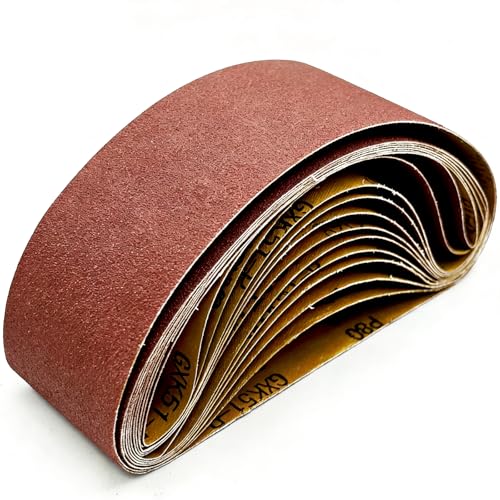
Best for mixed-material projects with steady performance. These belts combine premium aluminum oxide grit, rugged cloth backing, and strong resin bonds to resist heat and tearing. They use bidirectional tape seams to reduce vibration and belt jumping, supporting smoother operation and improved polishing accuracy. Choose this if you need reliable belts with a mid-range grit spread for wood and metal finishing. Caution: some users may prefer finer grits beyond 150 for final finishes.
BOSHCRAFT 21 Pack 3 x 21 Inch

Best for broad versatility with many grit options. The 21-piece set includes 40/60/80/120/180/240/400 grits, designed for wood, metal, plywood, and shaving boards. Aluminum oxide belts on a robust X-weight cloth backing offer improved longevity. The seam joint uses reinforced German tape to keep the belt flat and reduce belt jump. Limitation: the wide grit range means you may need to sort belts by task to maximize efficiency.
TPmax 3×21 Inch Sanding Belt Pack

Best for a compact 12-piece kit with evenly distributed grits (80/120/150). These belts use premium aluminum oxide on a firm diagonal lap splice, making them a solid choice for wood, aluminum, non-ferrous metals, glass, plastic, and stone tasks. They provide a balanced option when you want a ready-to-go assortment without purchasing multiple packs. Caution: lower grit options are limited, so plan for additional coarse belts if heavy stock removal is needed.
Buying Guide
What should you consider when choosing sanding belts for a belt sander?
- Grit range and task fit – Coarse grits (40–80) are for stock removal; mid grits (120–180) for shaping; fine grits (240–400) for finishing. Pick a belt set that matches your primary tasks.
- Backing material and bond – X-weight cloth backing and resin bonds offer durability and heat resistance, extending belt life under heavy use.
- Seam quality – A strong seam reduces bulges and belt jumps. Look for diagonal lap splices or reinforced joints for smoother operation.
- Compatibility – Verify belt size (width and length) for your sander (3×18, 3×21, 1/2×18, etc.).
- Application material – Wood, metal, plastic, fiberglass and composites respond differently to grit and bonding. Choose belts rated for your material mix.
Frequently Asked Questions
- What grit should I start with for rough material removal? — Start with 40–60 grit on wood or metal, then progress to 80–120 grit for shaping and 180–240 grit for finishing.
- Are thicker belts more durable? — Higher durability typically comes from backings like X-weight cloth and resin bonds, not belt thickness alone.
- Can I use the same belt for wood and metal? — Some belts are designed for multi-material use, but material-specific belts can yield better results on hard metals or soft woods.
- How do I prevent belts from coming apart at the seam? — Look for belts with diagonal lap splices or reinforced joints to minimize bulges and seam failure.
- Should I buy a mixed grit pack or separate grit packs? — Mixed grit packs are convenient for beginners and versatile projects; separate grit packs offer precise control for specialized tasks.
- What is the best belt size for a typical portable sander? — Common sizes include 3×21, 3×18, and 1/2×18; confirm your tool’s specifications before purchasing.