Answering the common buyer question: these tongue and groove planks provide a tight, flush fit for walls, ceilings, and feature accents. They’re best for homeowners seeking authentic wood warmth with straightforward installation. For humid spaces, thicker profiles tend to resist warping better, while primed or knot-free options simplify finishing. Below are five top options that balance price, ease of install, and natural wood character. The table summarizes who each product is best for, and why it was selected.
| Product | Best For | Why It Stands Out |
|---|---|---|
| Bingaai Cedar Tongue & Groove Panels | Humid spaces, accent walls | Thicker 1/2″ cedar; durable, moisture-resistant; authentic cedar aroma |
| baoyeewood Solid Pine Panels (Weathered Gray) | DIY enthusiasts, painted or stained finishes | Real pine, tongue & groove, FSC-certified, easy to finish |
| Wilson Tongue & Groove Pine Boards | Rustic interior walls | Unfinished, end-matched, reversible sides for versatility |
| INTERWOOD Primed Pine Beadboard Panels | Beadboard accent walls and ceilings | Primed and ready to paint, clean knot-free surface |
| Allwood Beaded Knotty Pine Wainscot Kit | Wainscoting and decorative walls | Classic beaded pattern, complete kit, tongue & groove edges |
Bingaai Cedar Tongue and Groove Wall Panels
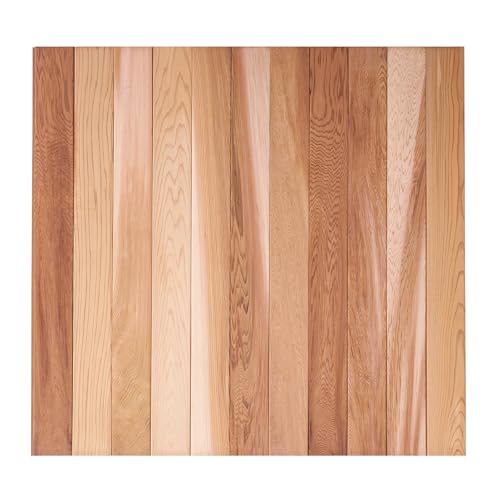
Product features highlight a ½” solid Western Red Cedar with 12mm thickness. Tongue and groove joints create flush connections that resist gaps. The thicker profile improves durability in moisture-prone spaces and allows pneumatic nailers and standard saws to cut precisely. Best for: spaces where humidity is a consideration and a solid wood, architectural feel is desired. Limitation: cedar’s natural oils may affect finish adhesion if the wrong primer is used; ensure compatible finishes for bathrooms or saunas.
baoyeewood Solid Pine Wall Panels (Weathered Gray)

This option uses real pine with FSC certification and a steam-dried treatment for stabilization. At ½ inch thickness, it offers stronger stability than thinner boards and a visually smooth, uniform surface suitable for painting or staining. Best for: DIYers seeking a ready-to-finish pine panel that combines durability with a restrained rustic-gray aesthetic. Caution: natural variations in pine can occur; expect minor movement in high humidity environments that require acclimation prior to installation.
Wilson Real Wood Tongue and Groove Rustic Pine

Unfinished pine with end-matched, reversible sides and a V-groove or shiplap option. The product’s flexibility makes it a strong pick for DIYers who want to experiment with two profiles in one installation. Best for: spaces aiming for a rustic, flexible design that can switch between beaded and flat profiles. Limitation: unfinished surfaces require sealing or coating; plan a finishing schedule accordingly.
INTERWOOD Beaded Pine Wainscoting Panels

Primed, ready-to-paint beadboard with tongue and groove edges. Includes 36 planks covering 10.5 linear feet and provides a smooth, paint-ready surface with clear pine wood for a clean look. Best for: bathrooms, hallways, and accent walls in homes where a bright, modern finish is desired. Caution: natural pine may exhibit light warping before acclimation; allow 48–72 hours for room acclimation before installation.
Allwood Beaded Knotty Pine Wainscot Kit

Complete wainscoting kit with knotty pine featuring a classic beaded pattern and tongue and groove edges. The kit includes 60 planks plus base and chair rail moldings, covering 18 linear feet. Best for: high-visibility interior walls and traditional-style rooms that benefit from the textured pine look. Limitation: knotty pine can show more natural imperfections; plan surface finishing to unify the final appearance.
Buying Guide: Tongue And Groove Pine Planks
What to consider when choosing pine tongue and groove panels
Thickness matters. A thicker profile (⅜” to ½”) generally offers better resistance to warping in humid environments. If you’re installing in a bathroom, sauna, or kitchen, a thicker option may deliver longer-term stability.
Finish and surface
Ready-to-paint primed panels simplify installation and finishing. If you prefer natural wood aesthetics, select knot-free pine for a uniform surface, or choose knotty pine for rustic texture. Consider whether you want a beadboard, V-groove, or shiplap profile to match your design goals.
Installation considerations
Tongue and groove joints provide flush connections with minimal gaps. Some products are end-matched or reversible, offering extra layout flexibility. Verify tool compatibility: many ½” panels accept standard pneumatic nailers and common saws.
Finish and acclimation
Natural pine expands and contracts with humidity. Allow planks to acclimate in the installation space for 48–72 hours (or as directed by the manufacturer) to minimize movement after installation. Prime or seal pine surfaces to improve stain or paint adhesion and durability.
Moisture and durability
Solid pine and cedar options provide natural moisture resistance, but indoor humidity should still be controlled. In high-moisture zones, thicker panels with tight joints help resist cupping and warping better than thinner boards.
Which option is best for you?
- Best for humidity-prone spaces: Bingaai Cedar Tongue and Groove Panels, due to thicker profile and cedar’s natural oils.
- Best for easy finishing: INTERWOOD Primed Beadboard Panels and baoyeewood Pine Panels with paint-ready or stain-ready surfaces.
- Best for rustic look and flexibility: Wilson Tongue & Groove Pine with end-matching and reversible sides.
- Best for complete wainscoting projects: Allwood Knotty Pine Wainscot Kit, which includes moldings for a finished look.
Fast facts at a glance
- Thickness ranges from about ½” to thicker options for stable moisture performance.
- Beadboard and V-groove profiles offer distinct interior styles.
- Primed options reduce finishing time; knot-free options reduce visual texture for smoother walls.
Frequently Asked Questions
- What is tongue and groove pine used for? – It is used for walls, ceilings, wainscoting, and decorative panels to create flush, seamless joints.
- Is pine suitable for bathrooms? – Pine can be used, but moisture management and proper sealing are important. Thick profiles and sealants help.
- Do these require special tools? – Most tongue and groove panels work with standard saws and nailers; check each product’s installation notes.
- Should I acclimate pine before installation? – Yes, acclimation helps reduce later warping; follow manufacturer guidelines.
- Are primed panels easier to install? – Primed panels reduce finishing steps and help achieve an even paint finish.
- Can I mix profiles in one room? – Yes, but plan transitions carefully to maintain visual coherence and ease of installation.