Answering the common search for durable, ready-to-use painting surfaces, these boards and canvases are ideal for acrylics, oils, watercolors, and mixed media. This guide highlights options for beginners, students, hobbyists, and professionals who want reliable primed surfaces. Each pick emphasizes what type of buyer benefits most, from classroom use to studio-level projects. The summary table below helps you compare at a glance.
| Product | Best For | Surface Size | Primed Type |
|---|---|---|---|
| Simetufy 12 Pack 8×10 Canvas Boards | Students and beginners | 8×10 in (12 pcs) | Acid-free acrylic primed cotton |
| KEFF 24-Pack Premium Canvas (Various Sizes) | Art classes and bulk buyers | Multiple sizes | Triple-primed cotton canvases |
| ESRICH Canvas Boards for Painting 8×10 | Young artists and hobbyists | 8×10 in (5 pcs) | Pure cotton, acid-free primer |
| Ampersand Artist Panel APS1114 | Mixed media and professional studies | 11×14 in | Smooth gesso on MDF |
| ESRICH Canvas Boards 11×14 | Studio practice and gallery-ready studies | 11×14 in (3 pcs) | Pure cotton, acid-free primer |
Simetufy 12 Pack 8×10 Canvas Boards

This value pack provides ready-to-paint canvas boards made of 100% cotton with an acid-free primed surface. Ideal for beginners and classrooms, the 8×10 size offers a versatile format for studies, still lifes, and quick studies. Best for learners who want a large quantity of panels that accept multiple media with minimal prep.
Who it’s best for: new artists, art teachers, and students needing economical practice surfaces. Why selected: the ready-to-use primed surface reduces setup time and supports acrylic, oil, tempera, and watercolor well.
Caution: cotton panels can warp if stored in overly humid conditions; keep flat and away from high moisture environments.
KEFF 24-Pack Premium Canvas for Painting
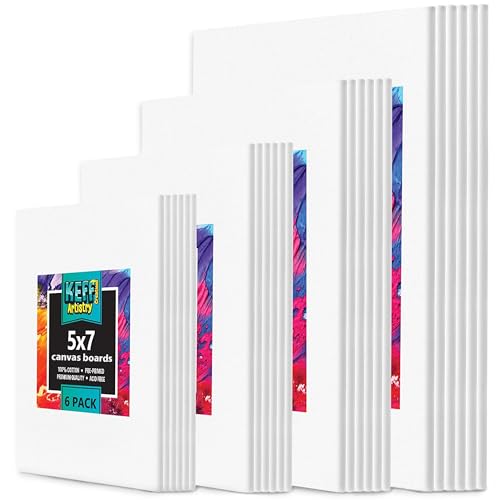
This versatile set includes multiple sizes (6 of each of 5×7, 8×10, 9×12, and 11×14). Each canvas is triple-primed for use with acrylics, oils, watercolor, or tempera. Best for art classes, studios, and artists who want a broad size range in one purchase. The multi-size bundle supports both quick studies and larger works.
Who it’s best for: instructors and students, hobbyists who want variety in a single kit. Why selected: the diverse sizes reduce the need for separate orders and maintain consistent priming across surfaces.
Caution: larger sizes require sturdy frames or backing if you plan to mount on display boards; consider storage that prevents warping.
ESRICH Canvas Boards for Painting 8×10

This 8×10 canvas value pack offers pure cotton canvases with a smooth surface and acid-free primer. It’s a practical option for beginners and intermediate artists who want reliable, non-warping panels that handle acrylics, oils, watercolors, and gouache well.
Who it’s best for: students and hobbyists seeking consistent performance at a reasonable bulk. Why selected: the combination of cotton material and acid-free primer provides a receptive painting surface across media.
Caution: avoid over-saturation or heavy wet-on-wet techniques that may cause slight warping in cheaper panels.
Ampersand Artist Panel APS1114

These primed panels combine a smooth surface with durable medium-density fiberboard (MDF) support. The top and sides are coated with acrylic gesso, creating a semi-absorbent ground that works with watercolor, acrylic, oil, and pencil. Best for mixed-media work and studio studies where a rigid, feather-light surface is preferred.
Who it’s best for: artists needing a rigid, stable alternative to canvas with excellent edge control. Why selected: the fully primed surface and MDF support provide predictable results for precise brushwork and knife painting.
Caution: MDF can be heavier than panel boards; handle carefully during transport to avoid edge damage.
ESRICH Canvas Boards 11×14

With an 11×14 size, this ESRICH pack provides three canvas boards primed on a pure cotton surface. The acid-free primer and sturdy core minimize warping and offer a reliable platform for acrylic and oil experiments, plus watercolor or gouache layering.
Who it’s best for: artists expanding to larger formats or class projects requiring multiple 11×14 panels. Why selected: consistent priming and cotton texture deliver solid color payoff and a dependable working surface.
Caution: larger panels may require careful storage to prevent edge dinging; store flat or upright in a protective rack.
Buying Guide: Key Considerations For Choosing Painting Boards
- Surface material: 100% cotton canvases offer a natural texture and good paint hold, while MDF or hardboard panels provide rigidity and reduced stretch. Consider the media you use most and whether you prefer a textured or smooth surface.
- Priming and acidity: acid-free primers protect artworks over time. Look for primed surfaces designed for acrylic, oil, watercolor, or mixed media to ensure compatibility and color adhesion.
- Size and quantity: bulk packs are cost-efficient for classrooms or ongoing projects, while individual panels fit studio setups. Choose sizes that align with your typical projects to minimize waste and frame compatibility concerns.
- Warp resistance: coatings and core materials influence warping, especially with large surfaces or heavy wet media. Cotton canvases with good priming tend to warp less when properly stored.
- Ground texture: semi-absorbent gesso impacts brush feel and paint flow. Artists preferring sharp edges or fine detail may opt for smoother surfaces like Ampersand panels, while textured surfaces suit expressive painting.
- Durability and handling: panels (MDF or birch) are less prone to denting than stretched canvases but can be heavier. Weigh your transport needs and display plans when deciding.
FAQ
- What is the main difference between canvas boards and canvas panels?
Canvas boards (cotton) have a textile surface primed for paint, while panels (MDF, birch) provide a rigid, warp-resistant support with a pre-made ground. - Are primed canvases suitable for oils and acrylics on the same surface?
Yes, most primed canvases support multiple media, but always check the primer’s compatibility with oil or acrylic for the best results. - Can I use these boards for watercolor?
Some are designed for watercolor as well as acrylic, but watercolor absorption may vary with primer and surface texture. Choose surfaces labeled as suitable for watercolor if that’s a primary medium. - Do larger panels require special framing?
Larger boards may need proper framing or backing to prevent bending and ensure stable display. - Which product is best for classroom use?
Bulk sets with uniform sizes, like the KEFF 24-pack, are ideal for classes needing multiple surfaces with similar characteristics. - Should I avoid any surfaces for certain techniques?
For heavy wet-on-wet techniques or textures requiring absorbency, select surfaces designed to handle higher moisture and pigment load to prevent premature saturation or warping.