Homeowners and DIY enthusiasts who need a durable rust solution should look for paints that chemically bond to rust while forming a protective barrier. These products convert rust and seal metal, helping prevent future corrosion. The top picks below are selected for effectiveness, practicality, and ease of use on various metal projects. Ideal buyers include car hobbyists, outdoor furniture restorers, fence or gate repairers, and workshop maintainers seeking long-lasting protection without extensive prep.
| Product | Best For | Key Benefit |
|---|---|---|
| Rust-Oleum 248658 Stops Rust Reformer Spray Paint | General metal rust on outdoor items | Instant rust conversion with paintable finish |
| DWIL Rust Converter for Metal | Intricate metal work and hard-to-reach areas | Thin, capillary-action formula for deep penetration |
| AGS RUST SOLUTIONS Rust Stop Spray Paint for Metal | Coatings with high heat exposure | Epoxy-fortified for strong adhesion and durability |
| 2 in 1 Rust Converter & Metal Primer — SMAPHY | Projects needing primer and converter together | One-coat rust conversion with primer-like adhesion |
| Ultra 2-in-1 Rust Converter Paint & Metal Primer — cocomfix | Automotive, chassis, and heavy-use metal | Direct-to-rust application with heat resistance |
Rust-Oleum 248658 Stops Rust Reformer Spray Paint

Rust-Oleum’s Stops Rust Reformer converts surface rust into a flat black, paintable layer that anchors a future topcoat. The oil-based formula creates a bond with the rusted surface, allowing immediate painting once dried. Best for exterior metal surfaces, railings, and tools exposed to moisture. Dries tack-free in about 20–40 minutes, with a recommended 24 hours before applying a topcoat. Consider this option when you want a straightforward rust-to-paint workflow on larger, accessible areas.
Who it’s best for: DIYers seeking a simple, single-step rust conversion and paint-ready surface without extra primer steps. It’s suitable for moderate rust and surfaces where a durable, matte appearance is acceptable.
Limitations: Oil-based formulas can have longer cleanup times and may require good ventilation. Use on properly prepared rusted surfaces for optimal adhesion.
DWIL Rust Converter for Metal

DWIL presents a 2-in-1 rust converter and primer in a low-viscosity formula that “looks like water but works like chemistry.” The product penetrates into microscopic pores and tight crevices, converting rust at the source to a durable, black protective layer. It’s designed to be versatile for car chassis, truck frames, gates, fences, and marine equipment, making it a strong candidate for complex or hard-to-reach surfaces.
Who it’s best for: Projects requiring deep rust penetration and a conversion layer without sanding or primer steps. Ideal for intricately shaped metal and areas where traditional paints can’t reach.
Limitations: The low-viscosity consistency may surprise those used to thicker paints; ensure proper application technique to avoid runs in vertical surfaces.
AGS RUST SOLUTIONS Rust Stop Spray Paint for Metal

AGS Rust Stop combines rust bonding with a fortified epoxy formulation to create a durable barrier. It bonds directly to rust with no sanding required, helping seal surfaces and prevent further corrosion. The paint is designed to withstand elevated temperatures (up to 300°F) and salt spray exposure, making it a robust choice for exterior metal in harsh climates.
Who it’s best for: Projects exposed to heat, humidity, and road salt, such as outdoor gates, fences, and machinery components. It’s particularly suitable when a tougher, long-term finish is desired without extensive prep work.
Limitations: The 14 oz can covers about 10–12 square feet; plan for surface area and multiple coats on larger items.
2 in 1 Rust Converter & Metal Primer — SMAPHY

SMAPHY markets a 2-in-1 rust converter and primer that converts rust into a durable black, paintable surface. It promises peel-proof adhesion and claims coverage of up to 100 square feet, with a heat resistance up to 350°F. This makes it suitable for automotive frames, trailers, and various outdoor metal items where primer steps are to be avoided.
Who it’s best for: DIYers who want a single-step solution that converts rust and primes in one coat, reducing the number of steps for large or flat surfaces. Also good for automotive or outdoor equipment where heat and UV resistance matter.
Limitations: While marketed as a long-lasting solution, actual performance depends on surface preparation and exposure conditions. Consider spot testing on high-wear areas first.
Rust Conversion Paint — Generic

Generic Rust Conversion Paint combines a rust converter with a protective rust paint layer. It’s designed for indoor and outdoor use on railings, car parts, and tools. The water-resistant formula creates a barrier against rain, humidity, and temperature fluctuations, extending metal lifespan with a weatherproof finish.
Who it’s best for: Budget-conscious projects and basic metal items where a simple, water-based solution is preferred for corrosion protection.
Limitations: Generic labels may reflect a wide range of properties; verify surface compatibility and recommended dry times for your specific project.
Ultra 2-in-1 Rust Converter Paint & Metal Primer — cocomfix
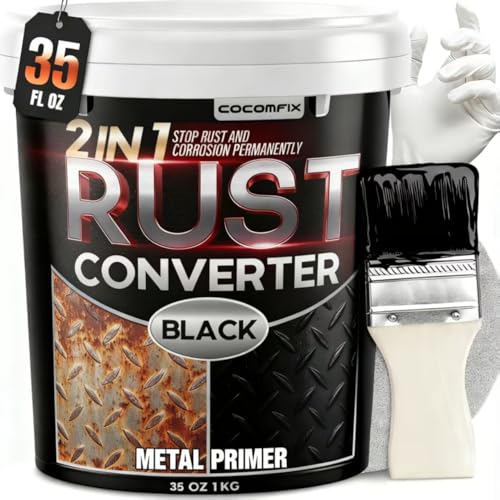
cocomfix offers an Ultra 2-in-1 Rust Converter Paint that converts rust to a stable, heat-stable black coating. It is designed for direct-to-rust application with no primer or topcoat required. The formula is stated to withstand up to 350°F heat, making it suitable for vehicle frames, trailers, and other high-heat metal components.
Who it’s best for: Those needing a direct-to-rust solution that delivers both rust conversion and durable adhesion in one coat, especially on automotive or industrial metal surfaces.
Limitations: Real-world heat exposure and environmental conditions can impact long-term durability; plan for a test patch on critical components.
Buying Guide: Key Considerations For Selecting Rust-Bonding Paints
- Rust stage: For active rust, look for rust converters that chemically neutralize corrosion and form a protective layer. If rust is stabilized, a direct-to-rust paint may suffice.
- Surface complexity: Low-viscosity or penetrating formulas are better for intricate metalwork and tight crevices, while thicker coatings suit flat, large surfaces.
- Heat exposure: Exterior metal and automotive parts benefit from heat-resistant formulas designed for 300–350°F or higher.
- Primer needs: Two-in-one converter-and-primer products reduce prep steps, but dedicated primers can optimize primer adhesion on challenging substrates.
- Application surface: Sanding and cleaning improve adhesion; in some cases, sanding may be minimized by direct-to-rust formulations.
- Coverage and can size: Plan based on surface area; larger items may require multiple cans or bulk packs.
Frequently Asked Questions
- What is a rust converter? A rust converter chemically converts iron oxide into a stable, paintable layer, stopping corrosion at the source and preparing the surface for painting.
- Can I paint over a rust converter without sanding? Many converters allow direct topcoating, but always follow the product’s label instructions to ensure adhesion and durability.
- Is it better to use a primer with rust paint? A dedicated primer can improve adhesion and longevity on harsh surfaces, especially when exposure to moisture or salt is high.
- Which product is best for outdoor metal fences? Look for epoxy-fortified or heat-resistant rust paints designed for weather exposure and salt spray resistance.
- Do rust converters require ventilation? Yes. Use in a well-ventilated area and wear safety gear as recommended by the product label.
- How long should I wait before topcoating over a rust converter? Dry times vary; typical guidance ranges from 24 hours to 48 hours to ensure full curing.