Looking for versatile wets-and-drys sanding sheets that span coarse shaping to fine polishing? This guide highlights five top options that cover a wide grit range, suitable for automotive, woodworking, and metalwork. Each pick is well-suited for different buyers: automotive detailers, woodworkers, DIY hobbyists, and professionals needing durable, multi-use sandpaper. The table below contrasts key specs to help you decide quickly.
| Product | Grit Range | Sheets Included | ||
|---|---|---|---|---|
| BAISDY 45Pcs Wet Dry Sandpaper | 400–3000 | 45 sheets | Wood, metal, automotive finishing | Excellent variety; standard 9×3.6 inch size |
| 3M Wetordry Sandpaper (03006) | 1000–2500 | 5 sheets | Clear coat polishing and paint defect removal | Premium brand with smoother finish |
| Pihemum 45Pcs Sandpaper | 80–5000 | 45 sheets | General sanding, finishing and polishing | Wide range from coarse to superfine |
| Atosun 45PCS Wet Dry | 120–5000 | 45 sheets | Wet/dry versatility for woodworking and metal | Silicon carbide, durable and tear-resistant |
| YXYL 48 PCS Sandpaper | 120–5000 | 48 sheets | Wood finishing and metal polishing | Printed grit on back for easy identification |
Each product below is chosen for its broad grit coverage, durability, and clear suitability for wet and dry use. Read each section to see who benefits most and why.
BAISDY 45Pcs Wet Dry Sandpaper Review
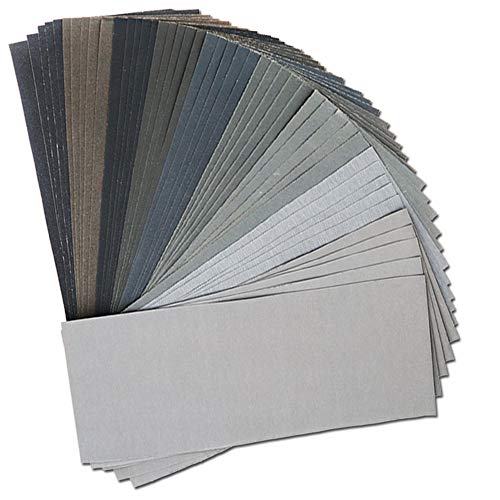
The BAISDY set provides a broad grit spectrum from 400 to 3000, with five sheets per grit for consistency across projects. Best for hobbyists and professionals who need a wide range in a single pack for wood furniture finishing, metal polishing, and automotive prep. The 9 x 3.6 inch sheets are easy to cut or fold to reach corners and crevices. Caution: check grit distribution if you require ultra-fine work, as some sheets may vary slightly in grit density.
3M Wetordry Sandpaper, Assorted Grits
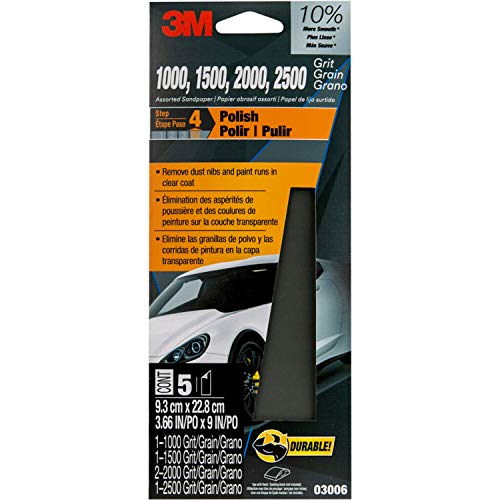
3M Wetordry offers a focused set of mid-to-fine grits (1000, 1500, 2000, 2500) ideal for clear coat sanding and defect removal. Best for professionals and serious hobbyists who want consistent, smooth finishes with less dust and a polished look. Use wet or dry to avoid switching papers mid-project. Limitation: only five sheets per pack, so you may need more packs for large jobs.
Pihemum 45Pcs Sandpaper Collection

Pihemum provides an extensive range from 80 to 5000 grit, with three sheets per grit. This makes it a strong all-purpose kit for homeowners and contractors doing heavy shaping and fine finishing on wood, metal, and automotive parts. Best for users who want a single pack that covers rouging, smoothing, and polishing. Caution: higher grits may require careful handling to avoid gumming on soft woods.
Atosun 45PCS Wet Dry Sandpaper

Atosun combines 120 through 5000 grit in a waterproof, tear-resistant set. This makes it well-suited for woodworking projects, metal smoothing, and automotive detailing where wet sanding reduces dust and heat. Best for DIYers who want a robust, long-lasting kit with clear grit progression. Limitation: some users may prefer even finer grits beyond 5000 for high-gloss polishing.
YXYL 48 PCS Sandpaper Set
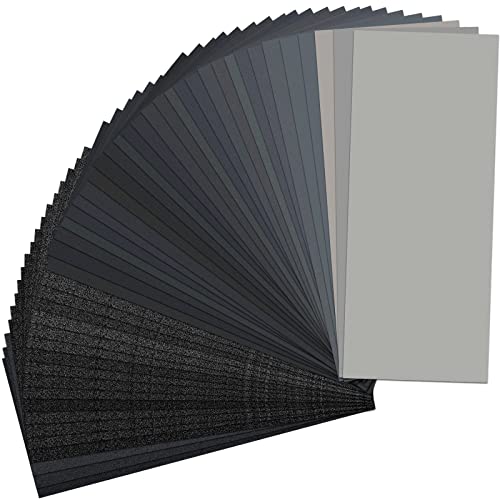
YXYL offers 48 sheets, spanning 120 to 5000 grit with back-grit labeling for quick identification. This makes it a versatile choice for wood finishing and metal polishing. Best for users who value easy grit recognition and a dense set that covers both rough shaping and fine finishing. Caution: read back-of-pack labels to ensure you select the exact grit you need for a given task.
Buying Guide
What grit range do I need?
Coarser grits (80–120) work for initial material removal and shaping. Medium grits (180–400) smooth surfaces. Fine grits (600–1200) prepare for primer or finish. Very fine grits (1500–5000) are for final polishing and finishing touches. For most projects, a mix that covers 80–5000 offers flexibility.
Wet vs Dry use: which to pick?
Wet sanding reduces dust and heat, helps prevent clogging, and yields smoother finishes on metal and automotive surfaces. Dry sanding is faster for wood shaping and initial metal work. Many sets are dual-use, making it easy to switch as you progress.
Durability and sheet size matters
Standard 9 x 3.6 inch sheets are compatible with most blocks and hobby tools. Look for electro-coated silicon carbide and waterproof backing for durability and long life, especially in wet environments.
How many sheets per grit?
Sets with multiple sheets per grit are preferable for larger projects to maintain consistent results. If you frequently complete big tasks, prioritize kits with several sheets per grit in the essential ranges (400/600/800 and 1000–2000).
Grit labeling and identification
Back-of-sheet labeling or clear packaging helps prevent using the wrong grit. Choose products with easy-to-read markings to improve workflow and accuracy.
Best for whom?
Automotive detailers benefit from finer grits (1000–5000) for paint correction and polishing. Woodworkers need a broad spread from 80 to 5000 to handle shaping and finishing. Metalworkers may prioritize durable wet-dry sheets across a wide grit spectrum for cleaning and smoothing metal surfaces.
FAQ
- What is the difference between wet and dry sandpaper? Wet sandpaper is designed to be used with water or lubrication to reduce dust, minimize scratching, and cool the surface. Dry sandpaper is used without lubrication and is typically faster for material removal.
- Can I cut sandpaper to a custom shape? Yes. Most sheets are 9 x 3.6 inches and can be cut or folded to fit curved surfaces or tight corners.
- Which grit should I start with for furniture finishing? Start with a coarse grit (around 120–180) for shaping, then move through finer grits (240–400) and finish with 600–1000 for a smooth base before sealing or staining.
- Are these sets suitable for automotive clear coat work? Sets that include 1000–5000 grit are suited for clear coat sanding and polishing, especially when used with wet sanding to avoid scratches.
- Is it better to buy one large set or multiple smaller packs? A large set with a wide grit range offers flexibility and consistency. Multiple smaller packs can be convenient but may require more management to avoid grit mismatches.
- How do I avoid clogging when sanding wood? Use lower grits for initial shaping, then progressively move to higher grits with light, steady pressure and a damp surface for best results.