Looking for drywall mud that helps create or repair texture on walls and ceilings? This guide highlights five reliable options suited to different texture goals, from knockdown finishes to smooth, seamless patches. Best for: homeowners tackling quick repairs, DIY painters, and professionals seeking consistent texture results without heavy sanding.
Summary table of selected products
| Product | Best For | Key Benefit | Selected For |
|---|---|---|---|
| Homax Texture Touch Up Kit | Texture repair on walls and ceilings | Adjustable texture sprayer and multiple texture options | Versatile texture matching |
| Patelai Knockdown Texture Sponge | Knockdown texture patches | Easy to use for small repairs with knockdown blend | Good for quick DIY texture patches |
| DAP Patching Plaster | General wall patching and quick repairs | Fast-drying, low shrinkage, paint-ready in hours | Simple wall repairs before painting |
| MuddSkip Smooth Drywall Additive Powder | Level 5+ smooth finish on seams and coats | No sanding required, same-day wet-on-wet coats | Finish coatings for a flawless surface |
| MuddSkip Heavy Duty Drywall Additive Powder | Level 3-4 finish on heavy repairs | No sanding required, same-day wet-on-wet | Durable texture and fills for robust repairs |
Homax Texture Touch Up Kit
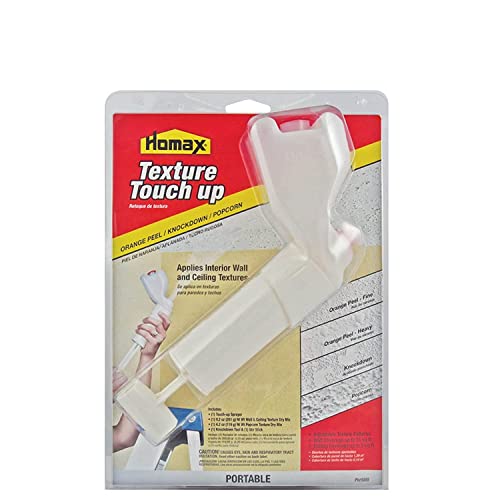
The Homax Texture Touch Up Kit is designed for walls and ceilings where texture needs to be repaired or adjusted. It includes a hand-operated texture repair sprayer, two texture mixes (orange peel, popcorn), a knockdown tool, and a stir stick. Best for: homeowners who want an all-in-one solution to match existing textures during quick renovations. This kit supports multiple texture types, making it easier to reproduce a consistent look. A limitation: end results depend on technique and surface condition, so some practice may be needed.
Patelai Knockdown Texture Sponge

The Patelai Knockdown Texture Sponge focuses on creating a knockdown texture with small patches. It’s best for DIYers repairing small areas or blending texture into surrounding walls. The sponge is vacuum-packed and expands when wetted, simplifying the process for beginners. A caveat: results depend on moisture control and technique, so follow the included quick-start guide for best outcomes.
DAP Patching Plaster

The DAP Patching Plaster is a ready-to-use, latex-based patching compound designed for quick wall repairs. It dries quickly with minimal shrinkage and can be painted in 1–5 hours depending on conditions. Best for: small to moderate plaster or drywall holes and cracks prior to painting. Limitation: not a full-texture product, but a reliable patch filler when smooth patches are needed before texture work.
MuddSkip Smooth Drywall Additive Powder
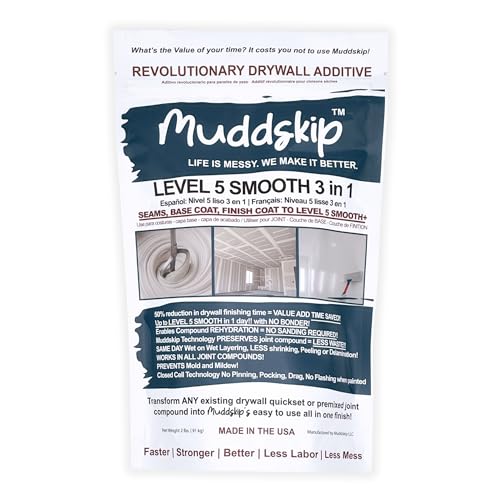
The MuddSkip Smooth Drywall Additive Powder is designed to deliver a Level 5+ smooth finish for seams and coats. It allows rehydration and rework up to 24 hours later, enabling a flawless final coat. Best for: professionals or DIYers aiming for ultra-smooth walls with minimal sanding. Limitation: intended for smooth, not heavy texture finishes, so pair with texture products if a textured surface is required.
MuddSkip Heavy Duty Drywall Additive Powder
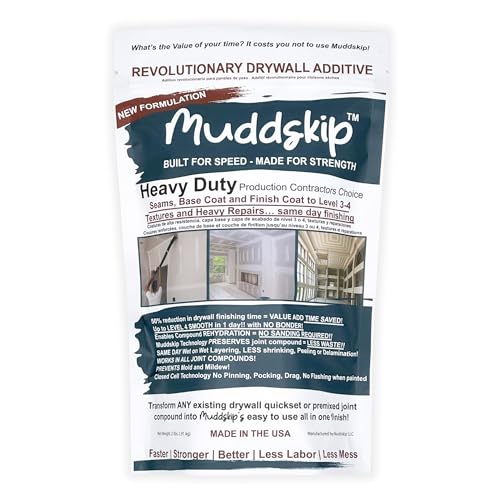
The MuddSkip Heavy Duty Drywall Additive is tailored for tough repairs and textured surfaces, delivering a Level 3–4 finish with no sanding required. Best for: patches that need durability and texture depth, such as high-traffic walls or areas with visible imperfections. Limitation: not intended for the finest, ultra-smooth finishes; choose the Smooth Formula for Level 5+ results.
Buying Guide: Drywall Texture Materials and Techniques
What should you consider when choosing drywall mud for texture?
- Texture type: Determine whether you want knockdown, orange peel, popcorn, or a smooth finish. Different products are optimized for different textures.
- Repair scope: For small repairs, patching plaster or a texture sponge can suffice. For large areas, a combination of mud with a texturing tool may be needed.
- Drying time: Fast-drying compounds speed up projects but may reduce working time. Plan accordingly based on climate and humidity.
- Finish level: If a high-smooth finish is required, look for Level 5+ additives; for robust patches with texture, Level 3–4 products may be better.
- Application tools: Consistent texture often comes from appropriate tools (sponges, rollers, knockdown sques, sprayers). Pair the compound with compatible tools for best results.
Practical buying considerations
- Are you patching small holes or repairing large areas? Pick a product suited to your patch size.
- Is ease of sanding important? Consider no-sanding additives for faster cleanup and cleaner job sites.
- Do you need adjustable textures or fixed textures? Some kits offer multiple texture options; others are specialized for a single finish.
Texture technique tips
- Practice on a drywall scrap or hidden wall area before applying texture to visible surfaces.
- Maintain consistent pressure and speed with texture tools to avoid uneven patches.
- Drying conditions affect texture appearance; climate control can help achieve predictable results.
Frequently Asked Questions
- What drywall mud is best for knockdown texture?
– Knockdown textures often use medium-set or special knockdown sponges and compatible texture compounds. Look for products marketed for knockdown or texture in conjunction with a sponge or roller. - Can I texture over existing texture?
– Yes, but ensure the old texture is clean, dry, and in good condition. Repair any damaged areas before applying new texture. - Do I need to sand between coats?
– Many modern additives are designed to minimize sanding. Always follow product instructions for recoat times and sanding requirements. - Is a texture sprayer worth it for beginners?
– A texture sprayer can speed up larger jobs, but practice is important to avoid over-spraying or drips. - What finish level should I expect with these products?
– Level 5+ is the smoothest finish, best for interiors with minimal texture. Level 3–4 is typical for visible texture and repairs. Choose accordingly. - How long does drying time vary?
– Drying depends on temperature, humidity, and thickness. Painting may be possible in as little as 1–5 hours for some patches.