Looking for gray or white paints that work on interior and exterior surfaces while delivering consistent color and easy application? This guide highlights five well-suited options based on finish, durability, and ease of use. Each product is chosen for different buyer needs—from fast-drying doors and trim to durable exterior coatings for walls and decks. The top picks cover metal, wood, masonry, and concrete surfaces, helping DIYers, renters, and homeowners select the right shade and sheen without complexity.
| Product | Brand | Finish | Best For |
|---|---|---|---|
| Rust-Oleum Advanced Dry Door & Trim Paint | Rust-Oleum | Satin | Interior/Exterior doors and trim |
| KILZ Self-Priming Masonry, Stucco & Brick Paint | KILZ | Flat | Masonry and textured surfaces |
| Painter’s Touch Latex Paint, Satin Stone Gray | Rust-Oleum | Satin | General indoor/outdoor surfaces |
| KILZ Low-Lustre Enamel Porch & Patio | KILZ | Low-lustre enamel | Porches, decks, and patios |
| EVOLVE All Purpose Whites Paint & Primer | EVOLVE | Flat | Walls and ceilings, frequent touch-ups |
Notes: The featured products span interior and exterior uses with gray and white tones. Threads connecting them include low odor formulas, quick drying times, and good adhesion on a variety of common surfaces. Use the Buying Guide below to tailor choices to your project type and environment.
Rust-Oleum Advanced Dry Door & Trim Paint

Finish and durability: Satin. This ready-to-use, water-based paint is designed for interior or exterior metal, wood, and fiberglass surfaces. It dries to the touch in about 45 minutes, offering faster project completion than many oil-based options. Best for doors and trim where quick re-coats are beneficial. Caution: odor is lower than oil-based formulas but still noticeable during application; ensure good ventilation.
Best for: Homeowners updating interior or exterior doors and trim who want fast-drying, long-lasting color without strong solvents. It’s particularly suitable for metal or fiberglass doors and for people who want a clean, modern Alpine Gray finish with good fade resistance.
KILZ Self-Priming Masonry, Stucco & Brick Paint

Finish and durability: Flat. This acrylic latex water-based paint offers strong hiding power and adhesion on textured masonry, stucco, brick, and drywall. It is self-priming and alkali-resistant up to pH 12, which helps with masonry efflorescence and mineral surfaces. Best for: walls and exterior surfaces with rough texture where hiding power is a priority. Caution: flat finishes show less sheen and can highlight surface imperfections; avoid high-gloss needs in high-traffic areas.
Rust-Oleum Painter’s Touch Latex Paint, Satin Stone Gray
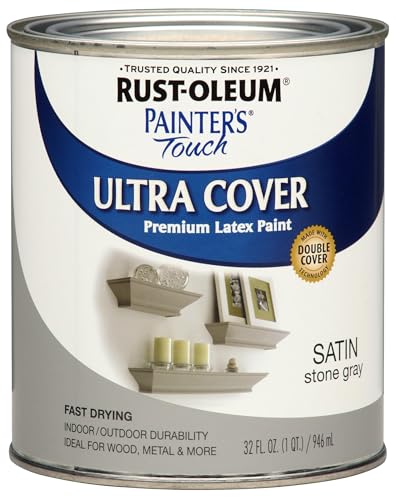
Finish and durability: Satin. This versatile water-based acrylic works on wood, metal, plaster, masonry, or unglazed ceramic. The low-odor formula resists chipping and provides long-lasting protection. It covers up to 120 sq ft and dries to touch in about 30 minutes. Best for: general indoor and outdoor projects needing a balanced gray with good washability. Caution: not ideal for areas with heavy foot traffic or automotive tire exposure; consider a more wear-resistant finish for floors.
KILZ Low-Lustre Enamel Porch & Patio

Finish and durability: Low-lustre enamel. A 100% acrylic latex coating designed for porches and patios, this paint endures moisture and weather while resisting scuffs. It is suitable for decks, siding, trim, and furniture. Best for: outdoor areas where a durable, easy-to-clean finish is desired. Caution: sealed surfaces can be slippery when wet; exercise caution in wet conditions and consider non-slip treatments on walking surfaces.
EVOLVE All Purpose Whites Paint & Primer

Finish and durability: Flat. This interior latex paint includes primer for better hiding and smoother touch-ups on walls and ceilings. It is designed for high-coverage needs in new construction, rentals, apartments, and busy spaces where frequent repainting occurs. Best for: walls and ceilings in spaces requiring a simple, uniform white that hides imperfections well. Caution: flat finishes show more imperfections and are less durable in high-traffic areas without additional protective topcoats.
Buying Guide: Key Purchase Considerations
Surface type and texture: Masonry, brick, stucco, wood, metal, or plaster each respond differently to paint. Choose formulas optimized for the surface to ensure adhesion and durability.
Finish and sheen: Satin offers slight sheen and easier cleaning; flat hides wall flaws; low-lustre enamel balances durability with aesthetics. Match the finish to room use and traffic.
Priming needs: Some paints are self-priming, which can save time on bare or porous surfaces. For previously painted or glossy surfaces, a primer may still be required for best adhesion.
Indoor vs. outdoor: Exterior paints need weather resistance and UV stability; interior paints prioritize odor, drying time, and washability. Consider environmental conditions where the project is located.
Drying time and recoat window: Faster-drying formulas can reduce project duration but may require more precise handling. Plan coats and re-coats accordingly.
Color behavior: Gray and white shades can shift with lighting. Test color samples on the actual surface to confirm tone and depth before full application.
Coverage and cleanup: Check square-foot coverage and cleanup requirements. Water-based formulas clean easily with soap and water, which helps with maintenance and touch-ups.
Frequently Asked Questions
- What kind of finish is best for doors and trim?
Glossy or satin finishes are typically preferred for doors and trim due to their durability and easier cleaning. Satin provides a balance of sheen and hiding power, while gloss offers more washability.
- Is a primer necessary for masonry surfaces?
Self-priming masonry paints exist, but on very porous or heavily textured surfaces, applying a dedicated primer can improve adhesion and hiding power.
- Can I use interior paint for exterior walls?
Interior paints are not formulated for outdoor conditions. Use exterior or porch-and-patio exterior formulas for weather exposure and UV resistance.
- How long should I wait between coats?
Drying times vary by product; follow label directions. Most latex paints require 1–4 hours between coats under typical indoor conditions.
- What is the advantage of flat vs. satin finishes for walls?
Flat hides surface imperfections better but is less washable. Satin finishes are more durable and easier to clean, suitable for high-traffic areas.
- How do I select gray vs. white tones?
Test swatches in natural and artificial lighting on the actual surface. Gray tones shift with light and neighboring colors; white can have warm or cool undertones.