Choosing the right white cement or white-wall repair product helps achieve a clean, durable finish on interior and exterior walls. This guide highlights five relevant products that address patching, repair, coatings, and decorative cement uses. It targets homeowners, DIYers, and contractors seeking reliable white cement solutions for walls, ceilings, and masonry surfaces. Each option is evaluated for applicability, ease of use, and practicality in common wall projects.
| Product | Best For | Key Benefit |
|---|---|---|
| White Portland Cement 10 Pound Bag | Concrete projects and mold casting | Pure white Type 1 cement for colored concrete and grout |
| White Portland Cement 5 Pound Bag | Colored concrete and mold casting | Compact option for small projects |
| Surecrete MicroTek One Coat | Interior/exterior wall overlays | Single-component microcement for a sleek finish |
| DAP DryDex Dry Time Indicator Spackling | Wall patching and repairs | Color indicator shows when repairing is dry |
| Breliter Drywall Repair Kit | DIY wall repairs | All-in-one repair kit for nails, cracks, and stains |
White Portland Cement 10 Pound Bag

This product provides white Portland cement suitable for swimming pool repairs, mold casting, and general concrete projects. It is a Type 1 cement, making it appropriate for creating colored concrete and grout when combined with pigments. Best for projects requiring a bright white base and bulk cement for larger wall repair or decorative concrete work. Choose this if you are mixing custom concrete or repairing exterior masonry and need a consistent white base. Caution: Ensure proper ventilation and follow mixing ratios to achieve the desired strength and color.
White Portland Cement 5 Pound Bag
This smaller bag also features white Portland cement suitable for mold casting and general concrete work. Best for small-scale wall repairs, decorative castings, or touch-ups where a lighter batch is sufficient. It fits scenarios where a compact quantity is preferable. Better for hobbyists or limited-surface projects. Avoid overloading a repair with too much cement at once to prevent handling issues or premature setting.
Surecrete MicroTek One Coat
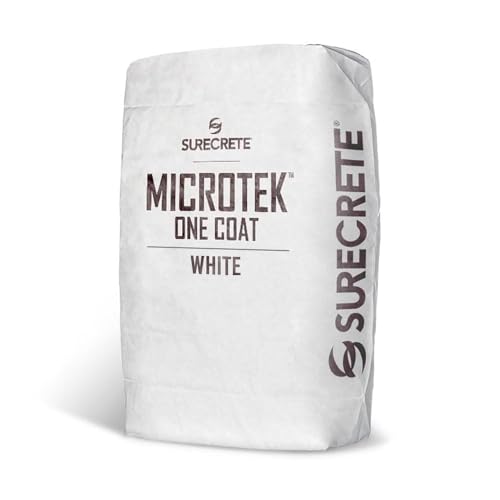
Surecrete MicroTek One Coat is a single-component microcement overlay designed for interior and exterior walls, bathrooms, and fireplace surrounds. Best for achieving a modern, seamless finish on prepared concrete, cement boards, or primed surfaces. It is ideal for those who want a durable, continuous cement-like surface with minimal layering. Choose this if you need a fast, water-friendly application that dries to a white, tight-troweled finish. Limitation: Requires proper substrate prep and consistent mixing with water per instructions for best results.
DAP DryDex Dry Time Indicator Spackling

DAP DryDex is a latex polymer spackle designed for interior and exterior repairs on drywall, plaster, wood, brick, and stone. It goes on pink and dries white, providing a clear signal that the patch is dry within 1 to 5 hours. Best for quick repairs where color indication matters. Choose this for nail holes, cracks, and shallow repairs up to 1/8″ deep. Caution: Deeper repairs may require multiple layers with drying time between applications.
Breliter Drywall Repair Kit

The Breliter Drywall Repair Kit provides an all-in-one solution for nail holes, cracks, and stains. It includes a 250g wall mending agent, a precision nozzle extender, a scraper, sandpaper, and more for a complete DIY repair workflow. Best for homeowners and renters who want a ready-to-use package with minimal setup. Limitation: Performance depends on proper surface preparation and drying time to ensure a uniform finish.
Buying Guide
What wall project are you tackling?
For structural repairs or patching on drywall, lightweight spackling or repair kits may be sufficient. For aesthetic finishes or decorative cement looks, consider cement-based overlays or white cement blends designed for concrete or masonry surfaces.
Do you need color fidelity or a white base?
White Portland cement variants offer a true white base for colored concrete and grout, while cement overlays provide a seamless, uniform finish. If you plan to add pigments, test a small area first to predict color results.
What surface prep is required?
Most cement-based products require clean, dry surfaces free of dust, grease, and loose material. Primers or sealers may be necessary on porous or masonry surfaces to ensure proper adhesion and finish quality.
How important is drying time and return to service?
Spackling like DryDex offers quick dry signals for repairs, while cement overlays may require longer cure times before finishing coats or painting. Plan projects to accommodate cure and potential rework if needed.
Is odor, VOCs, or fumes a concern?
Look for low-VOC or formaldehyde-free options when working in interiors, especially bedrooms or nurseries. Repair kits typically emphasize non-toxic formulas suitable for indoor use.
What is the best option for a beginner?
A complete drywall repair kit with simple tools (scraper, sandpaper, nozzle extenders) is often easiest for beginners. For a more decorative look, a ready-to-use microcement overlay can deliver professional results with minimal layering.
What trade-offs should be considered?
Portland cement offers strength and a white base, but may require more handling and curing time. Spackling and repair kits are quick and convenient but are best for small repairs. Choose based on project size, durability needs, and finish goals.
How should you store and apply these products?
Store in a cool, dry place away from moisture. Follow container directions for mixing ratios, application thickness, and curing times. Use appropriate protective gear for dust and fumes during sanding or mixing.
Quick tips for choosing
- Project size: large wall repairs favor cement blends; small patches favor spackle or repair kits.
- Finish goal: a sleek microcement look requires overlay products; simple patches need spackle.
- Substrate: concrete or masonry surfaces may benefit from cement-based products; drywall surfaces from spackling or patch kits.
FAQ
- Q: Is white cement suitable for interior walls? A: Yes, for decorative or repair purposes on concrete and masonry surfaces, and when used with appropriate primers.
- Q: Can I paint over cement overlays? A: Yes, most overlays accept paint after proper curing and sealing.
- Q: What is the best product for quick wall patching? A: Spackling with clear drying indicators, such as DryDex, offers fast visual confirmation of dryness.
- Q: Do these products require special tools? A: Some kits include essential tools; others may need basic scrapers and sandpaper.
- Q: Are white cement products ideal for outdoor use? A: Some are suitable for exterior walls and masonry; check the product data for outdoor compatibility and sealing requirements.
- Q: How do I prevent cracking after repair? A: Apply multiple thin layers if needed, allow adequate drying between coats, and smooth edges for a seamless finish.