If you’re restoring a weathered, old-wood deck, the right coating can bridge cracks, seal against moisture, and deliver a refreshed finish. This guide highlights top deck coatings designed for aged wood, explains who each product is best for, and helps you compare options without guesswork. Whether you need a textured resurfacer, a durable polyurethane sealant, or a prep primer to improve adhesion, the choices below are selected to suit common decking problems and outdoor conditions.
| Product | Best For | Why It Stands Out |
|---|---|---|
| KILZ Over Armor Textured Solid Coating – Redwood | Weathered wood, age-worn decks | Thick resurfacer that fills cracks up to 1/4” and hides splinters for a uniform look. |
| KILZ Over Armor Textured Solid Coating – Cape Cod Gray | Weathered wood, concrete surfaces | Solid color resurfacer similar to redwood option; enhances appearance while protecting. |
| Liquid Rubber Polyurethane Deck Coating – Neutral Beige (1 Gal) | Old wood and concrete decks needing durable sealant | 10X stronger than traditional deck paints; flexible, long-lasting protection. |
| Liquid Rubber Polyurethane Deck Coating – Neutral Beige (4 Gal) | Large or high-traffic decks | Same durability in a higher volume for bigger projects. |
| Rust-Oleum Deck Start Wood Primer – Clear (1 Gal) | Prep and adhesion for bare or weathered wood | Eliminates sanding/stripping by boosting topcoat grip on old coatings. |
KILZ Over Armor Textured Solid Coating – Redwood
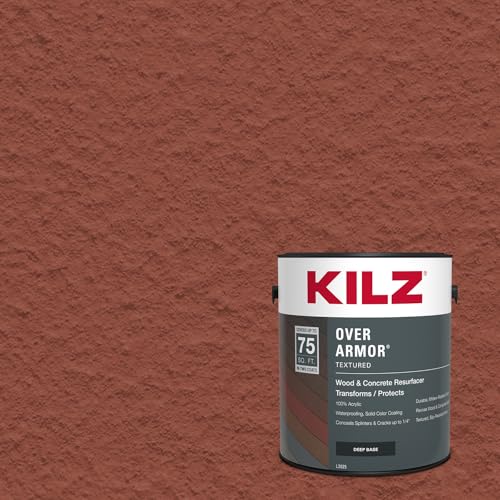
Best for: aging decks with visible cracks, splinters, or surface wear. This thick resurfacer bridges cracks and creates a uniform finish on worn wood and concrete surfaces. The formula fills cracks up to 1/4” and hides splinters, improving both appearance and safety. It is well-suited for residential exteriors where decks, porches, docks, or concrete patios show weathering.
Why selected: It’s a robust resurfacer that minimizes prep complexity while delivering a durable, finished look. The texture helps reduce slip risk in moisture-prone areas. A potential limitation: heavy coatings can take longer to cure, and prep must be thorough to maximize adhesion.
Caution: Ensure proper surface cleaning and removal of loose splinters before application for best results.
KILZ Over Armor Textured Solid Coating – Cape Cod Gray

Best for: decks with mixed materials or aged concrete patios that need a uniform shaded finish. This solid-color resurfacer hides imperfections on wood and concrete surfaces, bridging cracks and renewing the surface texture for a refreshed look.
Why selected: A consistent gray tone can complement outdoor furniture and surroundings while concealing prior damage. Limitation: color consistency can vary slightly by batch, so consider ordering extra for touch-ups.
Caution: Follow resin cure times and keep in mind that taller boards or deep cracks may require additional filling or multiple coats.
Liquid Rubber Deck Coating – Neutral Beige (1 Gal)

Best for: readers seeking a tougher, flexible sealant that resists peeling and cracking on old wood. This polyurethane deck coating offers durable protection for wood, concrete, and plywood, and is suitable for resurfacing older finishes or sealing newer builds.
Why selected: It provides a long-term protective layer with a proactive approach to moisture and wear. A potential limitation: application requires 2-3 coats, so plan for time and tools (roller or brush) accordingly.
Caution: Allow adequate drying between coats and avoid high humidity during application for best adhesion.
Liquid Rubber Deck Coating – Neutral Beige (4 Gal)
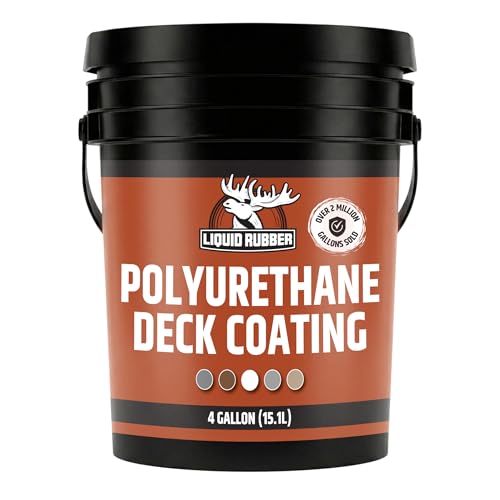
Best for: large decks, stair areas, and surfaces needing extended durability. The 4-gallon kit provides sustained coverage with the same 10X stronger-than-traditional performance and flexible sealant properties for expansive areas or heavy use.
Why selected: Higher volume reduces the number of product seams across bigger decks, helping maintain a uniform finish. Limitation: heavier purchase requires more storage and careful handling during transport and application.
Caution: Use proper safety gear and ventilate the area during application, especially in enclosed spaces or with older wood that may off-gas.
Rust-Oleum Deck Start Wood Primer – Clear (1 Gal)

Best for: preparation on weathered or previously coated exterior wood. This primer helps improve adhesion for subsequent topcoats, eliminating the need for extensive sanding or stripping in some cases.
Why selected: It acts as a practical prep step to maximize the performance of your deck coatings, especially on decks with old coatings or surface irregularities. Limitation: primer alone does not provide final protection; pair with a topcoat for full durability.
Caution: Ensure the surface is clean and dry before applying primer to avoid trapping moisture.
Buying Guide
What should you consider when choosing a deck coating for old wood?
- Surface condition: For severely weathered wood with cracks and splinters, a resurfacer (thick solid coating) helps restore texture and cover defects in one step.
- Material compatibility: Wood, concrete, and composites may require different coatings or primers. For older wood with previous coatings, an adhesion-friendly primer can improve outcomes.
- Durability vs. appearance: If you want a durable sealant, polyurethane-based coatings offer long-term protection. If you prefer a refreshed look with color, solid-color resurfacers provide both color and surface restoration.
- Application requirements: Some coatings require multiple coats, specific curing times, or particular tools. Plan for weather, temperature, and humidity to ensure proper curing.
- Safety and prep: Thorough cleaning, removal of loose materials, and proper ventilation improve performance and safety during application.
Practical buyer questions
- Do I need a primer before applying a deck coating to old wood? Yes, especially if the surface is weathered or has existing coatings that poor adhesion may occur with.
- Is a textured finish better for safety on wet decks? A textured finish provides better grip in damp conditions, reducing slip risk.
- Can these coatings bridge large cracks and gaps? Some resurfacers can fill cracks up to 1/4”; larger cracks may require filling prior to coating.
- How many coats are typically required? Most polyurethane sealants require 2-3 coats; resurfacers are often applied in one or two thick coats depending on the product.
- Which option is best for large decks? Choose higher-volume products (like 4 Gal Liquid Rubber) to reduce seams and ensure uniform coverage on bigger areas.
Frequently Asked Questions
- Q: Can I coat over an existing deck color without stripping? A: In many cases, yes, but check adhesion compatibility and consider a primer for best results.
- Q: How long does each coating take to cure? A: Cure times vary by product and weather; follow the product’s label for drying and recoat windows.
- Q: Will coatings prevent rot on old wood? A: They help seal against moisture and extend life but do not replace structural repair if rot is present.
- Q: Is a textured finish necessary for outdoor stairs? A: Textured finishes improve traction and are beneficial for high-traffic or wet areas.
- Q: How should I store leftover deck coatings? A: Reseal tightly and store in a cool, dry place away from direct sunlight.