Answering the question “which orbital sander is best for curved surfaces?” this guide highlights select models that handle curved contours, edges, and irregular shapes with ease. These tools are ideal for woodworkers shaping bowls, cabinetry edges, furniture curves, and automotive panels. The top picks emphasize comfortable grips, improved dust collection, and adjustable speeds to match the curvature of your project. Below, five proven sanders are analyzed for curved-surface work, followed by a practical buying guide and FAQs.
| Product | Best For | Key Benefit |
|---|---|---|
| HYCHIKA 5-Inch Random Orbital Sander | Medium to advanced curves | Six-speed control with strong dust collection |
| Shineboc 5-Inch Sanding Sponge Discs | Curved edge smoothing | 18 sponges with flexible sponge backing |
| Bosch ROS20VSC Palm Sander | Precision curves and detail | Vacuum dust collector and hook-and-loop system |
| DEWALT DWE6421 5-Inch Sander | General curved surfaces | Low vibration, close work piece access |
| SKIL SR211601 5” Sander | All-around curved work | Cyclonic dust box and variable speed |
HYCHIKA 5-Inch Random Orbital Sander
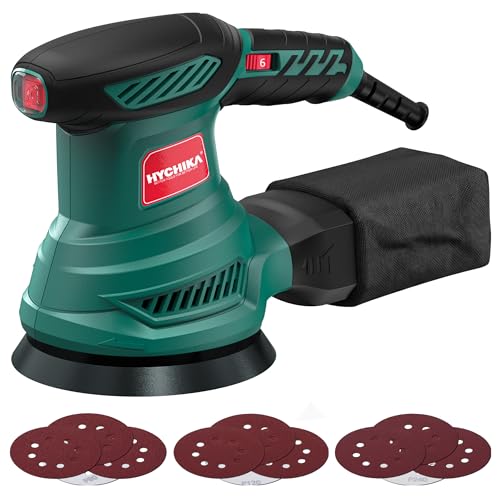
Best for versatile curved-surface tasks and finishing work, the HYCHIKA sander delivers 13,000 RPM with six variable speeds. It’s designed to be comfortable in the hand and suitable for curved contours where precision matters. The dust collection system helps keep the work area clearer, which is beneficial when finishing curved edges. Best for hobbyists and DIYers tackling bowls, rails, and curved panels.
- Six-speed control for material-specific finishes
- 300W motor with high efficiency
- Integrated dust collection for reduced debris
Who it’s best for: Woodworkers or DIYers who need reasonable punch on curved surfaces without sacrificing control. Caution: The dust bag and port may require occasional emptying during heavy use.
Shineboc 5 Inch Sanding Sponge Discs

The Shineboc set focuses on curved-surface polishing with a flexible sponge backing and 18 sanding sponges across nine grits. This option is particularly effective for smoothing curved edges and contours because the sponge acts as a buffer while the 5-inch discs adhere via hook-and-loop. It’s well-suited for finishing curved automotive panels or curved furniture edges.
- 180–3000 grit range for detailed finishing
- Sponge backing enhances curved-surface safety
- Hook-and-loop attachment for quick disc changes
Best for: Finishers who want precise, smooth curved surfaces. Caution: Not a standalone sander—works best with a compatible random-orbital base.
Bosch ROS20VSC Palm Sander

The Bosch ROS20VSC is a compact option with a vacuum dust collector and a variable speed dial, making it well-suited for curved work where dust control matters. Its soft carrying bag and reliable hook-and-loop discs help maintain consistent contact along curved surfaces. Best for detail-oriented tasks that require minimal vibration and precise control on rounded edges.
- Variable speed to match curve and material
- Vacuum dust collection reduces debris around delicate curves
- Ergonomic, comfortable grip for extended use
Who it’s best for: Professionals or serious hobbyists who need clean curves and precise sanding. Caution: Dust collection performance depends on the vacuum system used with the tool.
DEWALT DCW210B 20V Max Orbital Sander

This brushless DEWALT cordless model delivers runtime and efficiency for curved-surface tasks, with a wide speed range from 8,000 to 12,000 OPM. Its low-profile height helps reach tight curves and edges, making it a strong choice for curved cabinetry, trim, and decorative moldings where corded tools are impractical.
- Brushless motor for efficiency and longer life
- Variable speed to fine-tune for curved surfaces
- Low-profile design aids reach into tight curves
Best for: Cordless convenience on curved projects where proximity to the workpiece matters. Caution: Tool-only design requires separate battery and charger if not equipped.
DEWALT DWE6421 5-Inch Orbital Sander (Corded)
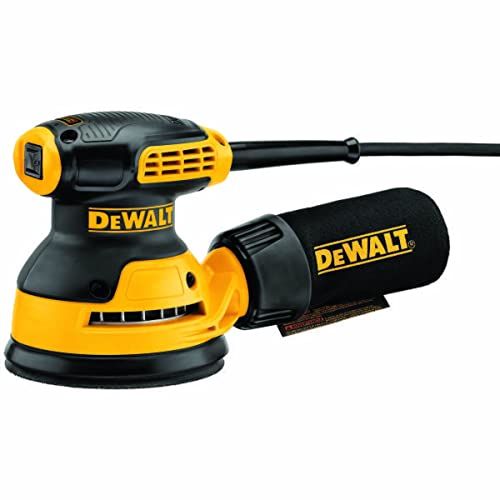
This 12,000 OPM sander from DEWALT offers a compact design with reduced height, supporting closer work on curved panels and edges. The separate counterweight helps minimize vibration, enabling steadier control across rounded surfaces. A practical choice for detailed curved-surface finishing in woodworking and cabinetry.
- 12,000 OPM for smooth curves
- Shorter height for closer access to curves
- Counterweight design reduces vibration
Best for: Craftsmen needing a balanced blend of reach and smooth operation on curved forms. Caution: Corded power may limit mobility in larger, curved-project scenarios.
DEWALT DWE6421K Orbital Sander Kit
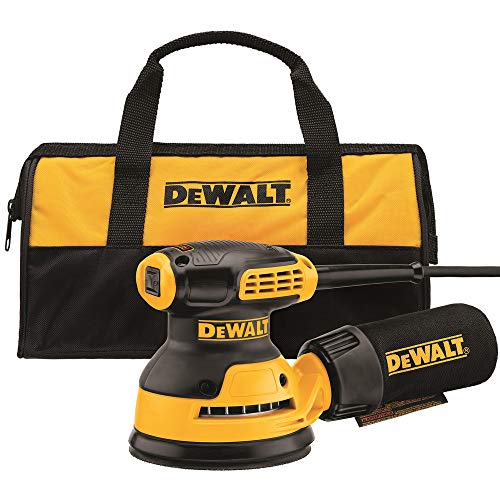
DEWALT’s kit version equips users with a 3-amp motor and a 12,000 OPM rating, plus the ergonomic benefits of a shorter height for curved surfaces. The kit packaging often includes suitable discs and accessories for smoother curves, making it a convenient all-in-one choice for curved-surface projects.
- 3.0-amp motor, 12,000 OPM
- Compact profile facilitates curve work
- Included accessories for immediate use
Best for: Hands-on projects requiring a ready-to-use set for curved surfaces. Caution: Some users may want a higher sanding speed range for tough curved materials like hardwoods.
Buying Guide: Orbital Sanders For Curved Surfaces
When choosing an orbital sander for curved surfaces, focus on grip comfort, vibration control, dust collection, and a speed range that accommodates different materials. Consider the following:
- Curve accessibility: Choose sanders with slim bodies or low-profile housings to reach tight radii.
- Speed range: Variable speeds help you start with rough shaping and finish with fine smoothing on curved edges.
- Dust management: A vacuum or efficient dust bag helps keep curved workpieces visible and reduces clogging in grooves.
- Attachment system: Hook-and-loop discs simplify disc changes on curved contours, especially for multi-step finishing.
- Ergonomics: A comfortable grip reduces fatigue on long curved-surface tasks and minimizes errors along bends.
- Power source: Corded vs. cordless trade-offs include reach and weight—corded tools often offer consistent power, while cordless models improve mobility around curved forms.
Which features matter most for curved surfaces?
- Low-profile design and slim housings for curve access
- Six- or more-speed ranges for precise curved finishing
- Robust dust collection to keep curves clean and clear
- Lightweight construction to reduce user fatigue on extended curved work
Practical tips for curved-surface sanding
- Start with coarser grits on the outside of curves, then feather into finer grits for a smooth finish.
- Keep the sanding motion consistent with the curve’s radius to avoid gouges.
- Regularly empty dust bags or check vacuum connections to prevent clogging that reduces suction on curved areas.
FAQ
- Can I use a regular orbital sander on curves? Yes, but models with low-profile bodies and six-speed control handle curves better.
- Is dust collection important for curved surfaces? Yes, it helps maintain visibility and reduces debris buildup in tight curves.
- Should I choose cordless or corded for curves? Corded tools offer steady power for continuous work; cordless tools add mobility for tight or awkward curves.
- What grit progression works best on curved edges? Start with coarser grits (60–120) for shaping, then move through 180–320 for finishing curves.
- What makes a sander good for curved surfaces? A combination of ergonomic design, flexible backing, and a stable dust collection helps manage curved work more effectively.
- Do all orbital sanders handle curved surfaces equally? No, some are better suited for curves due to their profile, weight, and control features.