The top answer for filling stair gaps is choosing a wood filler that dries hard, sands smoothly, and accepts stain or finish evenly. This guide highlights five reliable options ideal for stair treads, risers, and stringers. Each product targets different needs—quick-drying, flexible fills, or stainable finishes—so you can pick the right one for your project and skill level. Best for professional repairs, DIY home updates, and projects requiring long-lasting, finish-ready results.
| Product | |||
|---|---|---|---|
| Gap Filler Oak (LOBA) | Filler | Wood floors, stairs | Sandable and recoatable with finishes |
| Gap Filler Beech (LOBA) | Filler | Hard surface floors | Sandable, compatible with finishes |
| DAP Plastic Wood All Purpose Latex Wood Filler | Latex wood filler | Interior/exterior wood surfaces | Looks and acts like real wood; versatile |
| Goodfilla White Oak 8 oz | Water-based filler | Stainable, tintable repairs | Non-toxic, zero waste, sandable |
| WUDCARE Floorboard Gap Filler 1 L | Water-borne acrylic | Gaps in floors | Low odor, quick-drying, color-match able |
When selecting a filler for stairs, consider: the substrate material, location (indoor/outdoor), desired finish (stainable or paintable), drying time, and how the filler responds to sanding and finishing. The five featured products are chosen for reliability, versatility, and clarity in their application and finish. Now, explore each option to determine which is best for your stair project and skill level.
Gap Filler Oak — LOBA

Key data: Use on wood, cork, tile, and other hard surface floor coverings. Sandable and recoatable with finish, oil, and care products.
Best for: This oak filler is ideal for light to medium wood tones on stair treads where a natural oak look is desired. It is best for professionals or DIYers aiming for a finish-ready surface that accepts stains and topcoats well. Avoid this if you require heavy-duty gap filling on non-wood substrates from the outset.
Why selected: It’s designed to blend with oak-based floors and stairs, offering sandability and finish compatibility, which helps achieve a seamless repair with minimal finish mismatch.
Caution: While it’s versatile, ensure color match with your oak shade before large fills, as subtle color variation can appear after finishing.
Gap Filler Beech — LOBA

Key data: Use on wood, cork, tile, resilient, and other hard surface floor coverings. Sandable and recoatable with finish, oil, and care products.
Best for: Beech-toned stair surfaces or floors with a lighter beige-brown hue. This filler is suited for projects requiring a compatible finish with light wood tones and a smooth sandable surface.
Why selected: It mirrors typical Beech wood aesthetics and works well where a subtle repair should not stand out on the stair stringers or risers.
Caution: Color consistency can vary with larger fills; test on scrap or a hidden area to ensure uniform color after staining or sealing.
DAP Plastic Wood All Purpose Latex Wood Filler

Key data: Looks and acts like real wood; ideal for corners and vertical surfaces on interior or exterior wood. Easy-to-use, latex-based formula can be planed, cut, drilled, screwed, nailed, sanded, stained and painted. Shrink and crack resistance with strong nail and screw anchoring.
Best for: Great for stair edges and corners where a traditional wood filler is needed plus nail or screw anchoring support during assembly or repair. Suitable for both interior and exterior uses depending on substrate preparation.
Why selected: A versatile, easy-to-work-with option that accepts various finishes, making it a practical all-purpose choice for mixed stair repairs.
Caution: Some users may require multiple coats for deep fills; sandability is good but may need feathering for large gaps.
Goodfilla Water-Based Wood & Grain Filler (1 Quart)

Key data: High quality, no shrink, sink, or crack; mixes with pigments, tint, or stains. Water-based, non-latex, trowel-ready; unlimited shelf life; freeze-thaw stable. Zero VOC and non-toxic.
Best for: Professionals and DIYers needing a durable, stainable, and easily sandable filler that preserves wood grain appearance. Especially suitable for stair treads where a consistent color match is essential.
Why selected: Excellent finish versatility with water-based formulation, enabling color matching and smooth sanding without shrinkage across multiple layers.
Caution: Works best when fully cured before applying finishes; ensure proper ventilation during application due to potential fumes from finishes.
Goodfilla White Oak 8 oz
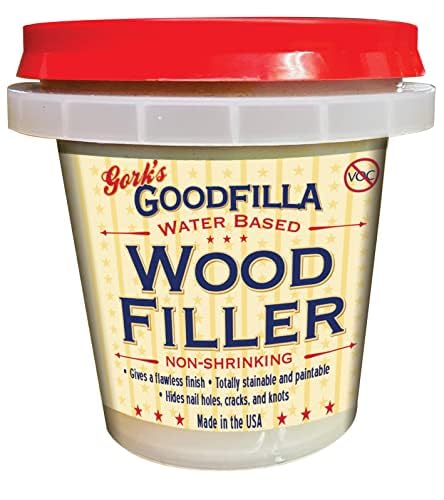
Key data: High quality, no shrink, sink, or crack; accepts any finish or stain. Mix with any pigment, tint, stain or dye. Green product with zero VOC, zero waste, non-toxic.
Best for: Light to medium oak repairs where a consistent white oak finish is desired. Suitable for stair nosings and visible face work where color accuracy is crucial.
Why selected: The White Oak variant provides a targeted option for oak-based stairs, ensuring better color coherence with surrounding wood. It also offers easy sanding and finish compatibility.
Caution: As with all wood fillers, test color match on scrap before large fills to avoid color discrepancy after staining.
Goodfilla White Oak (Gallon) — Water-Based
Key data: Similar benefits as the 8 oz variant, designed for larger projects; water-based, stainable, tintable, sandable, and fast-drying.
Best for: Bigger stair projects or multiple repairs where a consistent oak finish and easy sanding are priorities. Choose this if you anticipate filling several gaps or patches.
Why selected: A gallon option helps reduce refill interruptions on larger stair installations while maintaining finish integrity and color consistency.
Caution: Larger quantities may require proper storage to prevent drying; reseal after use to extend shelf life.
Buying Guide
What to consider when choosing a wood filler for stairs:
- Finish compatibility: If you plan to stain, choose a filler labeled stainable or tintable. For paint, a latex-based or paintable filler works well.
- Drying and curing: Quick-drying formulas save time, but ensure the fill dries hard enough for sanding and topcoat adhesion.
- Flexibility vs. rigidity: Flexible fillers resist cracking on seasonal stairs, while rigid fillers may offer stronger bite for nail holes and joints.
- Color match: For visible stair surfaces, color-matching a filler to the surrounding wood reduces contrast after finishing.
- Application method: Trowel-ready or sandable fills simplify application on narrow stair gaps and stringers.
- VOC and safety: Green or zero-VOC products are preferable for indoor spaces and enclosed stairwells.
Practical usage tips: Always test filler color on a scrap or hidden area before committing to the whole stair. Feather edges for a seamless repair and clean surfaces with appropriate primers or sealants as needed. For large gaps, apply in layers, allowing each to dry thoroughly to minimize cracking.
FAQ
- What filler is best for staining stair treads? Look for a stainable or tintable wood filler that matches your wood species, such as Goodfilla White Oak or LOBA Oak/Beech fillers.
- Can I use exterior wood fillers on indoor stairs? Most interior stairs benefit from water-based or latex fillers designed for indoor finishes; exterior fillers may require sealing for indoor use.
- Do I need to seal the filler after finishing? Yes, sealing after staining or painting helps protect repairs and ensure longevity.
- Are these fillers sandable? All listed products are described as sandable or sand-ready, suitable for smooth finishes with topcoats.
- Is color matching important for stair repairs? Yes; color matching reduces visible repairs, especially on high-traffic stair surfaces.
- How long should I wait before sanding after applying filler? Follow product-specific drying times; allow thorough curing for best results before sanding.