If you’re searching for deck coatings that keep surfaces cooler while protecting wood, these five products stand out. They balance heat-reduction features with durability and ease of application. The best options suit different needs—from DIY-friendly coatings to durable, textured finishes for high-traffic areas. This guide helps you choose based on climate, surface type, and traction needs. The buyer-focused table below highlights each pick for quick comparison.
| Product | Type | Finish | Best For |
|---|---|---|---|
| Liquid Rubber Polyurethane Deck Coating – Saddle Brown | Polyurethane Deck Coating | Smooth/Optional Texture | General wood decks needing rugged protection |
| Liquid Rubber Cool Foot Deck Coating – Neutral Beige | Cooling Deck Coating | Seamless Membrane | Hot climates, heat reduction |
| Liquid Rubber Polyurethane Deck Coating – Textured – Neutral Beige | Polyurethane Deck Coating | Textured | Traction-demanding areas |
| Liquid Rubber Cool Foot Deck Coating – Neutral Beige (5 Gallon) | Cooling Deck Coating | Seamless Membrane | Larger surfaces, heat management |
| Liquid Rubber Cool Foot Deck Coating – Misty Gray | Cooling Deck Coating | Seamless Membrane | Heat reduction, multi-surface use |
Liquid Rubber Polyurethane Deck Coating – Saddle Brown

Best for: Wood decks needing long-term durability. This polyurethane sealant outperforms traditional deck paints with superior resistance to peeling and cracking. It’s engineered for decks, stairs, and trailers, offering industrial-grade durability for resurfacing old finishes or sealing new builds.
Why chosen: It provides a tough, flexible membrane that protects against wear and weather. The option to apply 2–3 coats with a standard roller or brush makes it accessible for DIY projects. Coverage is about 50 sq ft per gallon in normal zones, less in high-traffic areas.
Caution: A smooth finish yields a sleek surface, but high-traffic zones may benefit from the textured option for extra grip.
Liquid Rubber Cool Foot Deck Coating – Solar Protection

Best for: Surfaces in direct sun where temperature reduction matters. This coating reflects solar energy, reducing surface temperatures by up to 35% compared with standard paint.
Why chosen: It forms a protective membrane across wood, concrete, and other substrates, and can be applied with a brush, roller, or sprayer for a seamless finish. It’s stand-alone but works well with compatible fabrics to bridge seams.
Limitation: As a cooling-focused product, it’s most effective when applied on sun-exposed areas and may require additional coats for best results in larger projects.
Liquid Rubber Polyurethane Deck Coating – Textured Finish – Neutral Beige
Best for: Areas needing improved traction without sacrificing heat savings. The textured finish provides grip, helpful on ramps, steps, or pool decks.
Why chosen: This option keeps the core benefits of durability and waterproofing while adding texture for safety. Coverage aligns with standard expectations for coating projects, with the same 2–3 coat approach.
Limitation: Texture can alter the smoothness of the surface, which may affect wheelbarrow or furniture movement if a very rough texture is selected.
Liquid Rubber Cool Foot Deck Coating – Neutral Beige (5 Gallon)
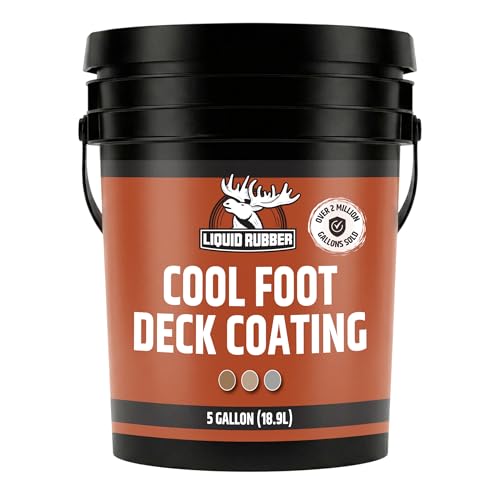
Best for: Large decks and expansive outdoor surfaces in hot climates. The 5-gallon size helps reduce the number of seam lines and provides a more uniform cooling effect over bigger areas.
Why chosen: The cooling membrane improves heat reflectivity while delivering durable waterproof protection. It pairs well with interior and exterior wood, concrete, and fencing projects.
Limitation: Bulk packaging requires space for storage and more time for thorough application on larger surfaces; plan for ample drying time between coats.
Liquid Rubber Polyurethane Deck Coating – Textured Finish – Stone Gray
Best for: A textured, slip-resistant deck surface that still emphasizes heat management. The textured finish provides grip for wet or outdoor conditions.
Why chosen: It combines the same durable polyurethane base with a textured profile, ideal for high-traffic outdoor spaces. It’s suited for resurfacing and weatherproofing older decks.
Limitation: Texture may slightly alter the overall appearance and must be matched with your outdoor décor preferences.
Buying Guide: Key Considerations for Cooling Deck Coatings
What climate or sun exposure do you face? For hot climates, prioritize solar-reflective or UV-stable coatings that lower surface temperatures. If your deck shades partially, heat reduction will still help but may be less dramatic.
What surface type and usage does your deck have? Consider whether you need a smooth, easy-to-clean surface or a textured finish for traction on stairs, ramps, or pool decks.
Durability versus ease of application: Polyurethane coatings offer long-term protection but require proper surface prep and dry times. DIY-friendly options provide quicker results but may require more coats for lasting wear.
Coverage and size: Larger decks benefit from higher-gallon packages to minimize seams. Ensure you have a plan for sufficient drying time between coats, especially in warm weather.
Maintenance and cleaning: Look for coatings that resist peeling and allow simple cleaning. A textured finish reduces slipperiness while maintaining durability.
FAQ
- What makes a deck coating stay cooler?
It reflects more sunlight, has higher solar reflectivity, and reduces heat transfer to the surface. - Can I use these coatings on new wood?
Yes, they’re designed for new builds and resurfacing old finishes, with appropriate surface preparation. - Is a textured finish necessary for traction?
Not always, but it helps in high-traffic or wet areas; choose texture based on safety needs. - How many coats should I apply?
Most products recommend 2–3 coats for best durability and coverage. - Do these coatings require specialized tools?
A standard 3/8″ roller or brush works well; sprayers can speed application for large areas. - Are these coatings waterproof?
Yes, the products provide a waterproof membrane once cured, protecting wood and substrates.