Answering the common buyer question: which primer should I use on laminate countertops before painting or epoxy coating? The top picks here are primers and bonding undercoats designed to adhere to slick laminate surfaces, provide a solid foundation for epoxy or paint, and minimize peeling or delamination. Best for DIY homeowners, kitchen remodelers, and renters seeking long-lasting results with minimal prep. The table below highlights five strong options with their core strengths.
| Product | Best For | Key Benefit |
|---|---|---|
| Stone Coat Bonding Primer & Sealer | Laminate, tile, cultured marble surfaces | Strong adhesion and low odor for indoor use |
| Giani Marble Countertop Paint – Step 1 White Primer | Laminate, Formica, Corian | Standard base coat for laminate with good coverage |
| Stone Coat Epoxy Undercoat White | Countertops, MDF, plywood | Two coats create a firm, dense foundation |
| Stone Coat Epoxy Undercoat Black | Porous surfaces and DIY epoxy kits | High-bond primer for a durable epoxy base |
| Country Chic Clear Bonding Primer | Laminate and chalk-style furniture projects | Clear base coat that preserves wood or laminate look |
Below are five carefully chosen products optimized for laminate countertop priming, each with practical notes to help you decide which primer fits your project and space.
Stone Coat Bonding Primer & Sealer for Laminate

Best For: DIYers and professionals applying epoxy finishes to slick laminate, tile, granite, or cultured marble. This bonding primer creates a durable foundation for epoxy countertop projects and is the upgraded version replacing prior primers.
Why selected: It delivers strong adhesion on low-porosity surfaces and supports reliable epoxy bonding, helping to reduce lifting or failure in the topcoat. The low-odor, low-VOC formula makes it suitable for indoor environments.
Caution: Ensure two light coats are dry before applying an epoxy or paint topcoat for optimal bond strength.
Giani Marble Countertop Paint Step 1 White Primer
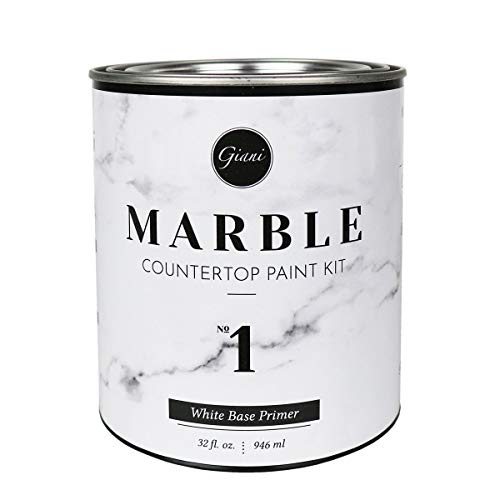
Best For: Laminate, Formica, Corian, cultured marble, and wood, as a standard base coat for the Giani countertop kit. Suitable for projects aiming for a bright, clean base before color application.
Why selected: It provides reliable adhesion for laminate and related surfaces used in kitchen and bath counters. Coverage is ample for typical countertops with two-coat application guidance.
Caution: This primer is part of a paint kit; plan the project scope to ensure you have the appropriate color system and topcoats for your intended finish.
Stone Coat Epoxy Undercoat White

Best For: MDF, plywood, and porous surfaces that will receive epoxy finishes. A two-coat application creates a dense foundation for a durable final look.
Why selected: Designed to be used with Stone Coat epoxy resin kits, it helps achieve a refined high-gloss appearance by building a solid base. It’s a practical step for DIY epoxy countertop projects.
Caution: Apply in a well-ventilated area and follow kit instructions for drying times between coats.
Country Chic Clear Bonding Primer

Best For: Chalk-style furniture paint projects, including laminate surfaces where a clear primer is preferred to preserve the underlying look.
Why selected: This primer is eco-friendly (low VOC) and water-based, making it a good choice for indoor projects with minimal odor. It dries clear, which is advantageous for distressing or preserving the original tone beneath.
Caution: It’s a clear primer; ensure compatibility with your final paint or topcoat to avoid visual surprises on certain laminates.
Buying Guide: Key Considerations For Laminate Countertop Primers
- Surface compatibility: Some primers are designed specifically for laminates, while others target wood or MDF projects. Choose a primer that explicitly lists laminate or similar slick surfaces.
- Bond strength: For epoxy applications, a bonding primer or undercoat is crucial to prevent peeling. Look for phrases like “high-bond,” “epoxy undercoat,” or “bonding primer.”
- VOC and odor: If you’re working indoors, low-VOC or low-odor options help with comfort and air quality during application.
- Coverage and coats: Check whether the product requires multiple coats and estimate your project size to avoid mid-project shortages.
- Compatibility with topcoats: Ensure the primer will work with your intended epoxy resin, chalk paint, or finish to avoid compatibility issues.
Practical tips by project type
- For epoxy countertops: Prioritize bonding primers and epoxy undercoats to maximize adhesion and lifespan of the epoxy finish.
- For a chalk-style or painted finish: A bonding or clear primer helps maintain color fidelity and surface smoothness; consider a clear primer if you want to preserve laminate’s look.
Frequently Asked Questions
-
Do I need a primer on laminate countertops before epoxy?
Yes. A primer or bonding undercoat improves adhesion and helps prevent peeling of the epoxy over time. -
Which primer is best for a white epoxy countertop base?
A high-bond epoxy undercoat or bonding primer (white or clear) is recommended to create a solid, uniform base for epoxy resin. -
Can I use a furniture primer on laminate countertops?
Some furniture primers are suitable; choose a primer labeled for laminate or smooth surfaces and compatible with epoxy or paint topcoats. -
Is low-VOC important for kitchen projects?
Yes. Low-VOC formulas reduce odor and improve indoor air quality during application. -
How many coats should I apply?
Most primers require two coats for a thorough, even foundation, especially on laminate for epoxy or paint finishes. -
Are clear primers better for preserving the laminate look?
Clear primers can preserve the underlying look, which is useful when you plan to distress or maintain the laminate appearance beneath the finish.