If you’re dealing with mold, mildew, or musty odors on porous surfaces, a dedicated mold-killing primer can make a big difference. This guide highlights five top primers designed to kill mold and prepare surfaces for painting, with practical notes on who each product is best for and any limitations to watch out for. The selections aim to help homeowners, condo owners, and rental property managers choose fast-acting, low-odor options that suit interior and exterior projects.
| Product | Best For | Where To Use |
|---|---|---|
| Meshed picks listed in product sections | Various surfaces including non-porous and some porous materials | Interior and exterior applications |
Note: always follow label directions for surface preparation, coverage, and safety. The products below emphasize rapid drying, odor control, and effective mold-kill performance to simplify quick project completion.
Zinsser Mold Killing Primer, Water-Based
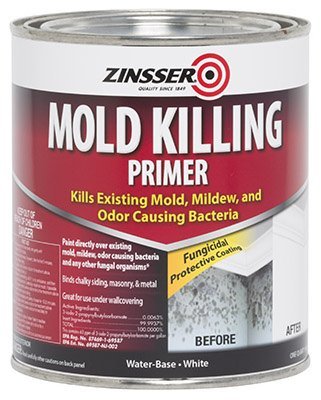
Product overview: The Zinsser Mold Killing Primer is a protective, water-based coating designed to paint over and kill existing mold, mildew, moss, fungi, and odor-causing bacteria on non-porous interior and exterior surfaces. It’s low odor, cleans up easily with soap and water, and covers up to 160 square feet. Drying is fast, with a touch-dry time of 30 minutes and a recoat window of one hour. This makes it suitable for quick upgrades in kitchens, bathrooms, basements, and other damp spaces.
Best for: Buyers tackling non-porous surfaces first, such as painted walls, metal, or sealed substrates. This primer is a straightforward choice when mold is present on non-porous materials and quick recoat timing matters.
Caution: For highly porous surfaces, consider a surface-prep step or a product explicitly labeled for porous materials, as mold may require deeper penetration than a surface-only primer can provide.
Zinsser Mold Killing Primer Quart, 4 Pack

Product overview: This 4-pack of Zinsser Mold Killing Primer offers the same mold-kill and stain-blocking benefits as the single-quart version, packaged for larger projects or multiple rooms. It is a water-based, low-odor formula that cleans up easily and delivers the same fast dry times as its single-pack counterpart. Coverage remains up to 160 square feet per gallon, with a 30-minute touch-dry and one-hour recoat schedule.
Best for: Small businesses or homeowners working across several rooms, where consistent mold-kill performance and uniform dryness are important across multiple walls or fixtures.
Caution: Ensure each coat is fully dry before applying the next to avoid lift or tackiness on glossy or sealed surfaces.
Rust-Oleum Zinsser WaterTite Mold Killing Primer – 1 qt

Product overview: The Rust-Oleum/ Zinsser WaterTite mold-killing primer is designed for all surfaces and emphasizes water-based performance with mold-killer properties. The 1-quart size suits mid-sized rooms or projects, and the badge indicates suitability for a range of surfaces beyond strictly porous materials, providing compatibility with both interior and exterior work. It also shares the quick-dry characteristics common to this product family.
Best for: Projects where a versatile primer is needed across multiple surface types, including slightly porous substrates where moisture resistance is a priority. It’s a practical pick when interior humidity control is a major concern.
Caution: On highly porous or heavily mold-damaged areas, a dedicated porous-surface primer or additional treatment may be needed for comprehensive mold control.
RMR Brands DIY Mold & Stain Remover Bundle

Product overview: This bundle combines two fast-acting formulas: RMR-86 Mold & Mildew Stain Remover and RMR-141 RTU Disinfectant Spray. The bundle targets mold and mildew quickly while lifting stubborn stains and addressing roots that mold may leave behind. It’s a practical pairing for prep work after moisture issues and before priming, especially in spaces with stubborn stains.
Best for: Environments where both mold removal and disinfectant protection are needed before or after priming. Useful in bathrooms, basements, or laundry areas with persistent staining and odor concerns.
Caution: The products are powerful cleaners; follow safety guidelines, particularly around ventilation and skin contact. They are not a substitute for proper moisture control alone.
MOLD ARMOR Mold Kill & Control Spray
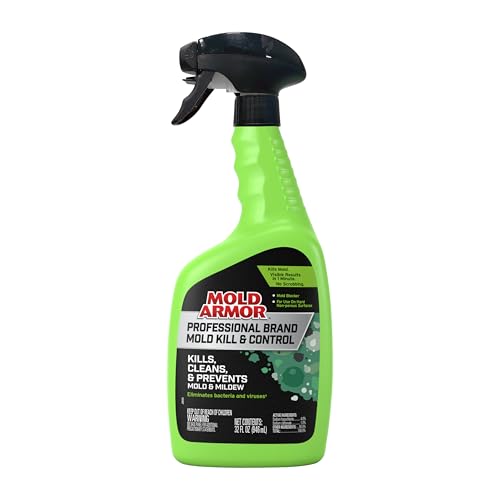
Product overview: This 32-ounce spray is designed to kill and clean mold and mildew on hard, non-porous surfaces with a fast-acting formula that yields visible results in minutes. It’s suitable for laminated, linoleum, sealed grout, stainless steel, and plastic surfaces, where quick visible results help guide the next painting steps. It also claims broad use in bathrooms and other damp spaces.
Best for: Quick cleanup on non-porous surfaces where immediate mold control and odor reduction are the goals before applying primer or paint.
Caution: Not ideal for highly porous materials where deeper penetration of mold is needed. Use as a cleanup step after moisture mitigation.
MOLD ARMOR Mold Blocker, 32 oz

Product overview: Mold Blocker creates an invisible barrier to prevent mold growth for up to three months and can be used on indoor and outdoor surfaces. It’s designed to be used in bathrooms, linens, fabrics, carpets, and furniture, offering a preventative layer that complements priming work.
Best for: Use as a preventative measure in high-moisture spaces after cleaning and priming to reduce future mold regrowth on porous and non-porous materials alike.
Caution: It is an anti-mold spray for ongoing prevention and not a substitute for remediation or moisture control in severely mold-damaged areas.
Zinsser Odor Killing Primer – Quart

Product overview: This odor-killing primer is designed to neutralize odors on interior surfaces, including subfloors, wood floors, cabinets, drywall, and more. It covers up to 100 square feet and dries quickly, helping prepare spaces with odor issues prior to applying finish coats.
Best for: Projects where odor control is as important as mold control, especially in rooms affected by pet, tobacco, or smoke odors that also have mold concerns.
Caution: This primer targets odors and many surface types, but odor control may not replace proper mold remediation on extensive mold growth sites.
Zinsser Odor Killing Primer (Gallon, Clear)

Product overview: A gallon version of the odor-killing primer, suitable for larger jobs. It’s designed to neutralize odors on a wide range of interior surfaces, including wood floors, plaster, drywall, metal, masonry, PVC, and more. Fast-drying times help accelerate project timelines for bigger spaces such as basements, hallways, or open-plan areas.
Best for: Larger projects that require consistent odor control across multiple areas, combined with mold-kill potential for interiors where moisture and odors co-exist.
Caution: As with odor-focused products, ensure mold remediation is prioritized if active mold is visible beyond superficial staining.
Buying Guide: Mold Killing Primers For Porous Surfaces
What should you consider before buying?
Porosity level matters. Porous surfaces absorb moisture and contaminants more deeply, so you may need products formulated for porous substrates or a two-step approach: clean + prime + seal. If your surface is non-porous, standard mold-killing primers are typically sufficient.
Odor control vs. mold kill. Some primers emphasize odor elimination in addition to mold killing. Choose based on whether odors are a primary concern or secondary to mold growth.
Key criteria for selection
- Drying time: Quick dry times enable faster repainting. Look for 30–45 minutes touch-dry and short recoat windows.
- Coverage: Most primers cover 100–160 square feet per quart; larger spaces may require gallons or multi-pack purchases.
- Surface compatibility: Confirm whether the product is labeled for porous or non-porous substrates and for interior/exterior use.
- VOC and odor: Low-odor formulas are preferable for enclosed spaces.
- Testing and safety: Follow label directions for ventilation, PPE, and surface prep to avoid mold spread.
Porous vs. non-porous: choosing the right primer
Porous surfaces (e.g., plaster, concrete, wood) may need a primer with deep penetration or an additional sealing step. For non-porous surfaces (e.g., ceramic tile, metal, sealed surfaces), a standard mold-kill primer often suffices and dries quickly for re-coating.
How to pair primers with mold remediation steps
- First, address moisture sources and visible mold growth with cleaning or remediation as needed.
- Apply the mold-killing primer to seal treated areas and kill residual spores.
- Follow with a compatible paint or topcoat to complete the project and maintain long-term protection.
FAQ
- What is the main purpose of a mold killing primer?
It kills existing mold and prepares surfaces for painting, helping prevent regrowth when used with proper moisture control. - Can mold killing primers be used on porous surfaces?
Yes, but porous materials may require extra surface prep or a primer designed specifically for porosity. - Do odor-killing primers replace mold remediation?
No. They complement remediation but should not substitute for addressing moisture sources and mold growth. - How long does a mold killing primer take to dry?
Many options dry to the touch in about 30 minutes to 1 hour, with recoat windows of 1–4 hours depending on product. - Is low-odor important for basements or bathrooms?
Yes, low-odor formulations are advantageous in enclosed spaces to improve indoor air quality during projects. - Should I use a primer before mold removal cleaner?
In some cases, cleaning mold stains first helps the primer achieve better adhesion and coverage, but follow label directions.